


A shaggy haircut for men is a layered cut with shorter pieces at the crown and longer, feathered lengths below, finished with a loose, tousled texture. It looks relaxed, but the structure underneath is what makes it work. Without that structure, you just have overgrown hair.
The shag started in the 1970s rock scene and has returned as one of the most requested cuts in modern barbershops. It suits wavy, curly, and thick hair best, but with the right layering it can work on straight and fine hair too.
This guide covers 25 shaggy haircuts for men, how to tell a shag from a wolf cut or mullet, what to say in the barber chair, and the mistakes that ruin the cut.
Quick takeaways:
- A shag relies on layers, point cutting, and weight removal, not length alone.
- Wavy and thick hair needs the least styling. Straight and fine hair needs smarter layering.
- Trim every 4 to 10 weeks depending on length and whether the sides are faded.
- Bring reference photos and name the variation you want.
Best Shaggy Haircuts for Men
Before you pick a style, match it to your face shape. This quick guide saves a lot of guesswork:
- Oval faces: Almost any shag works, so choose by lifestyle and hair type.
- Round faces: Go for longer layers and a side swept fringe to add length.
- Square faces: Soft, wispy layers and a curtain fringe soften a strong jaw.
- Long or rectangular faces: A fuller fringe at brow level shortens the face.
- Heart shaped faces: Medium length layers with volume near the jaw balance a wider forehead.
Mix and match elements from the styles below. A curtain fringe on a taper, for example, is a perfectly valid request.
1. Classic Shag
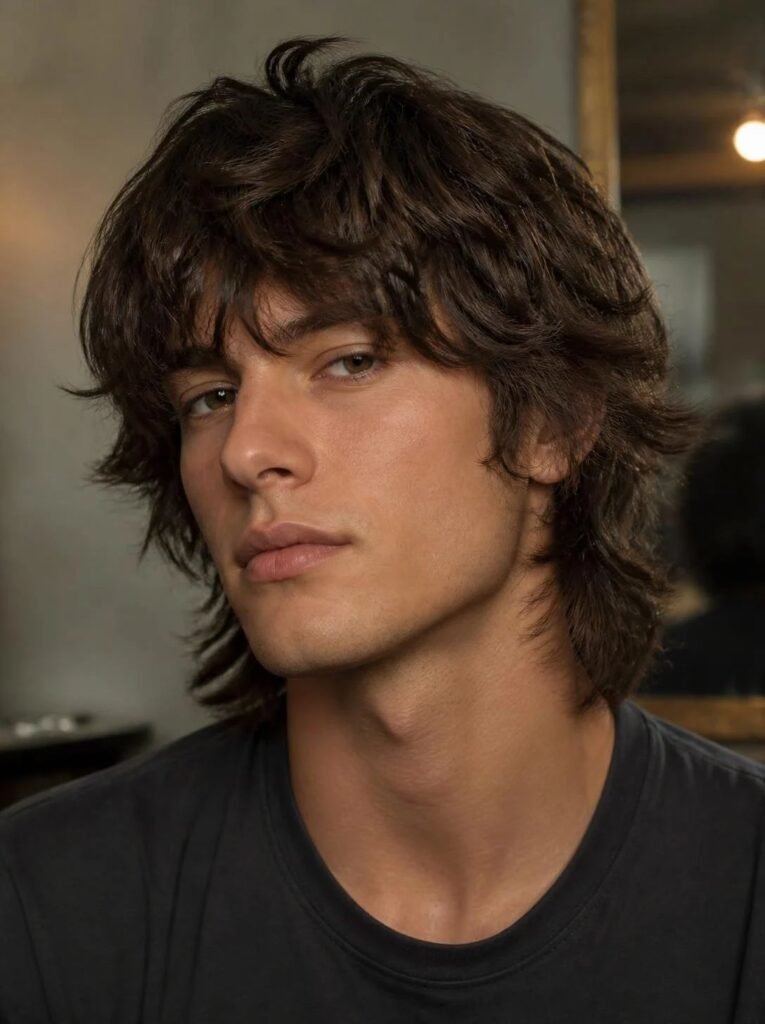
This is the original 1970s blueprint. Expect heavy layering at the crown, feathered ends around the ears, and length that settles near the collar. The fringe is full and brushes the brow. It suits wavy or thick hair, because the natural texture fills out the layers. Rough dry it with your fingers and work a light texture cream through the mid lengths.
2. Modern Shag
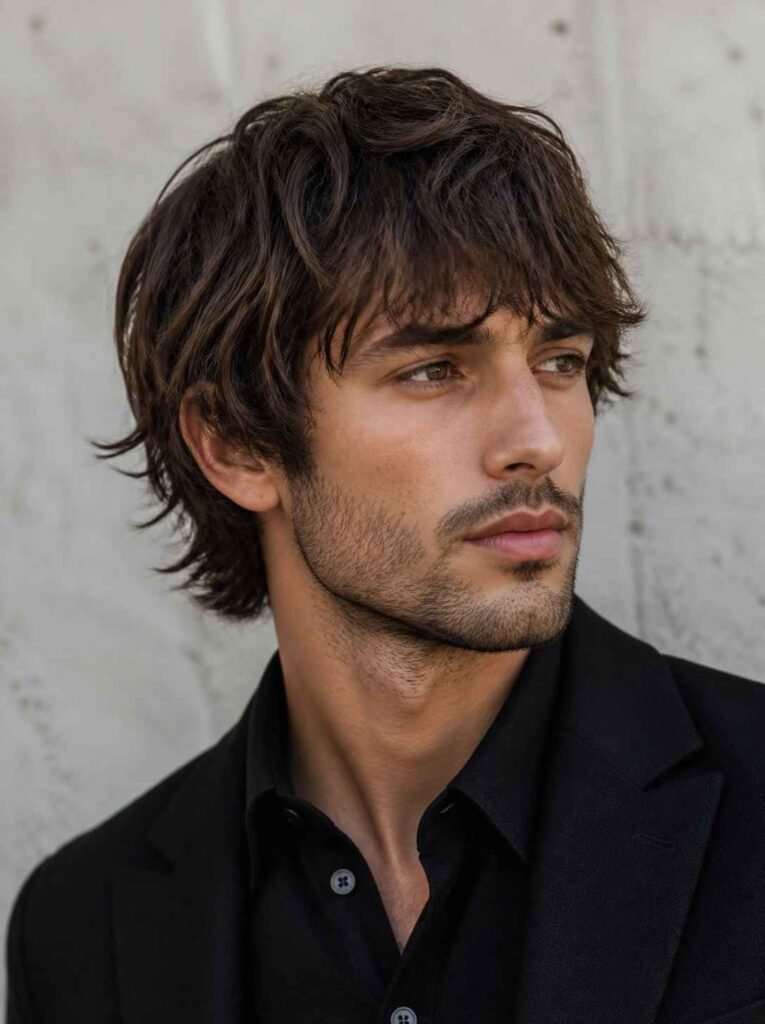
The modern shag keeps the layers but tightens the proportions. The ear line is cleaner, the fringe is softer, and the length stays above the collar. It moves easily from a Monday meeting to a weekend dinner. Blow dry loosely with your head tipped forward, then add a pea sized amount of matte paste to the ends for definition without stiffness.
3. Short Shag
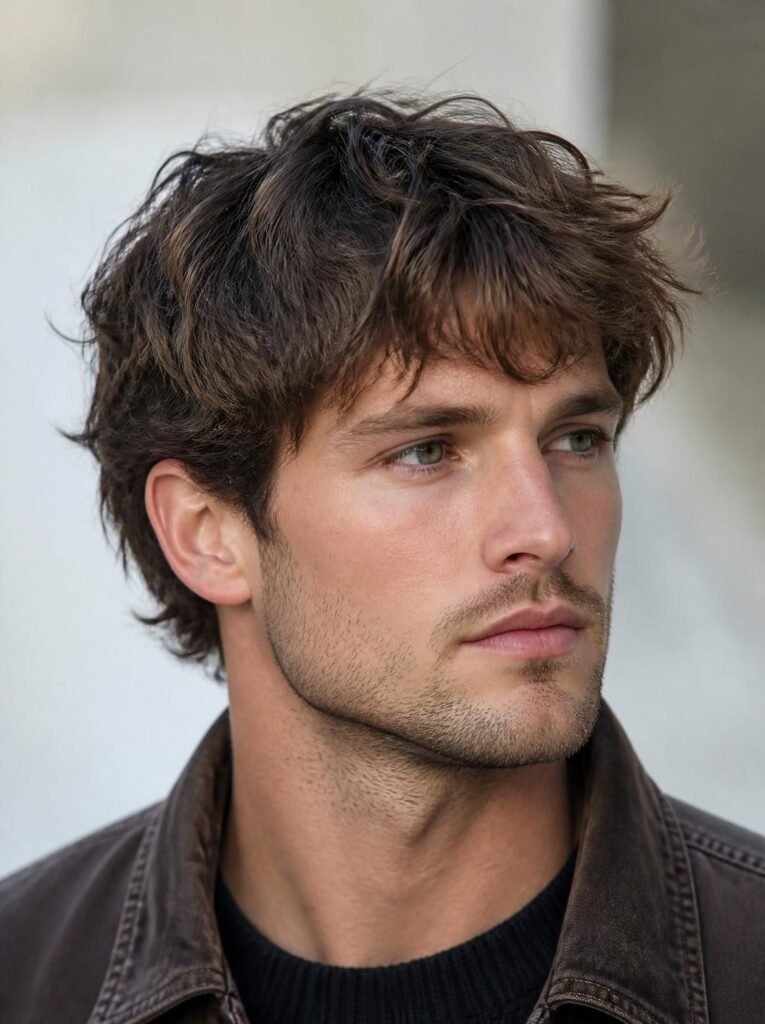
A short shag keeps layers on top at roughly ear length while the sides stay tidy. It also gives fine hair a boost, since shorter layers lift more easily. Use a sea salt spray on damp hair and scrunch it in.
4. Medium Shag

Sitting between the ears and the jaw, the medium shag is the most flexible length. It has enough hair to show movement, yet it still looks tidy under a collar. Ask for layers that start at cheekbone level so the cut frames your face. Finish with a light cream rather than wax.
5. Long Shag
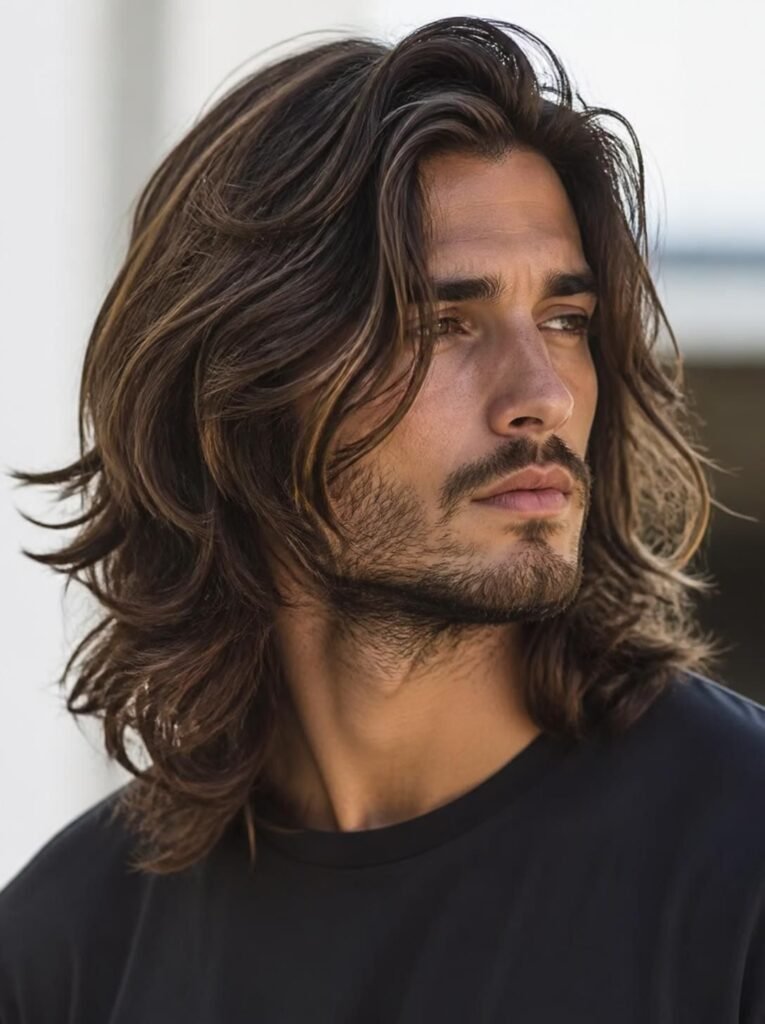
The long shag reaches the shoulders with long layers and face framing pieces up front. It looks best on healthy, wavy hair. Dry ends make the layers look stringy, so condition weekly and trim split ends on schedule. A leave in conditioner keeps the flow soft.
6. Shaggy Fade Haircut
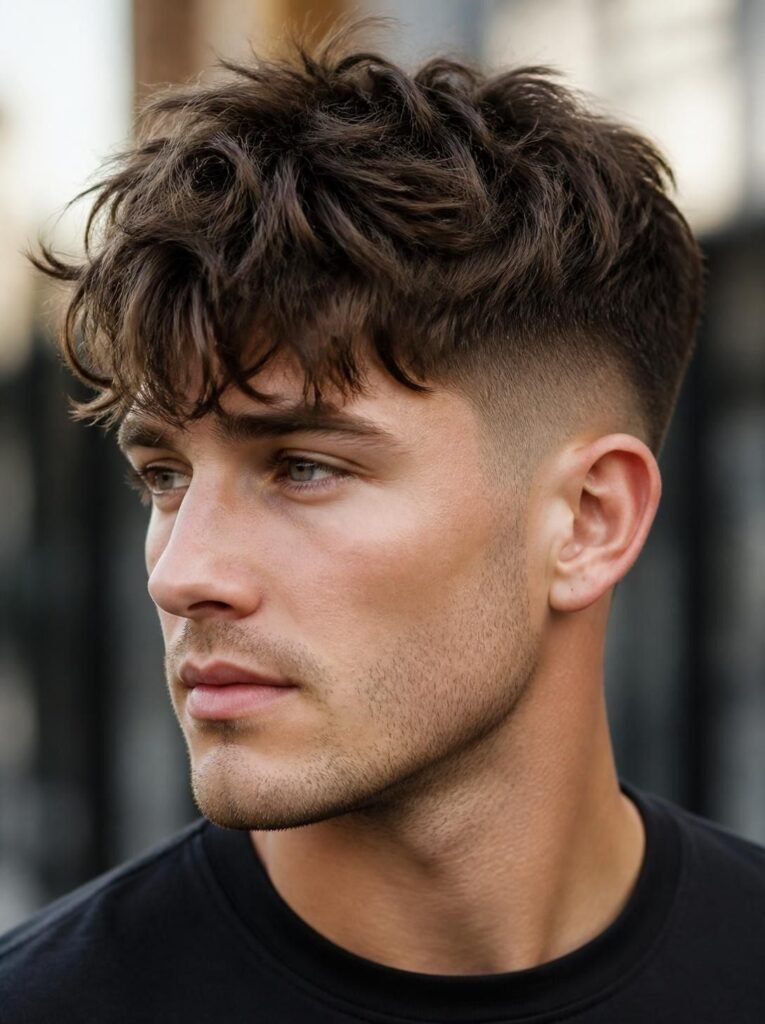
This cut pairs a layered, tousled top with faded sides. A low, mid, or skin fade removes bulk around the ears, which keeps thick hair from ballooning outward. It is a sharp option for a work setting where you still want personality. Plan on a refresh every 3 to 4 weeks to keep the fade clean.
7. Shag with Taper
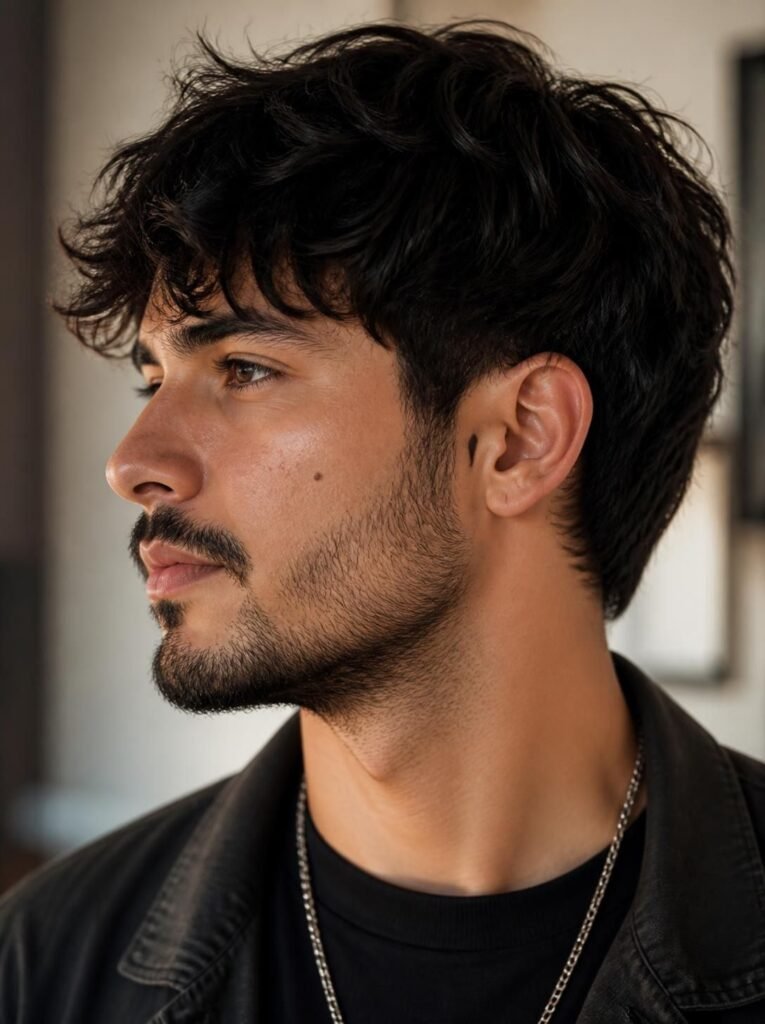
A taper is gentler than a fade. The hair gets gradually shorter at the sideburns and neckline but never reaches skin. The result is a neat outline around a messy top. It also grows out gracefully, which makes it ideal if you dislike frequent barber visits.
8. Curly Shag
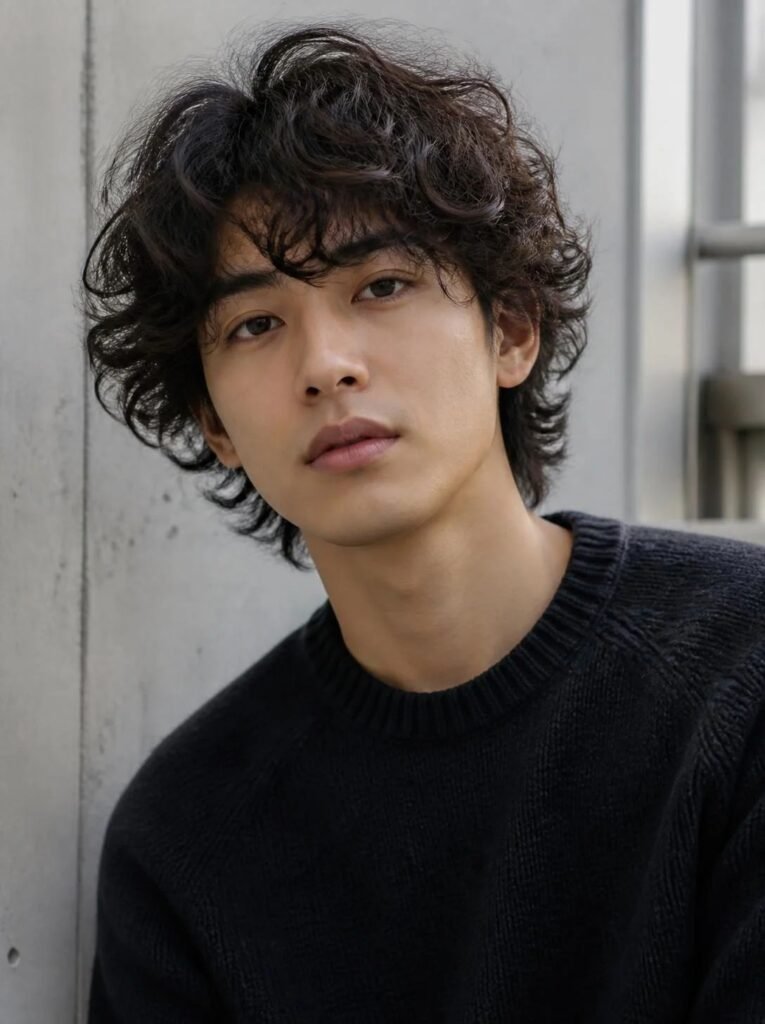
Curly hair and layers are a natural match, but technique matters. Ask for a dry cut or a cut that follows your curl pattern, because curls spring up once they dry. Avoid thinning shears, which cause frizz. Use curl cream on wet hair and diffuse on low heat.
9. Wavy Shag
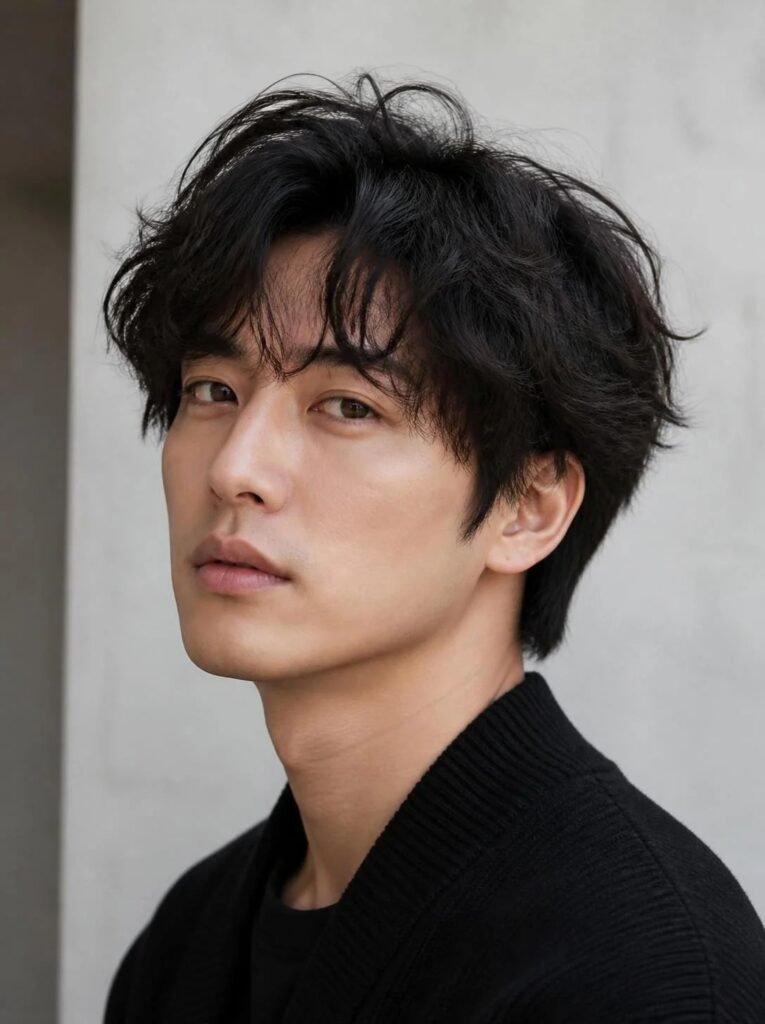
Waves make this the easiest version to wear. The layers follow your natural bend, so the cut looks styled even when it is not. Air dry with a little sea salt spray, then shake it out. Keep the fringe slightly longer to balance the volume at the crown.
10. Shag Haircut for Straight Hair
Straight hair can look flat in a shag, so the layers need to be more visible. Ask for point cutting and some razor work on the ends to create separation. Shorter crown layers help with lift. Blow dry the roots upward and finish with a texturizing spray.
11. Choppy Shag
A choppy shag uses bold, uneven layers cut with the tips of the scissors. It looks edgy and a little undone. Fine hair can struggle with too much choppiness, so keep the layers controlled if your hair is thin. A bit of matte clay defines each piece.
12. Textured Shag
Here the texture comes from the cut itself, using techniques such as slide cutting and point cutting. The finish is soft and broken instead of blunt. It works on most hair types and needs little product. Work a small amount of matte paste through dry hair.
13. Messy Shag
The messy shag is the bedhead cut. It is meant to look better the less you fuss with it. Rough dry, skip the brush, and tousle with your fingers. It suits guys who want a cool look with five minutes or less in front of the mirror.
14. Shaggy Mullet
This style mixes shaggy layers with extra length at the back. The sides are usually tapered, and the nape stays long. It is softer than a classic mullet because the layers blend rather than separate sharply. Ask your barber to keep the transition smooth. It works best on wavy or thick hair that can carry the length.
15. Shaggy Wolf Cut
The shaggy wolf cut stacks short, choppy layers at the crown over a longer back. It has more drama and volume than a standard shag. It needs a skilled barber, because the disconnection between layers has to look intentional. Texture clay gives it grip and shape.
16. Curtain Shag
In this version the fringe parts in the middle or slightly off center and falls to each side like curtains. It softens strong jawlines and balances a high forehead. It also works well for men who wear glasses. Use a small round brush while blow drying to train the fringe outward.
17. Korean Shag
Inspired by K-pop and Korean street style, this cut is lighter and airier than a Western shag. Expect soft, see through bangs, gentle layers, and a smooth, glossy finish. Many men pair it with a light perm for body. Use a lightweight cream and avoid heavy products that weigh it down.
18. 70s Rock Shag
Go longer and more feathered here. The sides cover the ears, the fringe flicks away from the face, and sideburns can stay full. Think vintage rock energy. Blow dry the sides back and use a light volumizing mousse. This style needs patience to grow, so start with a medium shag.
19. Shag with Bangs
Adding bangs gives the cut a clear focal point. A full fringe looks bold, a side swept fringe looks relaxed, and a wispy fringe looks soft. Aim for brow length. If you have a strong cowlick at the hairline, tell your barber before the cut so the bangs do not split or stand up.
20. Shag with Beard
A layered cut and a beard look balanced when the proportions are right. Keep the beard neatly shaped and let the hair carry the texture. If your hair is long, a shorter or faded beard prevents the face from looking too busy. Ask your barber to shape both in one appointment so the lines connect cleanly at the sideburns.
21. Thick Hair Shag
Thick hair needs careful weight removal or it balloons outward. Ask your barber to carve out bulk from underneath and inside the cut instead of thinning the surface, which can cause frizz. A well cut shag makes thick hair easier to manage, not harder.
22. Fine Hair Shag
Fine hair benefits from fewer, longer layers and a fuller perimeter so the ends do not look wispy. Too much layering strips away density. Use a volumizing mousse at the roots and avoid heavy waxes. A shorter length usually looks thicker.
23. Surfer Shag
This is the beachy, sun kissed version. It sits at medium length with loose waves and a relaxed fringe. Sea salt spray gives it texture, but salt can dry out hair, so rinse and condition after swimming. It is perfect for summer and for anyone who likes air drying.
24. Shaggy Crop
The shaggy crop keeps everything short, with textured layers on top, a short fringe, and tight sides. It is a low maintenance option that still has attitude. It works well on straight hair, and a light clay gives it definition.
25. Shaggy Undercut
This one pairs a long, messy top with sides clipped very short. The contrast is dramatic, and the top can be styled loose or tied back. Because the clipped sides grow out quickly, plan on trims every 3 to 4 weeks to keep the lines sharp.
Shag vs Wolf Cut vs Mullet: What’s the Difference?
These three cuts share DNA, which is why they get confused. The shag blends layers softly. The wolf cut disconnects them for more drama. The mullet keeps the sides short and the back long.
| Feature | Shag | Wolf Cut | Mullet |
| Layer style | Soft and blended | Short, choppy crown layers | Short front and sides, long back |
| Face framing | Heavy fringe and side layers | Shorter, sharper | Minimal |
| Back length | Even and moderate | Longer, often wispy | Clearly long |
| Typical trim | Every 6 to 10 weeks | Every 6 to 8 weeks | Every 4 to 6 weeks |
| Best for | First time layered cuts | Wavy, thick hair and bold looks | Confident, high contrast style |
Think of it as a scale. The shag is the softest, the wolf cut sits in the middle, and the mullet is the boldest. A shaggy mullet lands between the wolf cut and the mullet.
If you are unsure, start with a shag. It grows out better than the other two, and your barber can push the proportions toward wolf cut territory at your next visit.
How to Ask Your Barber for a Shag Haircut?
Clear communication is the difference between a great shag and a disappointing one. Follow these steps:
- Name the variation and the era. Phrases like “modern shag,” “70s shag,” “curtain shag,” or “shaggy crop” narrow things down quickly.
- Bring two or three reference photos. Choose pictures of people with a similar hair texture and face shape to yours. Point out what you like and what you do not.
- Request specific techniques. Ask for point cutting, razor work, and long internal layers to get the broken, feathered finish.
- State your length. Use real measurements, such as “keep the fringe at brow level” or “layers around two to three inches at the crown.”
- Describe the sides. Say whether you want them natural, tapered, or faded.
- Share your routine. Tell your barber how much time you spend styling and which products you use.
A simple script works well: “I want a modern medium shag with choppy layers on top, a soft fringe at brow length, and a natural taper at the neckline.” That gives your barber enough detail to start on the first visit.
What Goes Wrong with Shaggy Haircuts?
Most bad shags come from a handful of repeat mistakes. Knowing them helps you avoid them.
- Missing structure. Long hair with no layers is not a shag. It just looks overgrown.
- Too much thinning. Heavy use of thinning shears can leave frizzy, weak ends.
- The wrong fringe. A fringe that fights your hairline or face shape ruins the whole look. Cowlicks need special attention.
- Too much bulk at the sides. Thick hair without weight removal makes the head look wide.
- Heavy products. Thick waxes and gels flatten layers and kill movement.
- Ignoring hair type. Fine hair needs gentler layering, and curly hair needs a barber who understands shrinkage.
- Skipping trims. Layers lose their shape as they grow out, and the cut slowly turns into a shapeless mop.
Here is a quick test in the mirror. Does the fringe suit your face? Are the sides carrying too much weight? Does your hair still move when you turn your head? If any answer is no, tell your barber at the next visit.
How Often Should You Trim a Shag Haircut?
Most shaggy haircuts for men need a trim every 6 to 8 weeks. The exact timing depends on length and style.
- Short shag: every 4 to 6 weeks
- Medium shag: every 6 to 8 weeks
- Long shag: every 8 to 10 weeks
- Shag with fade or undercut: every 3 to 4 weeks
Signs it is time for a trim include a fringe that keeps poking your eyes, layers that look shapeless, or ends that feel dry and split. If only the crown looks flat while the rest still looks good, ask for a crown layer refresh instead of a full reshape.
FAQs About Shaggy Haircuts for Men
Should you wash your hair before a shag haircut appointment?
Yes, arrive with clean, product free hair so your barber can see your real texture and density.
Can a barber fix a bad shag without cutting it all short?
Often yes. A skilled barber can rebalance layers, soften the fringe, and remove bulk, though very short layers still need time to grow.
Does a shag haircut work with glasses?
Yes. Keep the fringe clear of the frames and ask for shorter layers around the ears. A curtain shag is especially glasses friendly.
Can you tie a shag back for sports or the gym?
Medium and long shags can be tied back with a soft tie, but shorter layers will fall out, so use a headband to hold them.
Can you perm straight hair to create shag texture?
Yes. Ask for a loose body wave, and book the perm before the cut so your barber can layer around the new pattern.
Final Thoughts
Shaggy haircuts for men have lasted because they are flexible. You can wear one short or long, faded or natural, polished or messy. The key is a barber who understands layers and a clear request that matches your hair type and face shape.
Pick one or two styles from this list, save your reference photos, and use the barber script above. With regular trims and a light touch of product, a good shag looks effortless every day.

Liam Joseph Miller is a fashion writer and content creator who enjoys exploring the latest fashion trends, outfit ideas, hairstyles, and styling tips. He focuses on creating simple, useful, and easy-to-read content for readers who want fresh inspiration for their personal style.
