


Mid fade haircuts for men remain a versatile choice in 2026 because they balance clean sides with enough length on top to express personal style. Whether you prefer a classic business haircut, a textured crop, a curly top, or a bold modern mullet, a mid fade can create a sharp and balanced appearance.
The defining feature is the fade’s starting point, usually around the temples and middle of the sides. The hair gradually becomes shorter toward the ears and neckline. You can customize the finish with a skin fade, a softer taper, or a more dramatic shape.
This guide covers 26 mid fade haircut styles, including options for straight, wavy, curly, and coily hair. You will also learn how to choose the right variation, what to tell your barber, and how to keep your haircut looking fresh between appointments.
What Are the Best 26 Mid Fade Haircut Styles?
The best mid fade depends on your hair texture, preferred top length, face shape, and daily styling routine. Here are 26 styles worth considering.
1. Classic Mid Fade
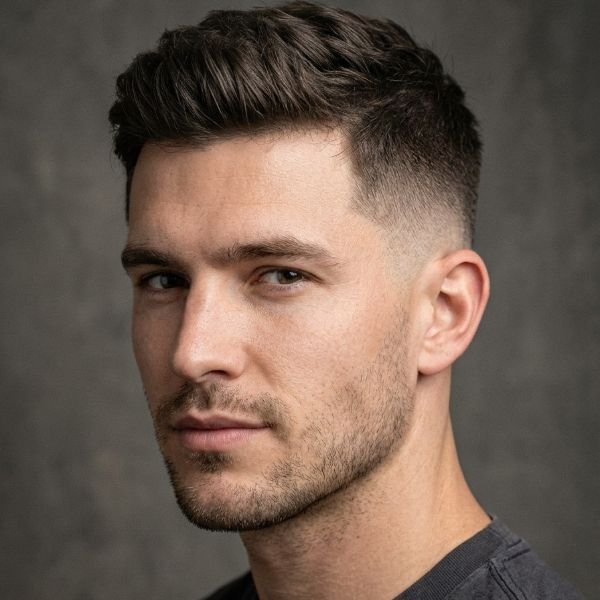
The classic mid fade features a gradual blend around the temples and sides, with a clean finish near the ears. It works with short, medium, or longer hair on top.
Choose this versatile option if you want a modern haircut that suits casual outfits and professional settings. A natural finish keeps it understated, while a little matte paste adds definition.
2. Mid Skin Fade
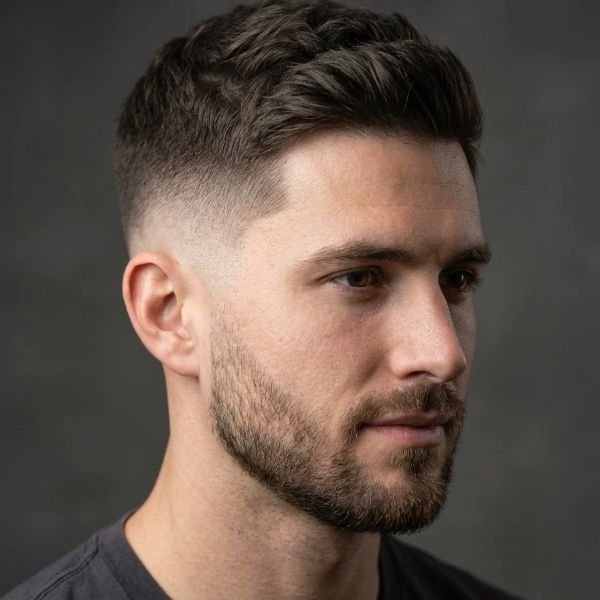
A mid skin fade blends the sides down to bare skin around the middle of the head. The sharp contrast makes the hair on top appear more prominent.
Pair it with a textured crop, curls, or a brushed-back style. This variation looks especially crisp when freshly cut, but visible regrowth means it often needs more frequent touch-ups.
3. Mid Taper Fade
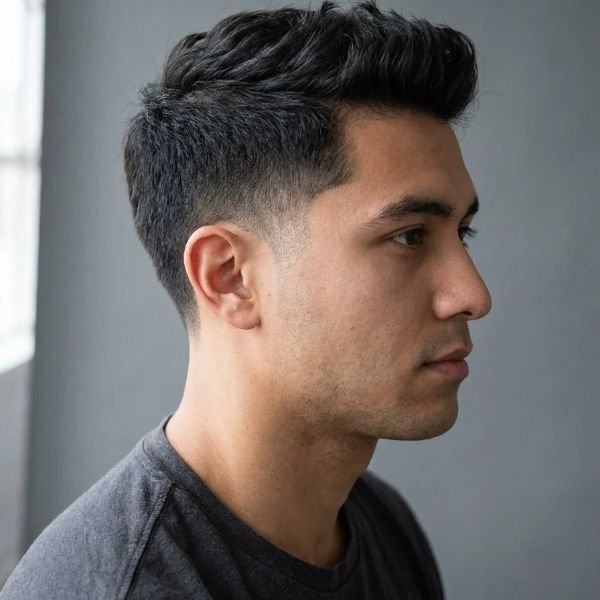
A mid taper fade creates a more gradual, conservative finish, depending on how your barber interprets the request. Traditional tapers usually concentrate the shortening around the temples and neckline, while a mid fade removes more hair across the sides.
Ask for a mid taper if you prefer a softer outline and less exposed scalp. Confirm the exact shape with your barber because terminology varies between barbershops.
4. Mid Drop Fade
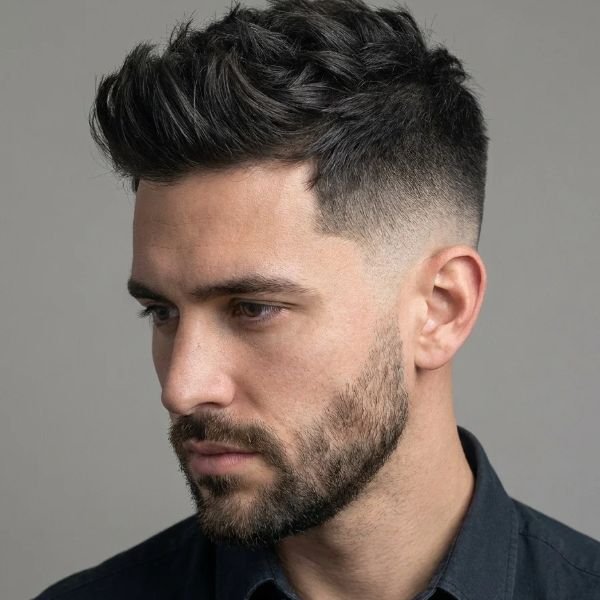
The mid drop fade curves downward behind the ears toward the back of the head. This creates a rounded silhouette rather than a straight fade line.
It works particularly well with curly tops, textured crops, and modern mullets. The curved shape can complement the natural contours of your head.
5. Mid Burst Fade
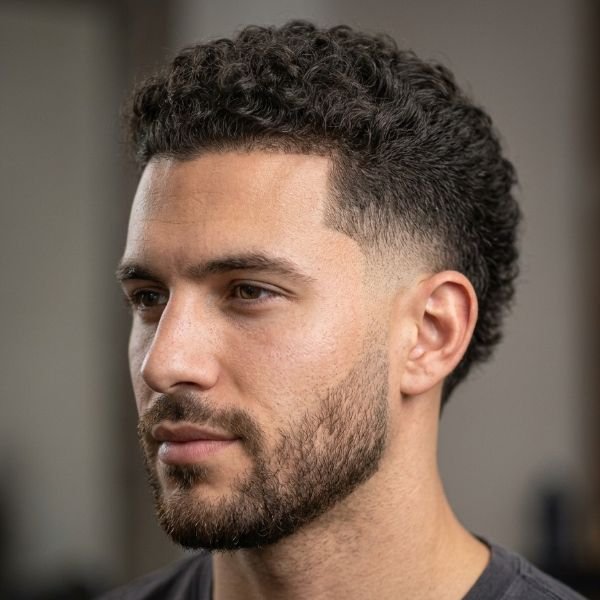
A mid burst fade creates a semicircular blend around the ears while leaving more length toward the back. It differs from a standard mid fade, which generally blends more evenly across the sides.
Choose this style for a curly faux hawk, a short mohawk, or a modern mullet. It offers a more distinctive profile without requiring an elaborate top.
6. Mid Temp Fade
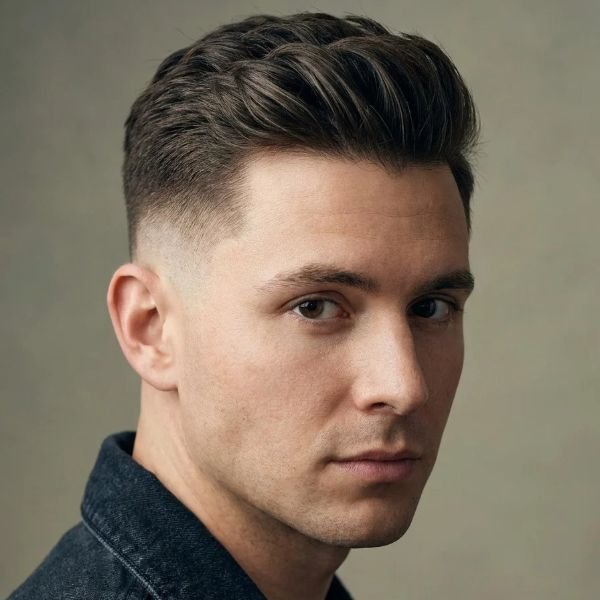
The mid temp fade focuses on the temple area and around the sideburns. Its exact appearance depends on how far the blend extends toward the back.
This option works well with line-ups, short curls, waves, and textured hairstyles. Ask your barber whether you want the fade restricted to the temples or extended farther around the head.
7. Mid Fade with Curly Hair
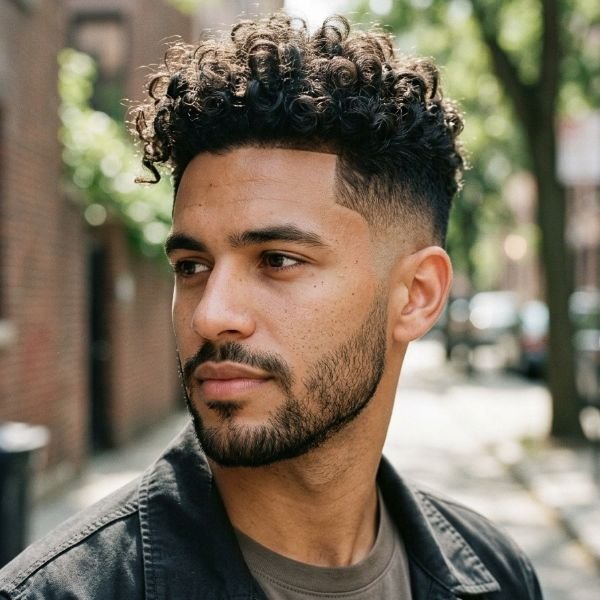
A mid fade with curly hair keeps the natural curl pattern visible on top while reducing bulk along the sides. The contrast creates a defined silhouette without requiring straightening.
Use a lightweight curl cream to improve definition and reduce frizz. Leave enough length for your curls to form naturally, and discuss shrinkage with your barber before cutting.
8. Mid Fade with Wavy Hair
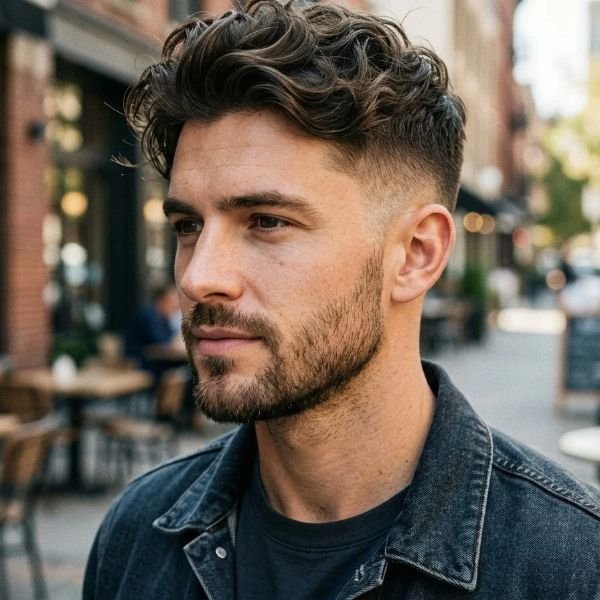
Wavy hair adds natural movement to a mid fade. A medium-length top can be swept backward, worn loosely to one side, or styled into a textured fringe.
Apply a small amount of sea salt spray or lightweight styling cream. Avoid heavy products if you want your waves to retain their movement.
9. Mid Fade with Straight Hair
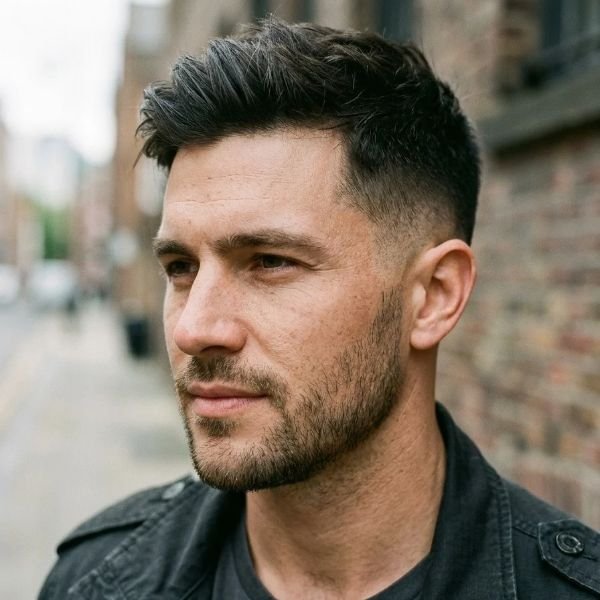
Straight hair creates clean lines and makes the transition between the top and sides easy to see. You can pair it with a side part, a quiff, a comb over, or a simple textured finish.
If your hair is fine, ask your barber to preserve enough weight on top. A matte product can add texture without making the hair look greasy or flat.
10. Mid Fade Textured Crop
The textured crop combines short, choppy layers on top with neatly faded sides. The finish looks relaxed and modern rather than overly polished.
This is a practical choice for men who prefer short hair and minimal daily styling. Work a small amount of matte clay through the top to emphasize the texture.
11. Mid Fade French Crop
A French crop features a short fringe at the front, usually paired with a relatively compact top. The mid fade adds definition to the sides and keeps the overall shape clean.
It can work well for straight, wavy, and some curly hair types. If your forehead is a styling concern, experiment with the fringe length and shape instead of relying on the fade alone.
12. Mid Fade Pompadour
The mid fade pompadour pairs closely trimmed sides with a voluminous top swept upward and backward. The contrast creates a bold, structured appearance.
You will generally need enough length to build height and a blow-dryer to direct the hair. Use a lightweight pre-styler followed by a suitable pomade or styling cream.
13. Mid Fade Quiff
A quiff lifts the front of the hair while allowing the rest of the top to retain natural movement. Unlike a traditional pompadour, it can look softer and less sculpted.
This style suits men who enjoy moderate volume without committing to a highly polished finish. Blow-dry the front upward and use a small amount of matte paste to hold its shape.
14. Mid Fade Side Part
The mid fade side part combines a defined parting with clean sides and a neatly styled top. It is a strong choice for business settings, weddings, and everyday wear.
Ask your barber to follow your natural parting where possible. A small amount of pomade or cream can maintain the shape without making the hair look stiff.
15. Mid Fade Comb Over
The comb over directs the longer top across the head, creating a controlled and balanced appearance. The mid fade removes excess bulk from the sides.
This combination works with straight and wavy hair, including some thinner hair types. Keep the top textured rather than excessively flat if you want a fuller-looking finish.
16. Mid Fade Slick Back
The slick back pushes the top hair away from the forehead. Paired with a mid fade, it creates a clean contrast between the styled top and shorter sides.
Medium-length hair generally provides the most flexibility. Use a comb for a polished finish or your fingers for a more relaxed appearance.
17. Mid Fade Brush Back
A brush-back style has more natural separation and movement than a tightly slicked-back haircut. The top can be slightly messy while the faded sides keep the silhouette controlled.
This is a useful choice for thick or wavy hair. A blow-dryer and lightweight styling cream can provide direction without removing natural texture.
18. Mid Fade Hard Part
The mid fade hard part features a shaved line that defines the parting. It adds precision to a side part, comb over, or short textured top.
Remember that the line requires upkeep as the hair grows. Ask your barber to keep it subtle if you want a style that remains appropriate for professional settings.
19. Mid Fade Crew Cut
The crew cut keeps the hair short on top, with slightly more length toward the front in many versions. The mid fade gives the sides a cleaner, more contemporary finish.
It suits men who want a low-effort hairstyle without shaving the entire head. A small amount of styling paste is optional rather than essential.
20. Mid Fade Buzz Cut
A buzz cut uses short, relatively uniform hair on top, while the mid fade creates a graduated transition along the sides. This adds structure to an otherwise simple haircut.
It is one of the easier options to maintain at home between appointments. Discuss top length and fade height first because small differences can noticeably change the final look.
21. Mid Fade with Beard
Combining a mid fade with a beard creates a connected frame around the face. Your barber can blend the sideburn area into the beard for a seamless transition.
The right beard length depends on your preference and facial proportions. Ask for balanced cheek lines and a clean neckline rather than assuming every beard needs sharply defined edges.
22. Mid Fade Faux Hawk
A faux hawk leaves more length through the center of the top and gradually reduces the hair toward the sides. The mid fade makes the central shape stand out.
Unlike a traditional mohawk, it does not require shaving a narrow strip completely away from both sides. Style the center upward with matte clay for a textured finish.
23. Mid Fade Mohawk
A mohawk keeps a more distinct strip of longer hair through the center, with the sides cut significantly shorter. A mid fade can soften the transition while preserving the dramatic shape.
This option suits men who prefer expressive, statement-making haircuts. Discuss how narrow or wide you want the central strip before your barber starts cutting.
24. Mid Fade Modern Mullet
The modern mullet keeps extra length at the back while shortening the sides and maintaining texture on top. A mid fade creates a stronger contrast around the temples and ears.
For a more balanced result, avoid making the back and top look disconnected unless that contrast is intentional. A drop or burst variation can also complement the mullet’s shape.
25. Mid Fade Executive Cut
The executive cut combines a neat, controlled top with a polished mid fade. It can incorporate a side part, a short comb over, or a subtle brushed-back finish.
This style is ideal for men who want a professional appearance without choosing a completely traditional haircut. Keep the top manageable and use a light styling product for natural hold.
26. Mid Fade Side Swept Fringe
The side-swept fringe directs the front hair diagonally across the forehead. The mid fade adds definition around the sides while the fringe introduces movement.
It works with straight, wavy, and suitably shaped curly hair. Ask your barber to tailor the fringe to your natural growth direction so it falls into place more easily.
Who Does a Mid Fade Suit?
A mid fade can suit many men because its height balances a clean outline with visible length on top. The most flattering version depends on individual proportions and hair characteristics, not just face shape.
- Oval faces: Most mid fade variations work well, from a crew cut to a pompadour.
- Round faces: A textured quiff or added height can create a more elongated appearance.
- Square faces: A classic mid fade or short textured crop can complement defined facial angles.
- Long faces: A side-swept fringe or lower-volume top can help balance facial length.
- Curly or coily hair: A mid fade can reduce side bulk while preserving natural texture.
- Fine hair: A shorter textured top can look fuller than a long, flat style.
Hair density, cowlicks, recession, and daily styling habits also matter. Ask your barber to assess your natural hair growth before choosing a specific variation.
How Do You Choose the Right Mid Fade?
Start by deciding how much contrast you want. A mid skin fade exposes the scalp at the bottom, while a softer fade leaves a visible shadow. Then choose a top style that matches your hair texture and routine.
| Your preference | Style to consider |
| Minimal daily styling | Mid fade crew cut |
| Sharp, high contrast | Mid skin fade |
| Natural curls | Mid fade with curly hair |
| Professional appearance | Executive cut or side part |
| Volume and height | Quiff or pompadour |
| Distinctive, modern shape | Burst fade or faux hawk |
| Longer hair at the back | Modern mullet |
Consider the maintenance commitment, too. Skin fades and hard parts need more frequent attention than softer blends and short, uniform tops.
What Should You Tell Your Barber?
Bring a reference photo showing the front, sides, and back whenever possible. Pictures communicate the intended shape more clearly than hairstyle names alone.
Explain these five details:
- Fade height: Say that you want the blend to begin around the temples.
- Bottom finish: Specify bare skin, a very short guard, or a softer shadow.
- Top length: Give a preferred length or show a reference image.
- Blending style: Explain whether you want a gradual transition or stronger contrast.
- Hairline and neckline: Decide whether you prefer natural edges or a sharper outline.
You can say: “I’d like a mid fade starting around my temples, blended smoothly into the top. Keep the top long enough for my chosen style, and leave the bottom at a short shadow rather than bare skin.”
Adjust this wording to match your desired cut. A good barber should confirm the plan before removing significant length.
How Often Should You Get a Mid Fade?
Most men benefit from a touch-up every two to four weeks, depending on how sharp they want the fade to look. A mid skin fade may need attention every one to two weeks, while a softer fade can remain presentable longer.
Your hair growth rate, contrast, and preferred finish affect the schedule. The top may also need trimming at different intervals from the sides.
To maintain your haircut between visits:
- Wash and condition your hair according to your hair type.
- Use a small amount of suitable styling product.
- Avoid attempting complex fade corrections at home without experience.
- Keep your neckline and beard tidy if those areas are part of the style.
What Is the Biggest Mistake Men Make with a Mid Fade?
The biggest mistake is choosing a haircut based only on a photo without considering hair texture, head shape, and styling requirements. A style that looks excellent on thick, straight hair may behave differently on fine or tightly curled hair.
Another common problem is asking for a fade without specifying its height or bottom finish. The result can be much shorter or more dramatic than expected.
Choose a reference that resembles your natural hair, discuss the amount of maintenance you can manage, and ask your barber to preserve enough length for your preferred top style.
FAQ
What is a mid fade haircut?
A mid fade is a haircut in which the sides and back gradually become shorter, with the blend starting around the temples or middle of the head.
Is a mid fade the same as a medium fade?
Yes. Mid fade and medium fade generally refer to the same fade height, although individual barbers may interpret the exact starting point differently.
How long does a mid fade last?
A mid fade usually looks freshest for about two to four weeks. Skin fades may require touch-ups sooner because regrowth becomes more noticeable.
Can curly hair get a mid fade?
Yes. A mid fade works well with curly and coily hair because it reduces bulk on the sides while allowing natural curls to remain visible on top.
What’s the difference between a mid fade and a low fade?
A mid fade begins higher around the temples, creating more contrast on the sides. A low fade starts closer to the ears and generally creates a more subtle transition.
What clipper guard is used for a mid fade?
There is no single guard for every mid fade. A barber may use a zero or short guard at the bottom and gradually blend through longer guards, depending on the desired finish.
Final Thoughts
The best mid fade haircuts for men in 2026 offer a balance of personal style, clean edges, and adaptable top lengths. From a classic mid fade and executive cut to curly crops, pompadours, and modern mullets, there is an option for nearly every preference.
Choose your haircut based on your natural hair texture, the amount of styling you enjoy, and how often you can visit your barber. Bring a clear reference photo, communicate the fade height and top length, and discuss maintenance before the cut begins.
A well-chosen mid fade should work with your hair rather than against it. The goal is not simply to follow a trend, but to find a haircut that looks good and fits your everyday life.
Liam Joseph Miller is a fashion writer and content creator who enjoys exploring the latest fashion trends, outfit ideas, hairstyles, and styling tips. He focuses on creating simple, useful, and easy-to-read content for readers who want fresh inspiration for their personal style.
