


A mid taper fade fringe combines clean tapered sides with longer hair at the front. The fringe usually falls forward toward the forehead. It can be short, textured, wavy, side-swept, or split like a curtain fringe.
The appeal is simple. The sides look neat without removing too much hair from the head. The longer fringe adds movement and personality. This makes the haircut flexible enough for school, work, weekends, and social events.
In 2026, modern fringe cuts are leaning toward natural texture instead of stiff styling. Barbers are also adapting the taper height, fringe length, and texture to the client’s hair type and face shape.
What Is a Mid Taper Fade Fringe Haircut?
A mid taper fade fringe is a men’s haircut with two main elements: a mid-height taper around the sides and neckline, plus longer hair at the front that forms the fringe.
The taper gradually reduces hair around areas such as the temples, sideburns, and neckline. The upper sides usually retain more weight than a traditional full fade. The fringe remains longer and is shaped with scissors to create direction and texture.
The front does not have to be perfectly straight. A modern fringe can have separated pieces, soft layers, a messy finish, or a slight sweep to one side.
Typical fringe lengths range from around 2 to 5 inches, although the ideal length depends on hair texture, density, forehead height, and the desired style. Recent haircut guides also emphasize that the shortest clipper setting and taper height are separate decisions.
Quick characteristics
| Feature | Mid Taper Fade Fringe |
| Sides | Mid-height tapered blend |
| Top | Medium to long |
| Fringe | Usually 2 to 5 inches |
| Finish | Textured, natural, messy, or polished |
| Best textures | Straight, wavy, thick, and curly with adjustments |
| Styling | Low to moderate |
| Overall look | Clean, youthful, modern |
What’s the Difference Between a Mid Fade and a Mid Taper?
The terms sound similar, but they describe different approaches.
A mid fade generally reduces the hair around more of the sides and creates a stronger transition. Depending on the finish, it can go very short or even down to the skin.
A mid taper focuses more specifically on the temples, sideburns, and neckline. More hair can remain through the side panels. This creates a softer silhouette.
| Mid Taper | Mid Fade |
| More conservative | More dramatic |
| Keeps more side weight | Removes more side weight |
| Usually focuses on temples and neckline | Covers a broader side area |
| Softer grow-out | Stronger contrast |
| Works well with relaxed fringes | Creates a sharper overall look |
For a fringe haircut, the mid taper can be a strong choice when you want the fringe to remain the main visual feature. A full fade can compete with the texture and movement of the top.
The exact terminology can vary between barbers, so showing a reference photo is often the safest way to communicate the desired result.
Why Mid Taper Fade Fringe Is So Popular in 2026
The haircut offers a useful balance between clean sides and expressive top styling. You can make it subtle or bold without changing the basic haircut.
Another advantage is versatility. Straight hair can be styled smooth or textured. Wavy hair naturally creates movement. Thick hair can support a fuller fringe, while finer hair can use layering and lightweight products to create separation.
The haircut also fits the current preference for less rigid men’s hairstyles. Instead of making every strand perfectly controlled, modern styling often allows natural movement and imperfect texture.
It is also easy to customize:
- Keep the fringe above the eyebrows for a cleaner look.
- Leave it closer to eyebrow level for more coverage.
- Add point-cut texture for separation.
- Sweep it sideways for a more mature appearance.
- Split it into curtains for a softer finish.
- Use a blowout technique for extra volume.
6 Mid Taper Fade Fringe Styles to Try
1. Short Fringe with Mid Taper Fade
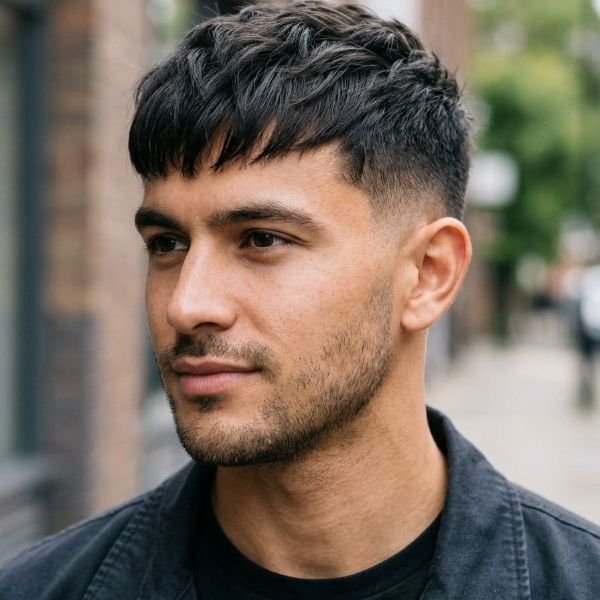
A short fringe sits around or slightly above the eyebrows. It is one of the easiest versions to maintain.
This option works particularly well for men who want the fringe effect without having hair constantly fall into their eyes. Fine to medium hair can benefit from light texture rather than excessive layering.
Best for: Oval and round faces, straight to mildly wavy hair.
2. Curtain Fringe with Mid Taper Fade

The curtain version separates the front around the center and lets both sides fall away from the forehead.
It gives the haircut a softer appearance than a straight forward fringe. Medium or longer top hair works best because the front needs enough length to separate naturally.
Best for: Oval and longer face shapes with medium to thick hair.
3. Side-Swept Fringe with Mid Taper Fade
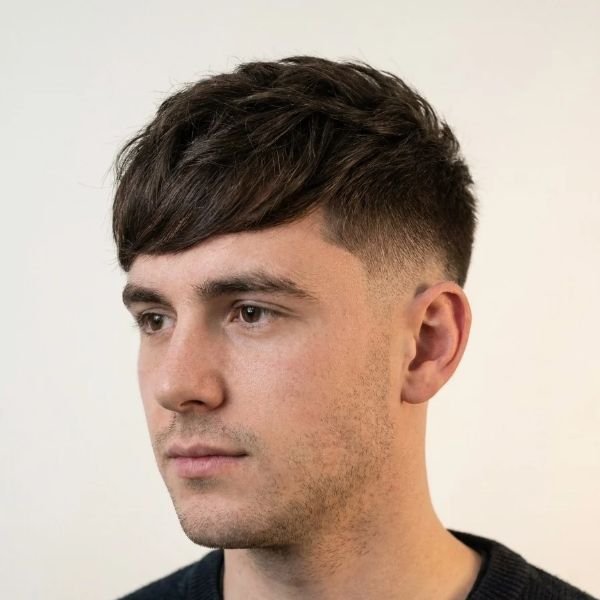
The side-swept fringe moves diagonally across the forehead instead of falling straight down.
It is a useful choice if you want a fringe but prefer a more mature or professional appearance. A lightweight cream can keep the hair flexible without making it greasy.
Best for: Straight or wavy hair and office-friendly styling.
4. Choppy Fringe with Mid Taper Fade
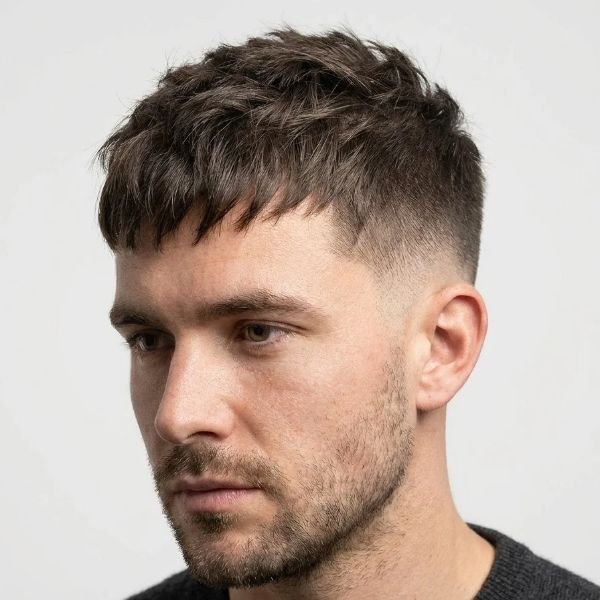
A choppy fringe uses uneven sections and point-cut texture to create separation.
It is one of the most recognizable modern versions because it avoids a heavy, solid block of hair across the forehead. Thick hair often handles this style particularly well.
Best for: Thick, medium, wavy, or naturally textured hair.
5. Fringe with Mid Taper Fade Blowout

This version combines a forward fringe with additional volume created by blow-drying.
Instead of pressing the front flat, use a dryer to direct the hair forward and slightly upward. The result has more lift and movement.
Best for: Thick, wavy, or curly hair that can hold volume.
6. Wavy Fringe with Mid Taper Fade
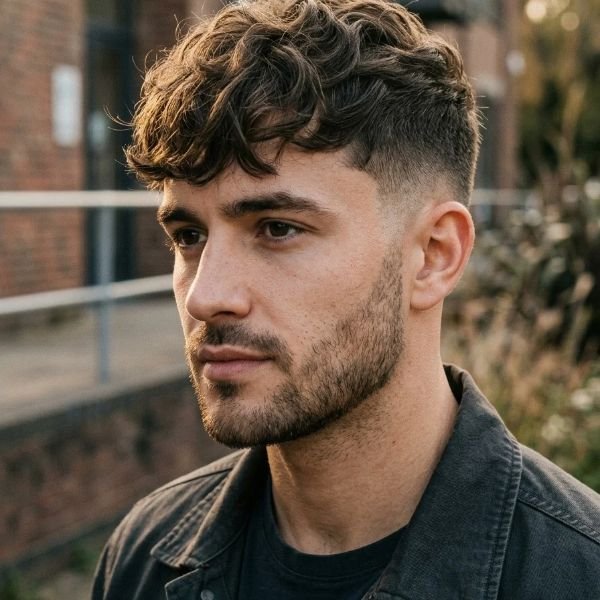
Natural waves can make a fringe look fuller without requiring heavy products.
The key is not to brush all the texture away. Use a lightweight styling cream or mousse and allow the waves to form naturally while drying.
Best for: Wavy and curly hair.
Common Mid Taper Fade Fringe Mistakes to Avoid
1. Cutting the Fringe Too Short
Cutting too much length from the front can remove the defining feature of the haircut.
If you are unsure about the ideal length, start slightly longer. Your barber can always remove more later.
2. Letting the Barber Guard-Cut the Fringe
The fringe usually benefits from scissor work and controlled texturing.
A clipper can make the front look overly uniform. Scissor cutting allows the barber to control individual sections, weight, and movement.
3. Skipping Heat Protection When Blow-Drying
Frequent high heat can make hair dry and brittle.
Use a heat protectant when blow-drying regularly. Keep the dryer moving rather than holding intense heat against one section for too long.
4. Choosing a Full Mid Fade Instead of a Mid Taper
A full fade creates more contrast and removes more side weight.
If your goal is a softer fringe haircut, clearly say that you want a mid taper, not a full mid fade.
5. Waiting Too Long Between Fringe Trims
The fringe grows into the eyes quickly because it is the most visible part of the haircut.
A small trim can maintain the shape without requiring a complete haircut every time.
6. Using Heavy Wax on Textured Fringes
Heavy wax can clump individual strands together.
For a modern textured fringe, lightweight matte clay, styling cream, paste, mousse, or sea salt spray can be more suitable depending on your hair type.
How to Style a Mid Taper Fade Fringe
The best routine depends on your hair texture and the finish you want.
Daily Styling Routine
- Start with clean, towel-dried hair.
- Apply a small amount of lightweight styling product.
- Comb or brush the fringe in your preferred direction.
- Blow-dry while shaping the front.
- Use your fingers to separate textured sections.
- Finish with a small amount of matte product if extra control is needed.
For a messy fringe, use your fingers instead of a comb during the final step. For a side-swept fringe, direct the airflow diagonally.
Products That Work Best
| Hair type | Useful product |
| Fine hair | Lightweight mousse or texture spray |
| Straight hair | Matte paste or styling cream |
| Thick hair | Matte clay or stronger cream |
| Wavy hair | Lightweight cream or mousse |
| Curly hair | Curl cream or light styling cream |
| Dry hair | Conditioning cream with light hold |
Avoid using more product simply because your hair is difficult to control. Start with a small amount and build gradually.
How Often Should You Trim the Fringe?
Most people can maintain the fringe shape with a trim every 2 to 4 weeks, depending on growth speed and preferred length.
If the hair repeatedly reaches your eyes, you may need a small front trim sooner than the rest of the haircut. Current fringe guides commonly recommend refreshing these cuts around the two-to-three-week range when a sharper shape is desired.
Which Face Shape Suits a Tapered Fringe?
A tapered fringe can work with many face shapes. The important factor is adjusting the fringe length, direction, and volume.
Oval Face
An oval face is highly adaptable. Almost every fringe variation can work.
You can experiment with short, textured, curtain, or side-swept versions.
Round Face
Add some vertical movement rather than creating excessive width.
A slightly longer, textured fringe and controlled sides can help create a more balanced appearance.
Square Face
A textured fringe can soften the strong angles of a square jaw.
Avoid making the front excessively blunt if you want a less rigid appearance.
Long Face
Be careful with excessive height on top. Too much vertical volume can visually lengthen the face.
A fuller forward fringe can provide more balance by reducing the amount of visible forehead.
Heart-Shaped Face
A tapered fringe can work well when some side weight is retained.
Avoid making the sides extremely narrow if your chin is already visually slim.
Face shape should be treated as a styling guide rather than a strict rule. Hair density, texture, forehead size, and personal preference can be equally important.
Best Mid Taper Fade Fringe Styles by Age Group
Teenagers
Teenagers can experiment with choppy, messy, wavy, and curtain fringes.
A textured fringe is especially practical because it does not need to look perfectly controlled.
Young Men
Young men have the widest range of options.
Try a side-swept fringe for a cleaner appearance, a choppy fringe for a casual look, or a curtain fringe for a softer aesthetic.
Professional Men
For professional environments, keep the taper clean and the fringe controlled.
A side-swept fringe or shorter textured fringe is usually easier to pair with business-casual and formal clothing than an extremely messy version.
Does a Tapered Fringe Make You Look Younger or Older?
It can do either.
A textured, forward fringe often creates a younger and more casual appearance. A smooth side-swept fringe can look more mature and polished.
Two factors matter most:
- Texture: More texture usually creates a relaxed, youthful effect.
- Finish: A neat, controlled fringe looks more refined.
The taper also matters. A conservative taper can appear understated, while a very tight finish creates stronger contrast and a more fashion-forward appearance.
How to Ask Your Barber for a Mid Taper Fade Fringe
Clear communication can make a major difference.
Do not simply say, “Give me a fringe.” Explain the taper height, front length, texture, and shortest finish.
Key Phrases to Use With Your Barber
You can say:
- “I want a mid taper around the temples and neckline.”
- “Keep the fringe longer and cut it with scissors.”
- “Leave enough length in front for texture.”
- “Point-cut the fringe instead of making it completely blunt.”
- “Keep the taper blended rather than taking the fade too high.”
- “I want the fringe to sit naturally over my forehead.”
A reference photo is also useful because haircut terminology can differ between barbers.
Choosing the Right Length and Guard Number
Guard numbers are not universal measurements, so they should be treated as a starting point.
For the taper, you might discuss:
| Desired finish | Possible starting point |
| Soft taper | Around #2 to #3 |
| Tighter taper | Around #1 to #1.5 |
| Very close finish | Zero or skin finish |
| Fringe | Usually scissor-cut |
For the top, 2 to 5 inches gives enough room for several fringe variations. Longer hair offers more styling choices, while shorter hair is easier to maintain.
Common Barber Mistakes to Mention
Tell your barber if you want to avoid:
- Taking too much weight from the fringe.
- Starting the taper too high.
- Making the fringe completely blunt.
- Creating a visible transition line.
- Cutting the top with a clipper when you want scissor texture.
- Removing too much side weight.
- Making the taper much tighter than the reference photo.
Frequently Asked Questions
What is a mid taper fade fringe?
It is a men’s haircut that combines a mid-height taper around the sides and neckline with longer hair at the front that forms a fringe.
How long should a mid taper fade fringe be?
A common starting range is about 2 to 5 inches on top, but the ideal length depends on hair texture, density, face shape, and styling preference.
Is a mid taper better than a mid fade for a fringe?
A mid taper is often better when you want a softer, more natural silhouette, while a mid fade creates stronger contrast around the sides.
Does a mid taper fade fringe work with straight hair?
Yes. Straight hair can work very well when the fringe has enough length and is given texture through scissor cutting and styling.
Is a mid taper fade fringe good for thick hair?
Yes. Thick hair can provide excellent volume and separation, although some weight removal may be needed to prevent the fringe from becoming too heavy.
How often should I get a mid taper fade fringe trimmed?
A refresh every 2 to 4 weeks is a practical starting point, with the fringe sometimes needing a smaller trim sooner as it grows.
Can a mid taper fade fringe suit a professional workplace?
Yes. Choose a controlled taper with a shorter or side-swept fringe and avoid excessive texture or extreme volume for a more professional appearance.
Conclusion
The mid taper fade fringe is one of the most adaptable modern men’s haircuts because it combines clean perimeter work with a flexible top. The taper keeps the sides and neckline controlled while the fringe creates the main character of the style.
The most important decisions are not just the fade height. Fringe length, hair texture, density, face shape, styling habits, and desired finish all affect the final result. A short fringe can be low maintenance, while a longer textured fringe gives you more ways to style the hair.
For the best result, tell your barber exactly where you want the taper, how much length you want to keep at the front, and whether you prefer texture, curtains, a side sweep, waves, or a blowout. When those details are clear, the haircut becomes much easier to customize.

Liam Joseph Miller is a fashion writer and content creator who enjoys exploring the latest fashion trends, outfit ideas, hairstyles, and styling tips. He focuses on creating simple, useful, and easy-to-read content for readers who want fresh inspiration for their personal style.
