


Finding the right haircut can make a significant difference when you have thin straight hair. Fine strands often fall flat, lack natural volume, and reveal more of the scalp under bright lighting. However, the right haircut can create texture, improve shape, and make your hair appear fuller without complicated styling.
The best haircuts for men with thin straight hair usually combine controlled length, textured layers, and carefully blended sides. Popular choices include the textured crop, French crop, crew cut, Ivy League, and low taper fade. Your ideal style depends on your hair density, hairline, face shape, and daily grooming routine.
This guide explores 27 stylish haircuts for men with thin straight hair in 2026. You will also learn how to style fine hair, choose suitable products, avoid common haircut mistakes, and communicate effectively with your barber.
What Makes a Haircut Work for Thin Straight Hair?
A good haircut for thin straight hair creates the appearance of fullness without making the hair look heavy or flat. The key is to balance length, texture, and shape.
Thin hair and fine hair are not exactly the same. Fine hair describes the diameter of individual strands. Thin hair can refer to lower overall hair density. Some men have fine strands but plenty of hair, while others have visibly thinning areas.
Straight hair can be particularly challenging because it naturally falls in one direction. Without suitable layering or styling, the strands may sit close together and expose the scalp.
Consider these important factors when choosing your haircut:
- Length: Short to medium-short hair is often easier to lift and style. However, extremely short hair may expose more scalp if your density is low.
- Texture: Choppy layers and point cutting can create separation and movement.
- Side profile: Tapered sides or a fade can make the overall shape look cleaner.
- Hairline: A forward fringe can soften a receding hairline, while a short buzz cut can create a deliberate, uniform appearance.
- Maintenance: Choose a style that fits the time you can spend styling your hair each morning.
The best haircut is not necessarily the shortest one. It is the cut that works with your natural density and growth pattern.
27 Best Haircuts for Men With Thin Straight Hair
These hairstyles range from simple, low-maintenance cuts to modern styles with more height and texture. Choose according to your hairline, face shape, and preferred styling effort.
1. Textured Crop
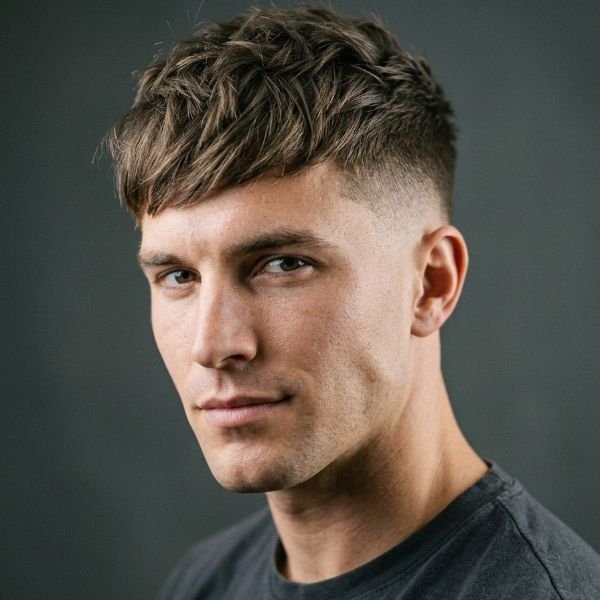
The textured crop is an excellent option for men with fine, straight hair. Short, uneven layers create separation, preventing the top from looking like one flat surface.
Pair it with a low fade or taper for a modern finish. Apply a small amount of matte clay and use your fingers to define individual sections. It works particularly well for men who want a stylish haircut without spending much time styling.
2. French Crop
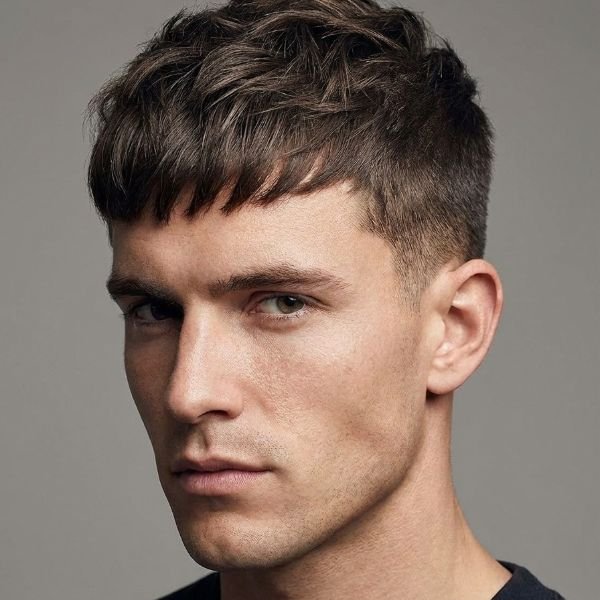
The French crop features a short top and a forward-facing fringe. This fringe can help soften a high forehead or make a receding hairline less noticeable.
Ask your barber for light texture rather than a thick, blunt fringe. Keeping the sides tapered makes the haircut look balanced and easy to maintain.
3. Buzz Cut
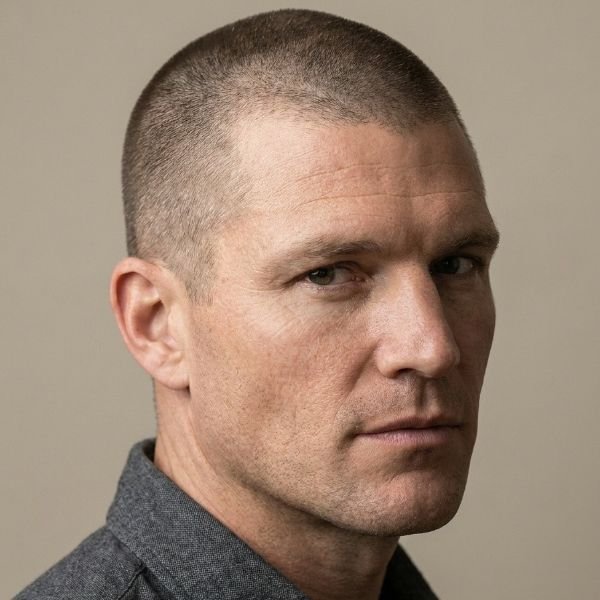
A buzz cut offers a clean, masculine appearance with minimal daily maintenance. Its uniform length can reduce the contrast between areas with different hair densities.
It is especially useful when you prefer a simple routine or have noticeable thinning. Ask your barber to select a clipper guard that suits your scalp coverage and head shape.
4. Crew Cut
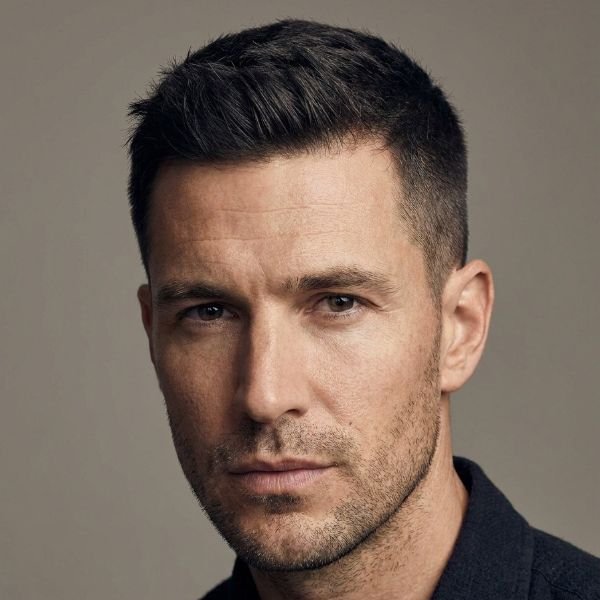
The crew cut keeps the sides short while leaving slightly more length on top. This creates a neat silhouette suitable for work, casual outfits, and formal occasions.
A little texture on top helps fine strands appear more separated. Use a lightweight styling product if you want additional definition without a greasy finish.
5. Caesar Cut
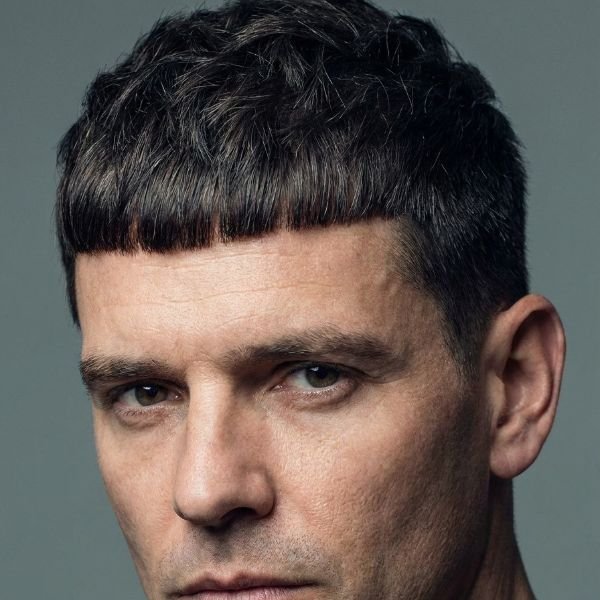
The Caesar cut features a short top with a small fringe brushed forward. It can work well for men with fine hair because the compact shape requires relatively little styling.
This haircut is particularly useful when you want to soften the appearance of a receding front hairline. A subtle taper keeps the finish modern rather than overly traditional.
6. Ivy League
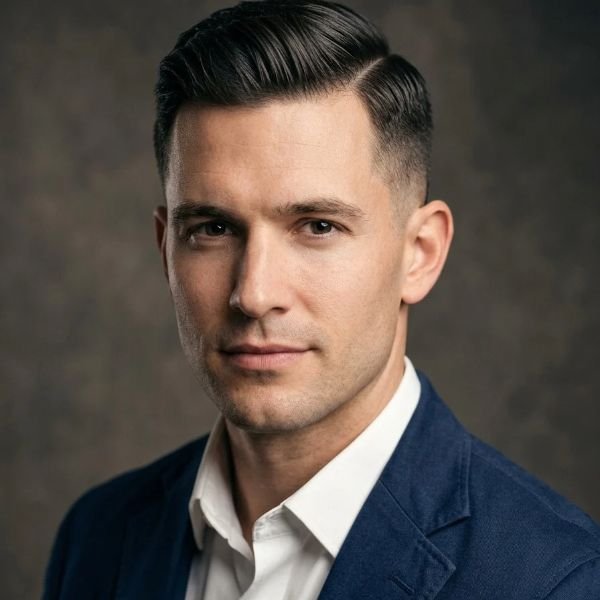
The Ivy League is a refined variation of the crew cut with enough length to create a side part or a gentle lift at the front.
It suits professional settings and men who prefer classic grooming. Use a lightweight cream or matte paste to maintain natural movement without flattening the top.
7. Side Part With Low Taper
A side part with a low taper combines a clean outline with a polished top. It works especially well when your hair still has reasonable density around the parting.
Avoid creating an excessively wide or sharply shaved part if the scalp already shows through. A natural part with light texture often looks fuller and more balanced.
8. Comb-Over Fade
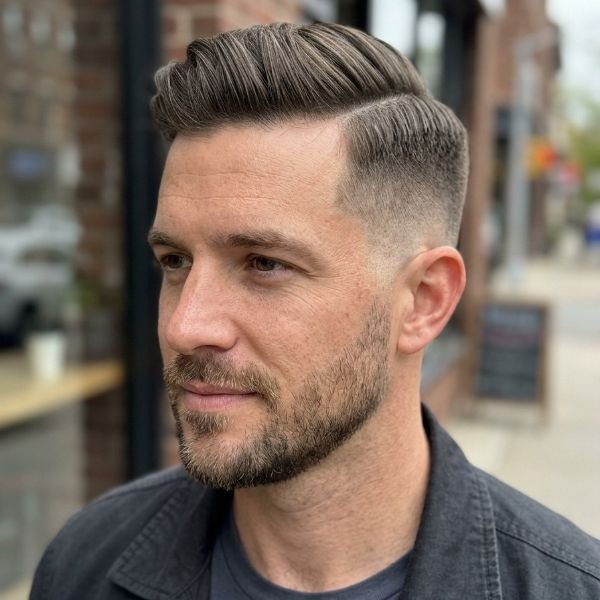
The comb-over fade directs the top toward one side while gradually shortening the sides. It creates a structured look that can suit office wear and everyday styling.
For fine hair, avoid combing the top tightly against the scalp. Use a lightweight volumizing product and lift the roots slightly before arranging the hair into place.
9. Short Quiff
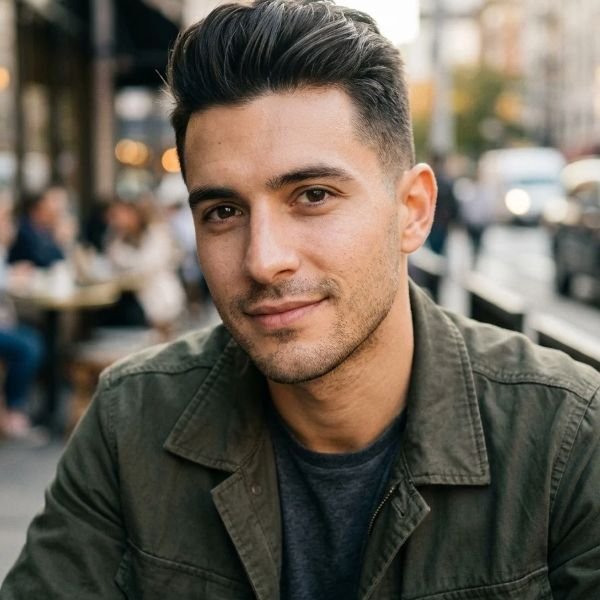
The short quiff adds height at the front without requiring the length of a traditional pompadour. It is a useful option for men who want a little more volume.
Apply volumizing mousse to damp hair and blow-dry the front upward. Finish with a small amount of matte paste to keep the shape natural.
10. Low Fade With Textured Top
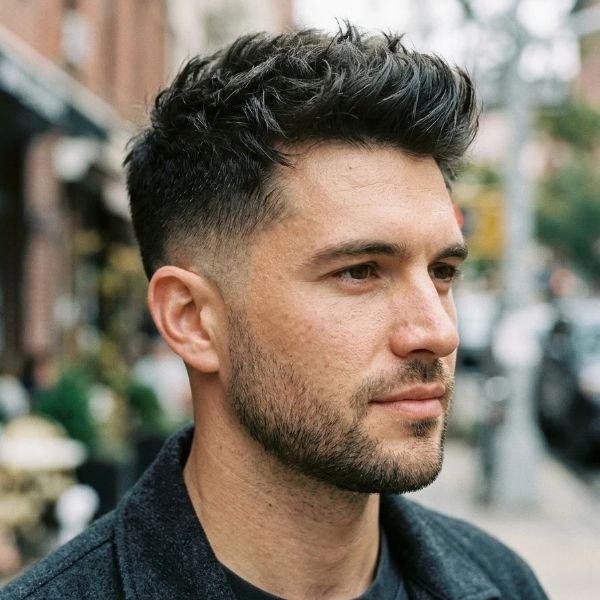
This haircut combines a gradual low fade with a short, textured top. The contrast creates a sharp outline while keeping the styling practical.
It is a strong choice for men who want a contemporary look without an extreme fade. Ask for enough texture on top to prevent the hair from lying flat.
11. High and Tight
The high and tight features very short sides and a compact top. Its simple structure makes it suitable for men who prefer a neat, athletic appearance.
Because the sides are so short, the haircut draws attention to the overall head shape. Consider how much scalp is visible before choosing an extremely short top.
12. Slicked Back With Undercut
A slicked-back undercut leaves the top longer while keeping the sides noticeably shorter. It creates a bold, defined silhouette.
However, very fine hair can look sparse when heavily slicked back with shiny products. Use a lightweight pre-styler and a matte finish instead of saturating the hair with pomade.
13. Angular Fringe
An angular fringe directs the front hair diagonally across the forehead. The angled shape adds visual movement and can soften a high forehead.
Ask for an uneven, textured finish rather than a heavy block of hair. This style is especially useful when you want the front to look deliberate without adding excessive length.
14. Short Pompadour
A short pompadour creates controlled height at the front and gradually blends into shorter sides. It offers a classic appearance with a modern edge.
Keep the volume moderate because excessive length can collapse under its own weight. Blow-dry the roots upward and use a small amount of lightweight styling paste.
15. Brush Up
The brush-up pushes the hair upward and slightly backward, creating the appearance of additional height. It is a practical choice for men whose hair responds well to blow-drying.
Keep the top short enough to hold its shape. A root-lifting spray can provide support, while a flexible finishing product helps prevent stiffness.
16. Faux Hawk Fade
A faux hawk creates a narrow strip of emphasis through the center of the top. The sides are tapered or faded to highlight the shape.
For fine straight hair, a subtle faux hawk is often more manageable than a tall, sharply defined version. Use matte paste to create separation and maintain natural movement.
17. Disconnected Undercut
The disconnected undercut features a noticeable difference between the long top and short sides. It creates a distinctive, fashion-forward appearance.
This haircut works best when the top has enough density to support its shape. If your hair is very sparse, a softer transition may produce a more balanced result.
18. Classic Taper
A classic taper gradually shortens the hair around the temples and neckline while preserving a natural finish.
It is suitable for men who prefer timeless grooming over dramatic fades. Add light texture to the top and use a small amount of styling cream for a controlled, understated look.
19. Skin Fade Crop
The skin fade crop pairs a closely shaved fade with a short top. Its crisp sides create contrast and make the haircut look deliberate.
Keep the top textured to avoid a flat appearance. Remember that a skin fade cannot increase hair density, and the contrast may make scalp visibility on top more noticeable for some men.
20. Short Back and Sides
This traditional haircut keeps the back and sides short while leaving enough length on top for simple styling.
It is versatile, professional, and relatively easy to maintain. Ask your barber to avoid leaving the top too heavy or cutting it into a completely flat shape.
21. Textured Side Sweep
The textured side sweep directs the hair diagonally while preserving natural movement. It offers a softer alternative to a tightly combed side part.
This style works well when your hairline is reasonably even and you want a slightly longer finish. Blow-dry the roots first, then sweep the hair into place using your fingers.
22. Buzz Cut With Skin Fade
A buzz cut with a skin fade combines a short, uniform top with very closely shaved sides. The result is sharp, clean, and low maintenance.
It can suit men experiencing general thinning who prefer a consistent appearance. Ask for a conservative top length first if you are unsure how much scalp coverage you want.
23. Choppy Fringe With Taper
The choppy fringe uses short, irregular sections across the forehead, while the tapered sides keep the outline tidy.
This haircut introduces texture without relying on substantial height. It is particularly useful for men who want a casual style that looks good with minimal product.
24. Layered Crop With Mid Fade
A layered crop combines short layers on top with a mid fade around the sides. The layers break up the surface, creating more visual movement.
This is a suitable option for men who like modern barbering but do not want a complicated daily routine. Ask for soft layering that preserves as much useful coverage as possible.
25. Messy Textured Top With Low Fade
This style embraces an intentionally imperfect finish. The top is arranged into small, separated sections, while the low fade provides a clean outline.
Apply a small amount of matte paste and shape the hair with your fingers. Avoid repeatedly running a comb through the finished style, as this can remove the texture.
26. Short Textured Spikes
Short textured spikes add subtle vertical movement without the stiffness of traditional spiked hairstyles.
Keep the sections small and irregular so the hair looks natural. A lightweight matte product can provide separation and hold without making the strands appear greasy.
27. Soft Side-Swept Crop
The soft side-swept crop combines a short top with a gentle diagonal direction. It is less structured than a traditional side part and works well for everyday grooming.
Ask for a tapered outline and light texture across the top. This option suits men who want a neat, understated haircut with enough flexibility to style it differently for work or weekends.
How to Style Thin Straight Hair for Maximum Volume?
The right styling technique can help fine hair look fuller without adding unnecessary weight. Start with clean hair and build volume gradually.
- Wash with a lightweight shampoo. Choose a formula that cleans the scalp without leaving heavy residue.
- Apply a volumizing pre-styler. Work a small amount of mousse or root-lifting spray through damp hair.
- Blow-dry at the roots. Use your fingers or a vent brush to lift the hair away from the scalp. Direct the airflow in the direction you want the finished style to sit.
- Use moderate heat. Excessive heat can damage the hair shaft. Keep the dryer moving and use a cool setting to finish.
- Add a small amount of matte product. Rub it between your palms before distributing it through the hair.
- Finish with flexible hold. Use a light hairspray if needed rather than applying multiple layers of heavy product.
What Products Work Best for Men With Thin Straight Hair?
Choose products that add body, texture, and hold without leaving the hair oily or heavy.
| Product | Main benefit | Best use |
| Volumizing shampoo | Removes buildup and supports a lightweight finish | Regular washing |
| Lightweight conditioner | Improves softness and manageability | Apply mainly to the lengths when needed |
| Volumizing mousse | Adds body and supports root lift | Apply to damp hair before blow-drying |
| Root-lifting spray | Helps create height near the scalp | Use before drying |
| Matte clay or paste | Provides separation and definition | Apply sparingly after drying |
| Texturizing powder | Adds grip and helps refresh flat roots | Use a small amount when needed |
| Flexible hairspray | Helps hold the finished style | Apply lightly as a final step |
Avoid using too much oil, heavy wax, or shiny pomade. These products can clump fine strands together, making the scalp more visible. The goal is to create a natural, fuller-looking finish rather than a stiff or greasy hairstyle.
Hairstyles to Avoid With Thin Straight Hair
No haircut is automatically wrong for every man with fine hair. However, certain styles may make low density or flatness more noticeable.
- Very long, heavy hair: Extra length can pull fine strands downward and reduce volume.
- Flat, slicked-back styles: Shiny products and tightly grouped strands can expose the scalp.
- Heavy blunt fringes: A dense, straight fringe may look disconnected from the rest of the hair.
- Excessively high fades: Strong contrast can emphasize sparse areas on top.
- Overly tall pompadours: Fine hair may struggle to maintain substantial height without heavy styling.
- Aggressive thinning with scissors: Removing too much hair can make already fine sections appear less dense.
The better approach is to work with your natural growth pattern. A skilled barber can preserve coverage while adding texture and improving the overall shape.
What Should You Tell Your Barber About Thin Straight Hair?
Clear communication helps your barber choose a cut that suits your hair rather than simply copying a photograph.
Tell your barber:
- Your hair is fine, naturally thin, or actively thinning, whichever describes it accurately.
- Whether you notice more scalp at the temples, hairline, crown, or throughout the top.
- How much time you want to spend styling your hair.
- Whether you prefer a low taper, mid fade, classic cut, or natural sides.
- Whether you want to add texture, preserve coverage, or create a shorter overall appearance.
You can say:
“I have fine, straight hair that tends to fall flat. I want a textured top that looks fuller without removing too much coverage. Please keep the sides neatly tapered and show me a length that works with my hairline.”
Bring two or three reference photos and ask your barber to adapt the cut to your actual density. A good consultation should consider how your hair looks when dry, where it naturally parts, and how it grows around the crown.
FAQ
Can thin straight hair be made to look thicker permanently without surgery?
A suitable haircut, volumizing products, and styling techniques can make hair look fuller, but they do not permanently increase strand diameter or restore lost density. A dermatologist can assess persistent hair thinning and discuss appropriate treatments.
Does hair colour affect how thin straight hair looks?
Yes. The contrast between hair and scalp can affect how noticeable sparse areas appear. Carefully chosen highlights or a colour closer to your scalp tone may reduce contrast, but colouring cannot increase hair density.
Should men with thin straight hair wash their hair every day?
It depends on scalp oiliness, sweat, and product buildup. Some men benefit from daily washing, while others do better with less frequent shampooing. Choose a gentle formula and avoid excessive heat or harsh scrubbing.
Does diet or nutrition actually affect hair thickness?
Adequate protein, iron, and other essential nutrients support normal hair growth. Correcting a deficiency may help when one is contributing to hair loss, but supplements will not automatically thicken naturally fine hair. Seek medical advice before taking high-dose supplements.
Is it worth getting a hair system or topper for thin straight hair?
A hair system or topper may provide immediate cosmetic coverage when natural density is insufficient for your preferred style. Consider its cost, maintenance, attachment method, comfort, and professional fitting before deciding.
Final Thoughts
The best haircuts for men with thin straight hair in 2026 are the ones that create shape without weighing down the strands. Textured crops, French crops, crew cuts, Ivy League styles, and soft side-swept cuts are useful starting points. However, the right choice depends on your hairline, scalp visibility, face shape, and personal preferences.
Focus on a suitable cut, lightweight products, and a simple styling routine. Communicate your goals clearly to your barber and avoid expecting a haircut to reverse hair loss. With the right approach, fine straight hair can look polished, natural, and confidently styled.
Liam Joseph Miller is a fashion writer and content creator who enjoys exploring the latest fashion trends, outfit ideas, hairstyles, and styling tips. He focuses on creating simple, useful, and easy-to-read content for readers who want fresh inspiration for their personal style.
