


A burst fade is one of the most versatile modern men’s haircuts. Its defining feature is a curved fade that wraps around the ear instead of following a straight line across the sides. This creates a clean, rounded shape while allowing the top and back to keep their length.
The style works with short crops, curls, waves, mullets, mohawks, pompadours, and longer hairstyles. You can also choose a low, mid, or high burst fade depending on how much contrast you want.
The right version depends on your hair type, face shape, lifestyle, and desired maintenance level. Below are 32 of the best burst fade haircuts for men, followed by practical advice on choosing, styling, and maintaining the cut.
What Is a Burst Fade Haircut?
A burst fade haircut is a fade that curves around the ear in a rounded or semicircular shape. The hair becomes shortest near the ear and gradually gets longer as the fade moves outward. Unlike a traditional fade, it does not usually continue across the entire back of the head.
The curved shape is what makes it different. The back can remain fuller, which is why burst fades pair especially well with mullets, mohawks, faux hawks, and longer textured styles.
You can customize the haircut in several ways:
- Low, mid, or high fade placement
- Shadow, taper, zero, or skin finish
- Short, medium, or long hair on top
- Natural or sharply defined edges
- Short or long hair at the back
The result can be subtle and professional or bold and attention-grabbing.
What Are the Best Burst Fade Haircut Styles?
1. Classic Burst Fade
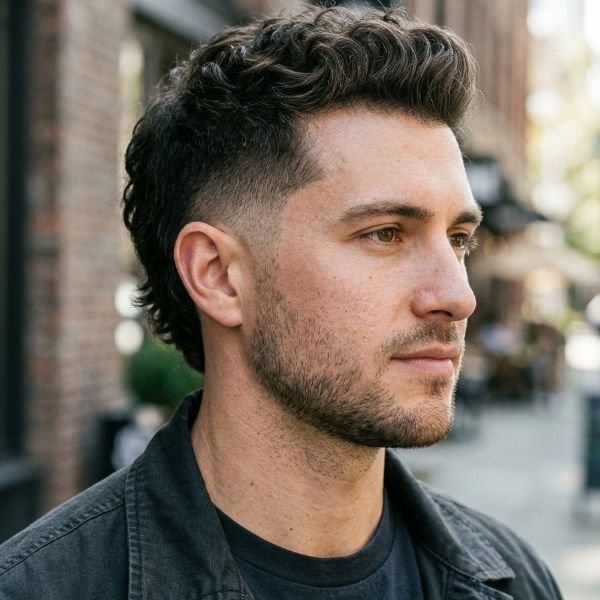
The classic burst fade keeps the signature rounded shape around the ear with a balanced amount of length on top and at the back. It is a reliable choice if you want a modern haircut without going extremely short.
2. Low Burst Fade
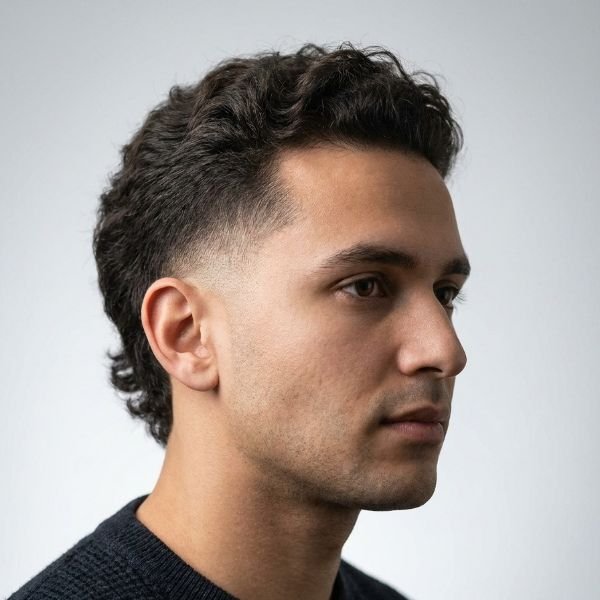
A low burst fade keeps the curved fade close to the ear. More hair remains on the sides, creating a softer transition. It is a good option for first-time wearers or men who want a less dramatic appearance.
3. Mid Burst Fade
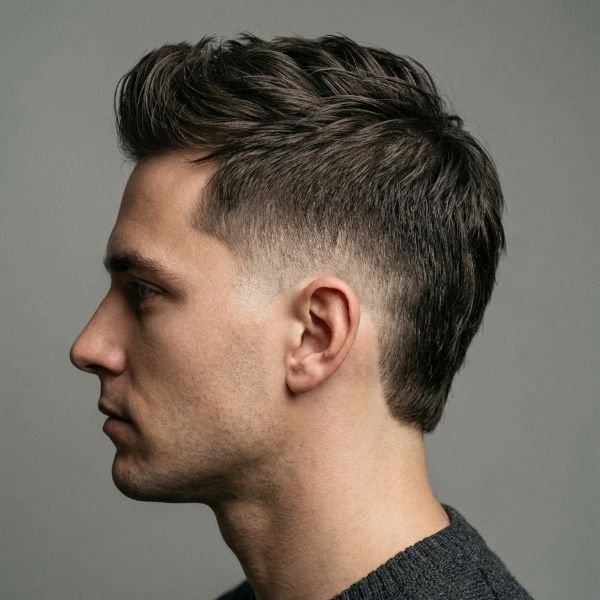
A mid burst fade sits higher around the side of the head and creates more visible contrast. It offers a strong balance between a subtle low burst and an aggressive high version.
4. High Burst Fade
A high burst fade pushes the curved fade toward the temple. It exposes more of the sides and creates a sharp contrast with the longer top. This works especially well with textured, curly, or spiked hairstyles.
5. Burst Fade Mullet
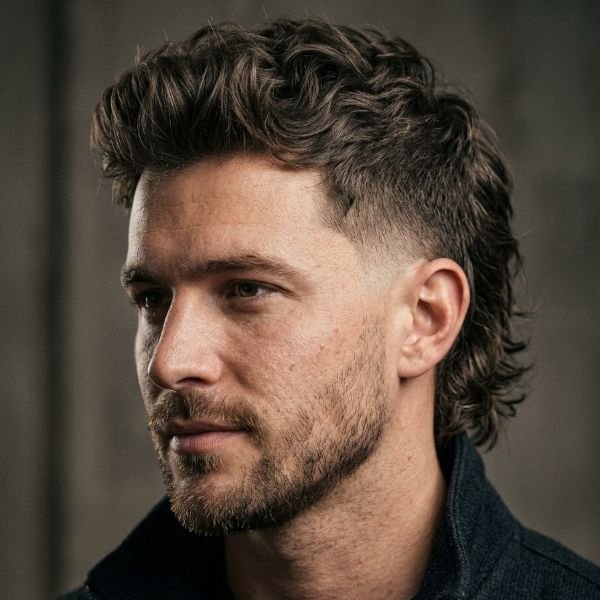
The burst fade mullet is one of the most recognizable combinations. The sides are cleaned around the ears while the back remains long. The result has a strong retro influence with a modern barber finish.
6. Burst Fade Mohawk
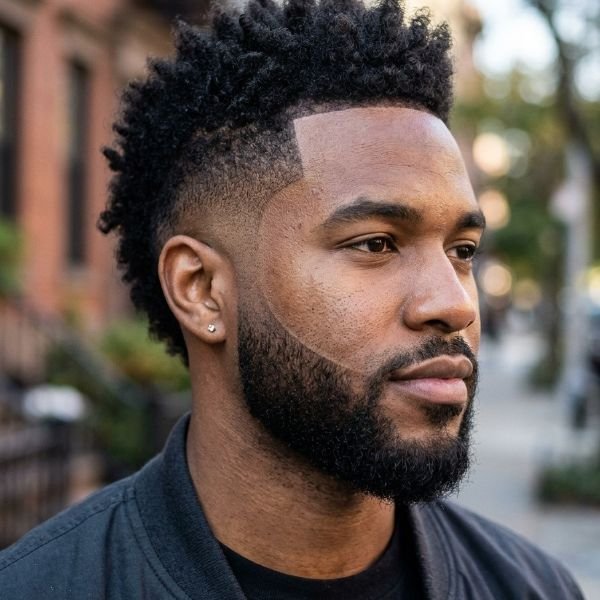
A burst fade mohawk leaves a central strip of longer hair running from the front toward the back. The faded sides make the central section appear wider and more prominent.
7. Burst Fade Faux Hawk
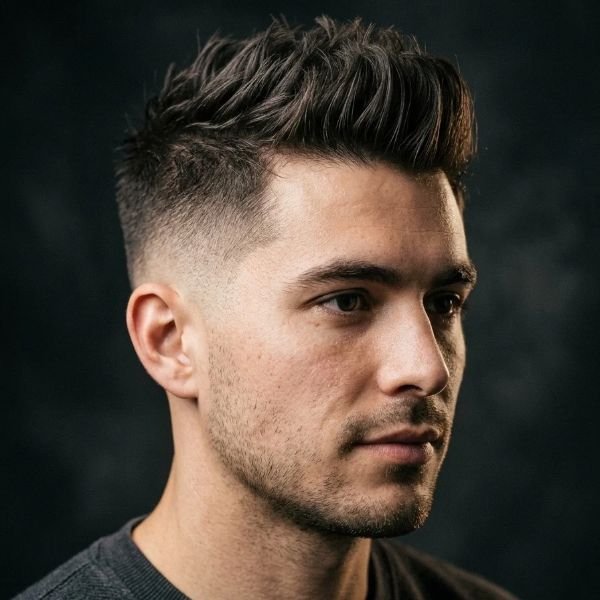
The faux hawk gives you the attitude of a mohawk without committing to a long central strip. Keep the top textured and slightly raised for an easy everyday version.
8. Burst Fade Textured Crop
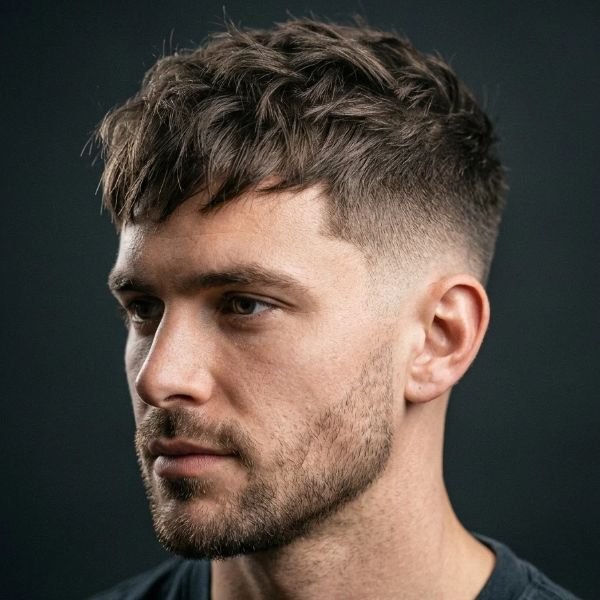
A textured crop combines short, choppy hair on top with a curved fade around the ear. Point-cut texture gives the top separation and movement. This is one of the easiest styles to maintain.
9. Burst Fade French Crop
The French crop features a short textured top and forward fringe. Adding a burst fade gives the classic crop a more modern side profile while keeping the haircut compact.
10. Burst Fade Pompadour
A pompadour creates height and volume at the front. The burst fade keeps the area around the ears clean while allowing the top to remain full. Use a blow dryer and strong styling product for maximum lift.
11. Burst Fade Quiff
The burst fade quiff is a softer alternative to the pompadour. Brush the front upward and slightly backward while keeping the sides tight. It works particularly well with medium-length hair.
12. Burst Fade V-Cut
A V-cut creates a pointed shape at the back of the head. Combined with a burst fade, it gives the haircut a distinctive rear profile. Ask your barber to preserve the point rather than rounding off the neckline.
13. Burst Fade Comb Over
A comb over adds a polished element to the burst fade. Keep the top long enough to part naturally and use a lightweight styling cream for a controlled finish.
14. Burst Fade Slick Back
The slick back keeps the top longer and directs the hair toward the back. The curved fade creates contrast around the ears without removing the longer rear shape.
15. Burst Fade Buzz Cut
A burst fade can make a short buzz cut look more detailed. Keep the top at a consistent guard length and use the curved fade to create a cleaner outline around the ears.
16. Burst Fade Crew Cut
The crew cut offers a neat, masculine silhouette. Pairing it with a burst fade gives the short haircut more shape while keeping styling requirements low.
17. Burst Fade Side Part
A defined side part adds a classic touch. The top can be combed neatly while the burst fade introduces a contemporary detail around the ears.
18. Burst Fade Hard Part
A hard part uses a shaved or sharply defined line to separate the hair. Combined with a burst fade, it creates a high-contrast style that needs regular touch-ups to stay crisp.
19. Burst Fade with Beard
A beard can balance the visual weight of a burst fade. Ask your barber to blend the sideburn area naturally into the beard instead of creating an abrupt transition.
20. Burst Fade with Design
Hair designs can be carved into or near the faded section. Lines, curves, and geometric patterns can personalize the cut. Keep the design simple if you want easier grow-out.
21. Burst Fade Long Hair
Longer hair on top creates a dramatic contrast with the shorter area around the ears. This version is useful if you want to keep significant length while still having a clean haircut structure.
22. Burst Fade Curly Hair
Curly hair is an excellent match for the burst fade because the fade controls bulk around the ears while allowing the curls to retain their natural volume. The top can remain loose, defined, or shaped into a curly mohawk.
23. Burst Fade Wavy Hair
Wavy hair provides natural movement without requiring extreme styling. Keep the waves medium length on top and use a light styling cream or sea salt spray to enhance their texture.
24. Burst Fade Straight Hair
Straight hair makes the curved fade especially visible. You can create a clean, precise appearance with a textured crop, quiff, side part, or slick back.
25. Burst Fade Afro
A burst fade can sharpen the outline of an afro while preserving volume above and behind the ears. The curved shape works naturally with the rounded structure of textured hair.
26. Burst Fade Dreadlocks
Dreadlocks combined with a burst fade create strong contrast between the clean sides and longer textured hair. Keep the fade controlled around the ears while preserving the desired length of the locs.
27. Burst Fade Brush Up
The brush-up keeps the front hair standing upward for added height. A matte product usually works well when you want texture rather than a glossy finish.
28. Burst Fade Taper
A burst taper is a softer interpretation of the haircut. Instead of creating an extremely exposed skin fade, the barber gradually reduces the hair around the ear. This is a useful option if you prefer lower contrast.
29. Burst Fade Ivy League
The Ivy League combines a short, polished top with enough length for a subtle side part. A burst fade adds modern character while keeping the overall haircut relatively refined.
30. Burst Fade Side Swept Fringe
The side-swept fringe gives the haircut movement across the forehead. Keep the fringe textured rather than overly rigid for a relaxed modern finish.
31. Burst Fade Modern Mullet
The modern mullet keeps more controlled length at the back than an extreme traditional mullet. The burst fade cleans up the area around the ears and creates a smooth transition into the longer rear section.
32. Burst Fade High Top
A high top creates significant vertical volume while the burst fade removes bulk around the ears. This combination works especially well with textured and coily hair.
Who Does a Burst Fade Suit?
A burst fade is adaptable because the fade itself is localized. Your barber can change its height, contrast, and surrounding length to suit your features.
By Face Shape
Round face: A higher burst with volume on top can create a taller visual profile.
Oval face: Most burst fade variations work well because an oval face generally accommodates many proportions.
Square face: A textured crop, crew cut, or short quiff can emphasize the strong jawline without making the haircut look too bulky.
Long face: Avoid excessive height if you want to prevent adding more visual length. A lower burst with some side volume can create better balance.
Heart-shaped face: Medium-length texture and controlled volume can help balance a narrower chin.
By Hair Type
| Hair type | Recommended burst fade |
|---|---|
| Straight | Classic, crop, quiff, side part |
| Wavy | Textured crop, fringe, brush up |
| Curly | Curly top, mohawk, mullet |
| Coily | Afro, high top, tapered burst |
| Thick | Mid or high burst |
| Fine | Low burst with textured top |
The haircut can work across straight, wavy, curly, and coily textures. The important part is adjusting the fade and top length to your natural density and growth pattern.
Burst Fade vs Drop Fade: What Is the Difference?
The easiest way to tell a burst fade from a drop fade is to look at the back of the head.
A burst fade curves around the ear and usually stops there, leaving more length at the back. A drop fade continues around the head and drops lower toward the nape.
| Feature | Burst Fade | Drop Fade |
|---|---|---|
| Main shape | Semicircle around ear | Curved fade around head |
| Back | Usually remains longer | Usually faded |
| Best pairings | Mullet, mohawk, curls | Crop, quiff, waves |
| Visual focus | Ear and side profile | Full side and back |
| Overall effect | Bold and localized | Clean and continuous |
If keeping length at the back is important, the burst fade is usually the better choice.
How Do You Choose the Right Burst Fade?
Start with the amount of contrast you want. A low burst is more subtle, while a high burst looks sharper and more dramatic. A skin finish creates even more contrast than a shadow or guarded fade.
Next, consider your top hairstyle. A mullet needs length at the back. A crop needs less length. Curly hair may need extra room to maintain its natural curl pattern.
Also consider maintenance. A highly defined skin burst can lose its crisp appearance faster than a softer tapered version.
A useful decision guide is:
- Choose low, mid, or high.
- Decide between shadow, zero, or skin.
- Choose your top length.
- Decide whether the back stays long.
- Consider your natural texture.
- Match the style to your daily routine.
What Should You Tell Your Barber?
Do not simply say, “Give me a burst fade.” Explain the shape and proportions you want.
A useful barber request is:
“I want a burst fade that curves around the ears, with a low, mid, or high placement. Keep the back at my preferred length and leave enough length on top for my chosen style. I want the blend soft and clean rather than creating a harsh line.”
Bring two or three reference photos showing the side and back. Photos reduce misunderstandings about fade height, top length, neckline, and overall shape.
If you want a skin burst, say so clearly. If you prefer a softer finish, ask for a shadow burst or burst taper.
How to Style a Burst Fade for Maximum Volume
The burst fade itself requires little styling. Most of the work happens on top.
For maximum volume:
- Start with towel-dried hair.
- Apply a small amount of volumizing mousse or styling cream.
- Blow-dry the roots upward.
- Direct the front in your desired direction.
- Finish with matte clay, paste, or texture powder.
- Use your fingers to separate the hair.
Fine hair usually benefits from lightweight products. Thick hair may need stronger hold. Curly hair generally looks better when its natural curl pattern is enhanced rather than brushed aggressively.
How Often Should You Get a Burst Fade?
Most men can refresh a burst fade about every two to three weeks, depending on how sharp they want the fade to remain. High or skin versions often need attention sooner because new growth becomes noticeable faster.
You can extend the time between full haircuts by asking your barber for a softer burst taper. A low, subtle version also tends to grow out less dramatically.
The best schedule depends on:
- Hair growth speed
- Fade height
- Skin versus shadow finish
- Hair density
- Desired sharpness
- Workplace requirements
What Is the Biggest Mistake Men Make with a Burst Fade?
The biggest mistake is focusing only on the fade and ignoring the overall haircut shape.
A burst fade should work with the top, back, hairline, and face shape. Taking the fade too high can remove too much side weight. Fading too far into the back can also change the haircut into something closer to a drop fade.
Another common mistake is asking for a skin fade without discussing the height first. The finish and height are separate choices. Decide both before the clippers start.
FAQ
Is a burst fade the same as a mullet?
No. A burst fade describes the curved fade around the ears, while a mullet describes the overall short-front, longer-back haircut; they are often combined.
How long does a burst fade last?
A burst fade generally looks freshest for about two to three weeks, although high and skin versions may need earlier maintenance.
Can curly hair get a burst fade?
Yes. Curly and coily hair can work especially well with a burst fade because the shape controls bulk around the ears while preserving natural volume.
What hairstyles pair best with a burst fade?
Mullets, mohawks, faux hawks, textured crops, curly tops, quiffs, waves, and longer textured hairstyles are among the strongest pairings.
How do I ask my barber for a burst fade?
Tell your barber the desired fade height, skin or guarded finish, top length, back length, and preferred hairstyle, then show clear side and back reference photos.
Final Thoughts
The 32 best burst fade haircuts show how flexible this fade can be. The curved shape around the ear gives the haircut its identity, while the top and back determine the overall personality. You can make it subtle with a low burst taper or bold with a high skin fade.
Choose the haircut based on your hair texture, face shape, styling routine, and preferred maintenance level. Most importantly, communicate the exact height, finish, and length you want to your barber. A well-planned burst fade should look balanced from the front, side, and back, not just impressive from one angle.
Meta Description: Discover the 32 best burst fade haircuts for men, including mullets, curls, crops, mohawks, styling tips, barber advice, and maintenance.
Liam Joseph Miller is a fashion writer and content creator who enjoys exploring the latest fashion trends, outfit ideas, hairstyles, and styling tips. He focuses on creating simple, useful, and easy-to-read content for readers who want fresh inspiration for their personal style.
