


A low fade haircut keeps the sides and back clean while leaving most of the visual weight on top. Unlike a high fade, it does not climb far toward the temples. This makes it one of the most versatile fade styles for men in 2026.
The best low fade is not simply about making the sides shorter. The fade height, clipper guard, top length, hair texture, face shape, and neckline all affect the final result. A good barber blends these details instead of treating every low fade the same.
This guide covers 30 low fade haircuts, from classic and professional cuts to curly, textured, modern, and longer styles. You will also learn how a low fade compares with mid and high fades, how often to maintain it, and what to tell your barber.
What Is a Low Fade Haircut?
A low fade is a haircut where the hair gradually becomes shorter around the lower sides and back of the head. The fade usually begins just above the ears and continues toward the neckline. The transition stays below the temple area, giving the haircut a controlled and subtle appearance.
The shortest section can range from a very short clipper length to nearly bare skin. That creates different versions, including a classic low fade, low skin fade, low taper, and low drop fade. The important point is that the fade remains low rather than moving high onto the sides.
A low fade works with almost any top style. You can pair it with a buzz cut, crew cut, crop, quiff, pompadour, curls, slick back, middle part, or longer hair. This flexibility is one reason it remains popular.
For the best result, tell your barber exactly how low you want the fade and how much length you want to keep on top. A reference photo can also prevent confusion because barbers may interpret terms such as “low fade” differently.
What Are the Best 30 Low Fade Haircut Styles?
1. Classic Low Fade
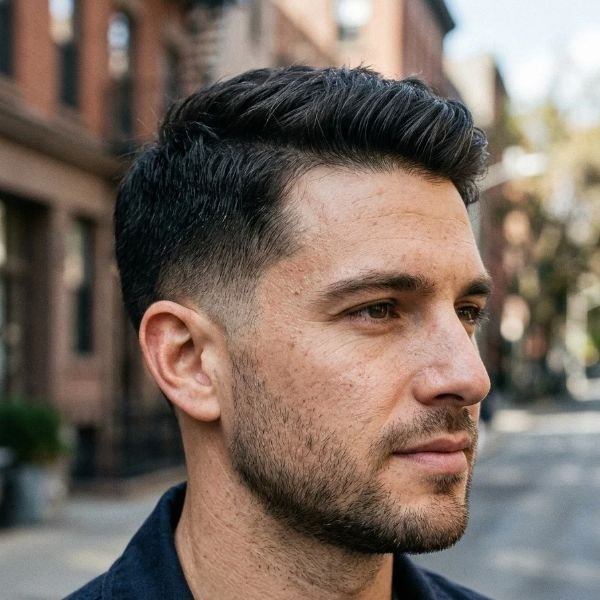
The classic low fade is the safest starting point. The sides gradually shorten around the ears and neckline while the top keeps enough length for several styling options.
It suits straight, wavy, and moderately thick hair. Ask for a low fade that stays below the temples with a natural blend and a clean neckline.
2. Low Skin Fade
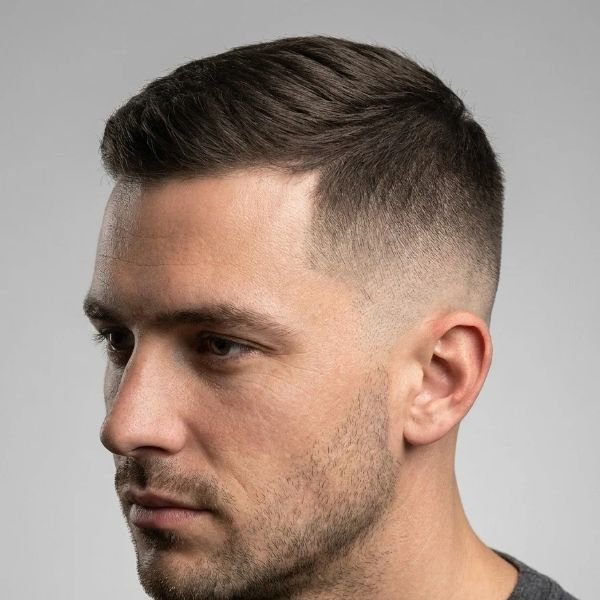
A low skin fade takes the shortest section down to bare skin before gradually blending upward. It creates more contrast than a traditional low fade.
This style works particularly well with thick hair because the sharp lower section contrasts with the fuller top. It usually needs more frequent barber visits to keep the skin area looking fresh.
3. Low Taper Fade
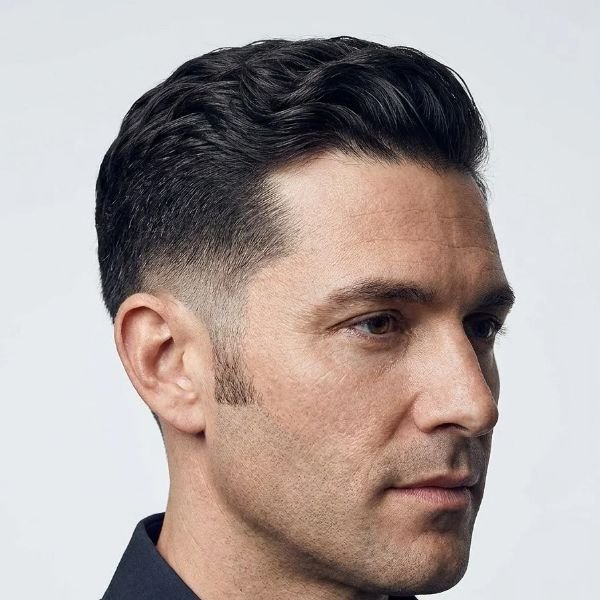
A low taper fade focuses mainly on the sideburns and neckline. More weight remains on the sides than with a traditional low fade.
It is an excellent choice for men who want a polished appearance without exposing too much scalp. It also works well in conservative workplaces.
4. Low Drop Fade
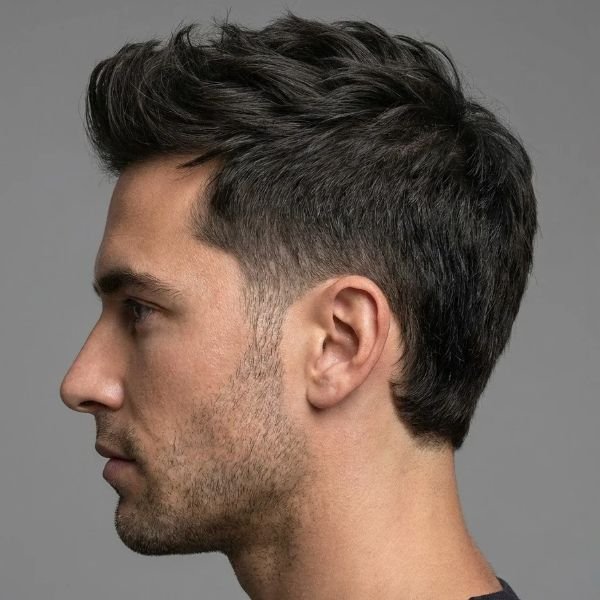
A low drop fade curves downward behind the ear rather than following a straight horizontal line. This creates a more customized shape around the head.
The curved fade pairs especially well with textured crops, curly tops, short cuts, and longer styles.
5. Low Temp Fade
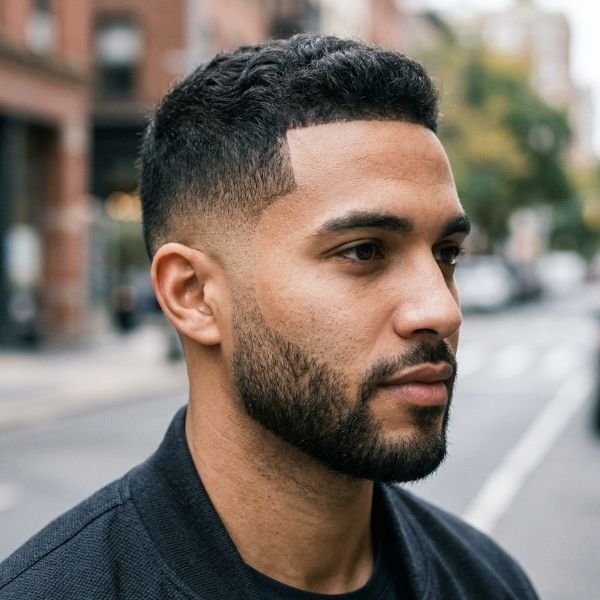
A low temp fade concentrates the blend around the temple area while keeping the overall fade low.
It gives the front corners of the haircut a cleaner appearance without removing too much hair from the sides. It can be especially effective with curly or textured hair.
6. Shadow Fade
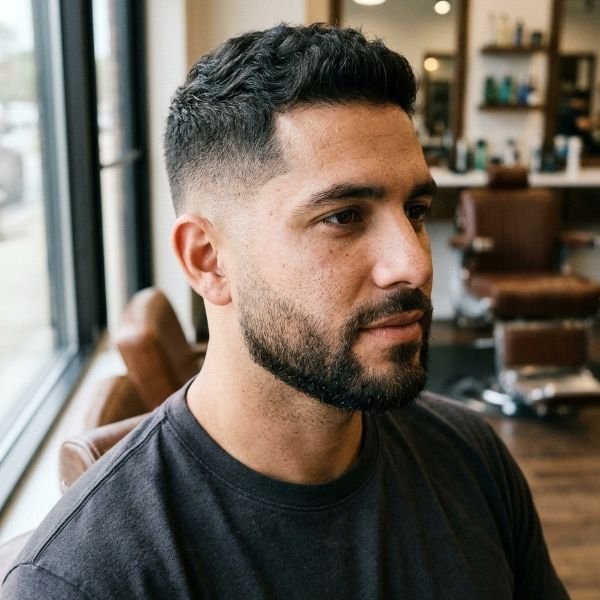
A shadow fade leaves a small amount of visible hair at the shortest point instead of going completely down to the skin.
The result is softer and more natural than a skin fade. It is a good option if you want contrast without an extremely sharp finish.
7. Low Burst Fade
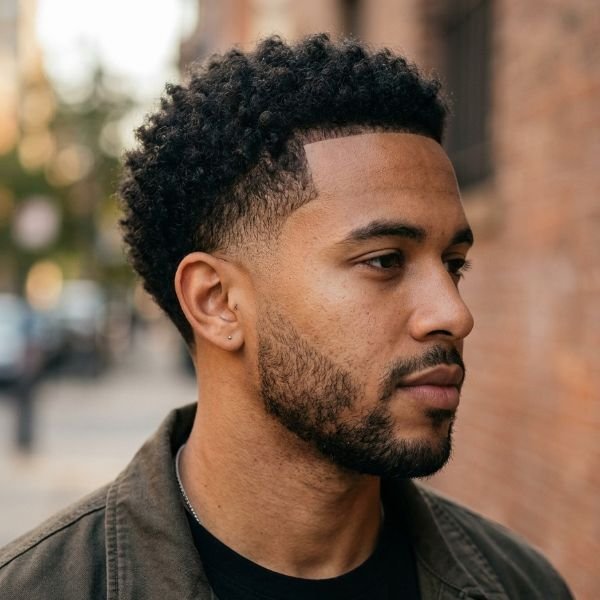
A low burst fade creates a curved fade around the ear while leaving more length toward the back.
It is a strong choice for modern styles such as faux hawks, textured tops, and mullets. The rounded shape also works well with naturally thick hair.
8. Low Fade Haircut for Curly Hair
Curly hair looks excellent with a low fade because the clean sides make the natural curl pattern stand out.
Keep enough length on top for the curls to form properly. Your barber should also account for shrinkage because curly hair can appear significantly shorter once it dries.
9. Low Fade Crew Cut
A crew cut with a low fade is practical, clean, and easy to maintain. The top remains short while the fade removes unnecessary bulk around the sides.
It is a strong everyday haircut for men who want minimal styling. A small amount of matte product can add texture without making the hair look heavy.
10. Low Fade Textured Crop
The textured crop combines a short top with deliberately separated strands. The low fade keeps the sides controlled while the top provides movement.
Ask your barber for texture rather than simply removing large amounts of hair. Matte clay or paste usually works well for creating a natural finish.
11. Low Fade French Crop
A French crop has a short textured top with a forward fringe. Adding a low fade keeps the silhouette compact.
This style can be useful for men who want their hairstyle to require little daily styling. The fringe can also help frame the forehead.
12. Low Fade Pompadour
The pompadour needs length and volume at the front. The low fade cleans the lower sides without competing with the height on top.
Use a blow dryer and a styling product with enough hold. This is a higher-maintenance option than a crop or crew cut.
13. Low Fade Quiff
A low fade quiff combines a lifted front with gradually faded sides. It creates height without requiring the dramatic contrast of a high fade.
The style works particularly well for straight and wavy hair. A round face can also benefit from the added vertical height.
14. Low Fade Comb Over
The comb over is a classic option that works for both formal and casual settings. The low fade keeps the sides neat while the longer top is directed to one side.
Use a matte product for a modern appearance or a traditional pomade for a more polished finish.
15. Low Fade with Beard
A low fade and beard can create a strong connection between the haircut and facial hair. The barber can blend the sideburn area into the beard for a smoother transition.
The beard should complement the haircut rather than overpower it. Keep the cheek and neckline edges intentional for a cleaner overall shape.
16. Low Fade Buzz Cut
A buzz cut with a low fade gives an extremely simple haircut a sharper finish. The top stays short while the lower sides become progressively tighter.
It is one of the easiest low fade styles to maintain. However, a very short buzz cut puts more attention on the head shape and hairline.
17. Low Fade with Straight Hair
Straight hair makes the fade transition easy to see because the sides tend to lie flat.
You can pair it with a side part, crop, quiff, slick back, or simple short top. Avoid excessive product if your hair becomes flat or oily easily.
18. Low Fade Mohawk
The low fade mohawk leaves noticeable length through the center while cleaning the sides.
It is a more adventurous choice than a classic low fade. A textured or curly top can make the central section look fuller and more dynamic.
19. Low Fade Edgar
The Edgar combines a short top with a defined forward fringe and tightly controlled sides.
A low fade makes the style slightly less aggressive than a high fade. The front line should be customized to your natural hairline instead of being forced into an unnatural shape.
20. Low Fade Blowout
A blowout keeps the top and sides above the fade fuller and pushes the hair outward or upward.
The low fade gives the hairstyle structure without removing the volume that makes a blowout recognizable. A blow dryer is usually important for achieving the intended shape.
21. Low Fade Mullet
The low fade mullet combines short, clean sides with extra length at the back.
It creates a modern contrast between the controlled sides and longer neckline. Ask your barber exactly how much length to retain at the back because small changes can dramatically alter the silhouette.
22. Low Fade Slick Back
The slick back leaves the top long enough to comb backward while the low fade cleans the lower sides.
It looks especially polished with straight or slightly wavy hair. Choose a lightweight styling product if you want movement instead of a stiff finish.
23. Low Fade with Design
A hair design can be shaved into the faded section for extra personality. Lines, curves, and simple geometric details are common choices.
Keep the design relatively simple if you want the haircut to remain wearable in professional settings. Remember that designs grow out faster than the rest of the haircut.
24. Low Fade Middle Part
The middle part has returned as a popular men’s hairstyle, and it works surprisingly well with a low fade.
The longer top is divided near the center while the fade controls the lower sides. This combination works best when the top has enough length to fall naturally.
25. Low Fade Man Bun
A man bun with a low fade combines long hair on top and at the back with cleaner lower sides.
It provides a way to keep long hair while adding structure around the ears and neckline. This style requires patience because the top and back need substantial length.
26. Low Fade for Black Men
A low fade can complement coily, curly, textured, and afro-textured hair extremely well. The fade can frame the natural volume without taking away the character of the top.
Popular combinations include curls, waves, sponge twists, short afros, and textured tops. A skilled barber should work with the natural density and curl pattern rather than fighting it.
27. Low Fade for Asian Hair
Asian hair can range from fine and straight to extremely thick and coarse, so the fade should be adjusted to the individual’s density.
A low fade pairs well with textured crops, side parts, middle parts, quiffs, and longer tops. If your hair is very thick, ask the barber to remove weight without creating an overly thin appearance.
28. Low Fade for Boys
A low fade can be a practical haircut for boys because it looks neat without requiring complicated styling.
For younger children, a softer fade is often easier to maintain than an extremely sharp skin fade. The haircut should also match school requirements and the child’s natural hair texture.
29. Military Low Fade
The military low fade is short, structured, and practical. The top usually stays close to the head, while the lower sides are faded cleanly.
It is ideal for men who want very little styling. Regular trims help preserve the precise shape.
30. Low Fade All Around
A low fade all around keeps the transition consistently low around the sides and back.
This creates a balanced appearance from different angles. It is a useful choice when you want a clean haircut without a dramatic fade line.
How Does a Low Fade Compare to a Mid Fade?
The biggest difference is where the fade begins. A low fade starts close to the ears and lower sides, while a mid fade moves higher toward the middle of the sides.
| Feature | Low Fade | Mid Fade |
| Fade height | Low | Medium |
| Contrast | Subtle | Stronger |
| Scalp exposure | Usually lower | Usually higher |
| Best for | Conservative and versatile looks | Balanced modern styles |
| Top compatibility | Very high | Very high |
| Maintenance | Moderate | Moderate |
Choose a low fade if you want to preserve more side weight. Choose a mid fade if you want the fade to become a more obvious part of the haircut.
How Does a Low Fade Compare to a High Fade?
A high fade begins much farther up the sides, often approaching the temple area. This creates considerably more contrast between the top and sides.
A low fade is generally more conservative and leaves more hair around the sides. A high fade can look sharper and more dramatic, while a low fade often feels more balanced.
For a workplace-friendly haircut, the low fade is usually the easier choice. For a bold, high-contrast style, a high fade may be more appropriate.
What Is the Biggest Mistake Men Make with a Low Fade?
The biggest mistake is asking for a “low fade” without explaining how low, how short, and how much weight you want to keep.
The same phrase can produce different results depending on the barber and the starting haircut. Be specific about:
- Fade height
- Skin or non-skin finish
- Clipper guard preference
- Top length
- Texture
- Sideburn shape
- Neckline
- Desired maintenance level
A reference photo taken from the side is often more useful than a hairstyle name alone.
How Low Can a Low Fade Go?
A low fade can begin very close to the ear and neckline, with the shortest section positioned in the lower portion of the sides.
The exact height depends on your head shape, hair density, and desired appearance. If you want an especially subtle result, ask the barber to keep the fade close to the ear and preserve more weight above it.
Can You Do a Low Fade at Home?
Yes, but a professional barber will usually produce a cleaner blend. The difficult part is creating an even transition between different clipper lengths, especially around the ears and back of the head.
If you attempt it yourself, start conservatively. Removing too much hair is difficult to reverse.
You will generally need:
- Quality hair clippers
- Multiple guards
- A detail trimmer
- Two mirrors or a clear view of the back
- Patience and good lighting
For your first attempt, avoid a skin fade. A slightly longer low fade is more forgiving if the blend is not perfect.
FAQ
What is a low fade haircut?
A low fade gradually shortens the hair around the lower sides and back, beginning just above the ears and blending toward the neckline.
How long does a low fade last?
Most men refresh a low fade every 2 to 3 weeks, although growth speed and the desired level of sharpness can change that schedule.
Can curly hair get a low fade?
Yes. A low fade works very well with curly hair because it removes side bulk while leaving the natural curl pattern visible on top.
What clipper guard is used for a low fade?
The shortest section can range from a very short guard to skin, then gradually blend into longer guards such as #1, #2, or #3 depending on the desired finish.
Is a low fade good for thick hair?
Yes. A low fade can reduce unwanted side bulk while preserving the density and volume that make thick hair look full.
Are low fades still in style?
Yes. Low fades remain popular in 2026 because they work with classic, textured, curly, professional, and modern men’s hairstyles.
Can a fade cause hair loss?
A properly performed fade does not normally cause hair loss because clippers cut the hair shaft rather than the follicle. Excessive irritation or skin injury is a separate issue.
Final Thoughts
The best low fade haircut is the one that matches your hair, face shape, lifestyle, and preferred maintenance level. You do not need the most dramatic fade to get a sharp result. A well-blended low fade can make almost any top style look cleaner.
For a first attempt, start with a classic low fade, low taper, crew cut, textured crop, or low fade with curls. If you want more personality, consider a drop fade, mullet, Edgar, design, or blowout. Most importantly, give your barber specific instructions about fade height, top length, and the amount of side weight you want to keep.
Liam Joseph Miller is a fashion writer and content creator who enjoys exploring the latest fashion trends, outfit ideas, hairstyles, and styling tips. He focuses on creating simple, useful, and easy-to-read content for readers who want fresh inspiration for their personal style.
