


Messy hairstyles for men are not about looking careless. The best messy haircuts are carefully shaped, then styled with enough texture and movement to create a relaxed finish.
In 2026, messy hair remains one of the most versatile men’s hairstyle trends because it can work with short, medium, or long hair. You can also adapt it to straight, wavy, curly, or thick hair.
The secret is simple: keep the haircut controlled while allowing the styling to look natural. Clean sides, purposeful layers, a matte finish, and separated strands can make messy hair look modern rather than unkempt.
Whether you want a casual haircut for everyday wear or something polished enough for work, there is a messy hairstyle that can fit your look.
Best Messy Hairstyles for Men
Here are 25 messy hairstyles worth considering in 2026. The right choice depends on your hair type, length, density, face shape, and how much styling you want to do each morning.
1. Messy Fringe

The messy fringe is one of the easiest ways to introduce texture without growing your hair very long. The top is cut with separation, while the fringe falls loosely toward the forehead.
It works especially well with straight or slightly wavy hair. Use a small amount of matte clay and separate the fringe with your fingers instead of creating a perfectly straight line.
2. Messy Quiff
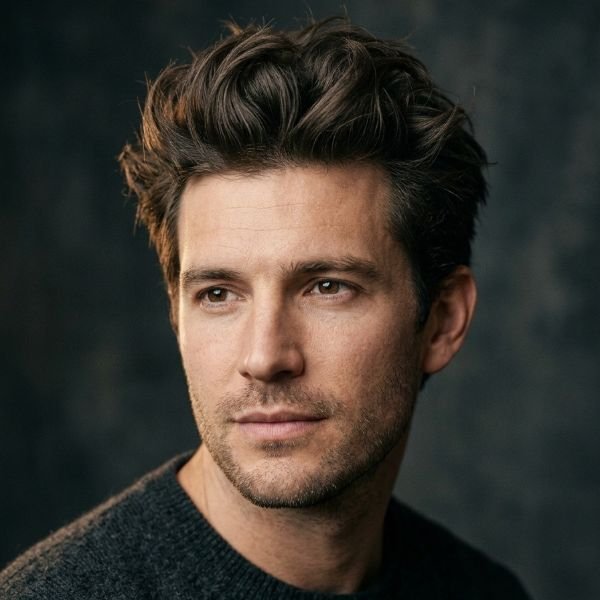
A messy quiff combines volume at the front with a relaxed finish. Unlike a traditional quiff, it does not need to be perfectly sculpted.
Ask your barber to leave enough length on top for lift. Blow dry the front upward, then use your fingers to break up the shape. This style is particularly effective on thick or medium-density hair.
3. Messy French Crop
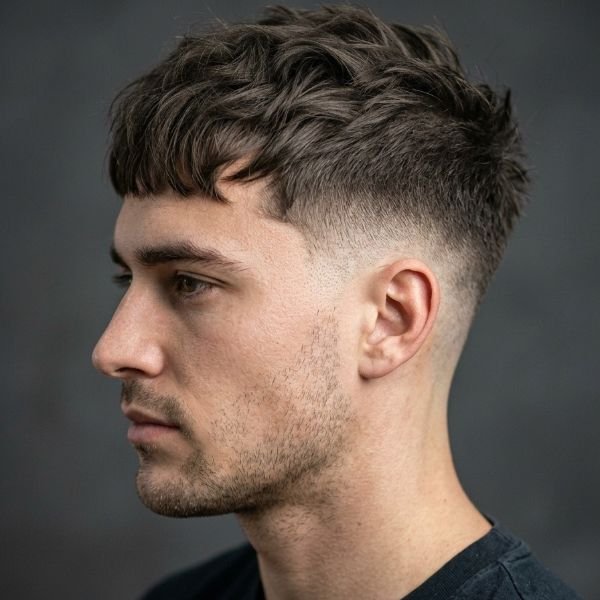
The messy French crop combines a short textured top with a forward fringe and shorter sides. The fringe should look broken and natural rather than perfectly straight.
It is a practical choice for men who want a short haircut with visible texture. A matte clay or texture powder can add separation without making the hair look greasy.
4. Messy Taper Fade
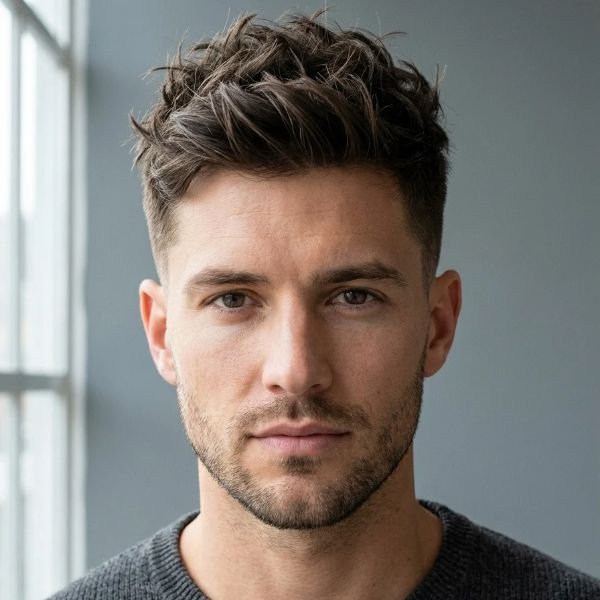
A messy taper fade keeps the sides and neckline clean while leaving the top loose and textured.
This is one of the best choices if you want messy hair that still looks professional. The taper creates a neat outline, while the longer top provides movement. A low taper usually gives the most subtle contrast.
5. Messy Flow
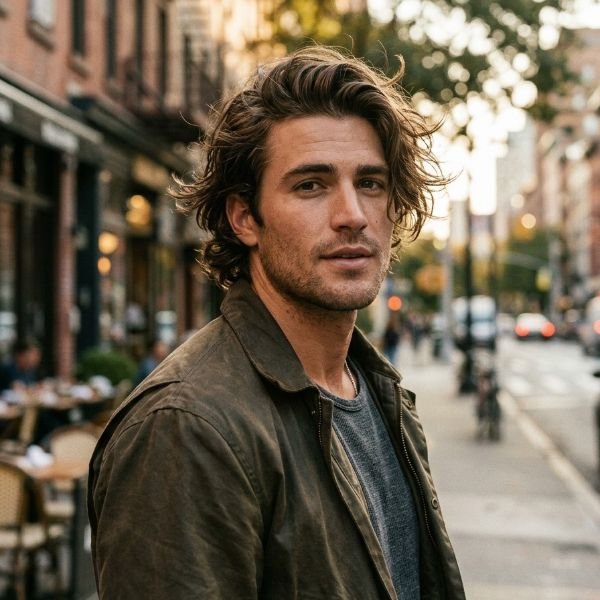
Messy flow is designed around movement. The hair is normally left medium length and encouraged to fall naturally backward or toward the sides.
It is especially good for naturally wavy hair. Instead of fighting your natural direction, ask your barber for layers that allow the hair to flow.
6. Messy Curtains

Messy curtains feature a loose center or slightly off-center part with longer pieces framing the face.
Unlike perfectly styled curtain hair, the messy version has separation and natural movement. It works well with medium-length straight or wavy hair and can create a relaxed 1990s-inspired appearance.
7. Messy Layered Cut
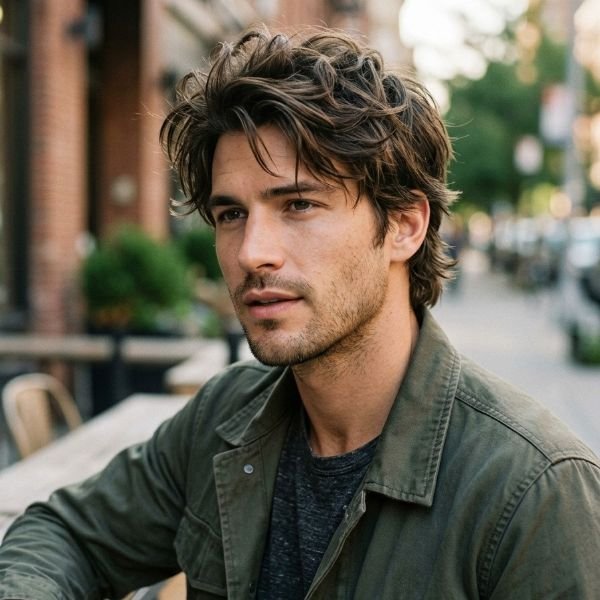
Layers are one of the foundations of messy hair. A layered cut removes unnecessary weight and gives different sections room to move.
This style is useful for medium or longer hair. It can also help thick hair feel lighter while giving straight hair more visual movement.
8. Short Messy Hair

Short messy hair is ideal if you want minimum maintenance. The top is kept short enough to be practical but textured enough to avoid looking flat.
Use a small amount of matte paste or clay. Rub it between your palms, work it through the hair, and finish by pushing individual sections in different directions.
9. Medium Messy Hair
Medium messy hair gives you more styling options than a short cut. You can wear it forward, upward, backward, or with a loose part.
The extra length also makes it easier to create waves and layers. If your hair is thick, ask for weight removal without making the top excessively thin.
10. Long Messy Hair
Long messy hair works best when the length has structure underneath it. Without layers, longer hair can become heavy and lose movement.
Ask for long layers that support natural flow. A lightweight cream or leave-in styling product can control frizz while keeping the finish flexible.
11. Messy Fade
A messy fade pairs a textured top with a fade on the sides. You can choose a low, mid, or high fade depending on how much contrast you want.
A low fade gives a softer appearance. A high fade creates a stronger modern contrast. Keep the top long enough to show the texture.
12. Messy Undercut
The messy undercut creates a noticeable difference between the longer top and shorter sides.
It suits men who want a bold haircut rather than a subtle style. The top can be pushed back, forward, or sideways. Matte products usually work better than high-shine gels for maintaining the undone effect.
13. Messy Brush Up
The messy brush up takes the classic brush-up shape and makes it less formal.
The hair is pushed upward with the fingers rather than combed into perfectly parallel sections. It is a good option for medium to thick hair because natural density helps create height.
14. Messy Side Part
A messy side part gives you the structure of a traditional side-part haircut with a more relaxed finish.
Keep the part visible but not overly sharp. Use your fingers to style the longer side rather than a fine-tooth comb. This makes the haircut suitable for casual settings while retaining a polished appearance.
15. Messy Slick Back
Messy slick back hair sounds contradictory, but the idea is simple. The hair moves backward without being flattened into a perfectly smooth shape.
Use a lightweight matte or natural-finish product. Blow dry backward with your fingers to create volume, then allow a few strands to separate naturally.
16. Messy Curly Hair
Curly hair already has natural texture, making it a strong foundation for messy hairstyles.
The goal is not to destroy the curl pattern. Ask your barber for a shape that supports your curls, then use a lightweight curl cream or mousse. Avoid applying too much product because it can make curls look heavy.
17. Messy Wavy Hair
Wavy hair is particularly suited to messy hairstyles because natural waves create movement without much effort.
A medium layered cut can enhance the wave pattern. Apply a small amount of styling cream or sea salt spray, scrunch the hair, and let it dry naturally or use a diffuser.
18. Messy Straight Hair
Straight hair can sometimes look too flat for a messy style. The solution is usually haircut texture rather than excessive product.
Ask for point-cut or choppy layers that create separation. Texture powder or matte clay can then add volume and make individual strands more visible.
19. Messy Mullet
The messy mullet combines shorter sides and front sections with more length toward the back.
The messy version is softer than an extremely sharp modern mullet. Layers help the back move naturally while keeping the overall haircut lightweight.
20. Messy Man Bun
A messy man bun works best with enough length to create a loose tie without pulling the hair too tightly.
Leave a few natural pieces around the face and avoid making every strand perfectly smooth. This gives the bun a relaxed appearance while keeping the long hair manageable.
21. Messy Spiky Hair
Messy spikes are a modern alternative to stiff, heavily gelled spikes. The spikes should be separated and flexible rather than standing in identical directions.
Use matte wax or clay and pinch small sections between your fingers. Concentrate the texture on the top while keeping the sides relatively clean.
22. Messy Comb Over
A messy comb over keeps the basic direction of a comb-over but replaces the polished finish with natural separation.
It is useful for men who like a visible direction without wanting a formal hairstyle. A low taper can make the sides cleaner while allowing the top to remain relaxed.
23. Messy Pompadour
The messy pompadour keeps the height and volume of a pompadour but removes some of its rigid structure.
Blow dry the front upward and backward, then use your fingers to break up the shape. This works particularly well with thick hair that naturally holds volume.
24. Messy Wolf Cut
The messy wolf cut combines shaggy layers, volume, and movement. It is more dramatic than a basic messy layered haircut.
The style is ideal if you want a fashion-forward look with noticeable texture. Medium to long hair provides enough length for the layered shape to become visible.
25. Korean Messy Hair
Korean messy hairstyles often combine soft layers, natural volume, longer fringe, and a lightweight finish.
The result is usually less aggressive than a high-contrast fade. This makes Korean-inspired messy hair a good option if you prefer movement around the forehead and a softer overall silhouette.
Messy vs Textured vs Tousled: What’s the Difference?
These terms overlap, but they are not exactly the same.
| Style term | Main characteristic | Overall appearance |
| Messy | Controlled disorder | Relaxed and imperfect |
| Textured | Separation between strands | Defined and dimensional |
| Tousled | Loose movement and volume | Soft and casually styled |
| Shaggy | Layers and uneven length | Fuller and more rugged |
| Bedhead | Very relaxed styling | Casual and undone |
Messy hair describes the overall finish. Texture describes how separated or dimensional the hair looks. Tousled hair describes loose movement, usually with some volume.
A good messy haircut often uses all three.
How to Ask Your Barber for Messy Hair
Do not simply tell your barber, “Make it messy.” That can mean different things to different barbers.
Explain these five details:
- Top length: Tell them approximately how much length you want to keep.
- Sides: Choose a taper, low fade, mid fade, high fade, or scissor cut.
- Fringe: Explain whether you want it forward, split, lifted, or pushed sideways.
- Texture: Ask for layers or point-cutting if you want visible separation.
- Finish: Tell them you want natural movement rather than a polished, shiny finish.
A reference photo is also useful because “messy” can range from subtle texture to a heavily layered look.
What Makes Messy Hair Look Intentional?
The biggest difference between stylish messy hair and unkempt hair is control.
A successful messy haircut usually has at least one clean element. That might be a tapered neckline, neat sideburns, controlled length, or a defined overall silhouette.
Focus on:
- Clean edges around the ears and neckline
- Purposeful layers
- Visible but controlled texture
- A suitable haircut for your hair density
- A lightweight or matte styling product
- Natural movement instead of random volume
If every part of the haircut looks uncontrolled, the style can quickly appear neglected.
Common Messy Hair Mistakes
Even an excellent haircut can look poor if it is styled incorrectly.
Common mistakes include:
- Using too much product
- Choosing a glossy product for a matte hairstyle
- Making every strand point in a different direction
- Ignoring the neckline and sideburns
- Overusing texture powder
- Copying a style without considering hair density
- Using excessive heat without protection
- Trying to create volume when the haircut does not have enough length
- Cutting curly or wavy hair without accounting for shrinkage
The most important rule is to start with a small amount of product. You can always add more.
How Often Should You Trim Messy Hair?
Most messy hairstyles benefit from a trim every 3 to 6 weeks, depending on the haircut and how quickly your hair grows.
Fades and tight tapers usually need more frequent maintenance because the contrast becomes less defined as the sides grow.
Longer layered styles can often go longer between appointments. Your barber can adjust the schedule according to the shape you want to maintain.
FAQs About Messy Hairstyles for Men
Can messy hair work for a job interview?
Yes. Choose a controlled messy style with clean sides, a neat neckline, and moderate texture rather than an extreme bedhead look.
Does messy hair look better on day one or day two?
Many messy hairstyles can look better on day two because natural oils and movement soften the finish, but excessive oil can make hair look flat.
Can you build messy hair from a buzz cut without an awkward phase?
Yes. Grow the top gradually and ask your barber to maintain the sides while adding texture as the top gains enough length.
Does humidity ruin messy hairstyles?
Humidity can increase frizz and reduce definition, so use a lightweight anti-frizz product and avoid overloading the hair with heavy products.
Should messy hair have a parting or not?
Either works. A defined or loose part gives more structure, while no part creates a more casual and free-flowing appearance.
Final Thoughts
The best messy hairstyles for men in 2026 are not truly random. They are built around a good haircut, purposeful texture, and controlled movement.
Short messy fringes and French crops are practical choices for low-maintenance styling. Messy quiffs, flows, curtains, and layered cuts provide more movement. Curly and wavy hair can take advantage of natural texture, while longer styles such as wolf cuts and man buns offer a more expressive look.
Your hair type should guide the decision more than a trend alone. Start with the texture and density you already have, choose a haircut that supports them, and use just enough product to create separation.
The best messy hairstyle is the one that looks relaxed without looking neglected.

Liam Joseph Miller is a fashion writer and content creator who enjoys exploring the latest fashion trends, outfit ideas, hairstyles, and styling tips. He focuses on creating simple, useful, and easy-to-read content for readers who want fresh inspiration for their personal style.
