


A mid taper fade creates a clean transition around the temples, sideburns, and neckline. The hair gradually becomes shorter toward these areas while the top remains longer. The exact result depends on the barber’s blending technique and how much hair is retained above the ears.
Straight hair makes this haircut especially versatile. Its smooth texture allows different top styles to stand out. You can wear it with a textured fringe, fluffy layers, a slick back, or a middle part.
What Is a Mid Taper Fade Straight Hair?
A mid taper fade for straight hair is a men’s haircut that combines longer hair on top with gradually shortened hair around the middle of the temples and lower hairline. The sideburns and neckline receive the tapered finish.
Unlike a traditional full fade, a taper usually preserves more natural hair around the sides. However, some barbers use the phrase mid taper fade to describe a broader fade. Always confirm the desired shape before cutting.
The haircut works with different straight hair lengths:
- Short hair for a neat, simple appearance.
- Medium hair for texture and styling flexibility.
- Long hair for curtains, slick backs, and layered looks.
Why This Cut Works So Well for Straight Hair in 2026
Straight hair can sometimes look flat because its strands naturally fall in a consistent direction. A mid taper adds structure by cleaning up the sides and creating contrast with the top.
It also offers flexibility. You can change your styling direction without changing the entire haircut.
Its main advantages include:
- Balanced appearance: The sides look neat without removing too much hair.
- Styling freedom: Multiple top hairstyles work with the same taper.
- Clean outline: The temples and neckline look more defined.
- Professional versatility: It can look suitable for school, work, and social occasions.
- Adaptability: It works with fine, medium-density, and thick straight hair when the cut is adjusted appropriately.
20 Best Mid Taper Fade Styles for Straight Hair
Here are 20 haircut ideas with different lengths, finishes, and styling directions. Choose one based on your natural hair density and daily styling habits.
Mid Taper Fade Straight Hair: Blowout & Volume Styles
1. Mid Taper Fade Blowout Straight Hair
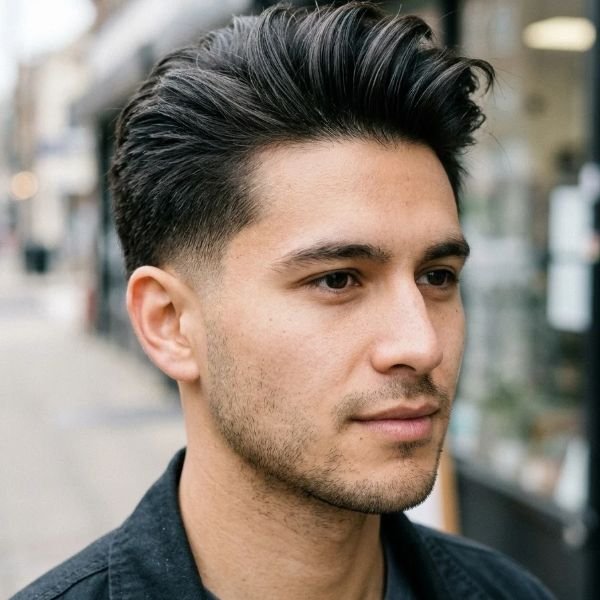
Best for: Medium to thick straight hair
A blowout mid taper combines short, clean sides with a lifted top. The hair is directed upward and outward to create a fuller appearance. This is a good choice if your straight hair usually falls flat.
Ask your barber to leave enough length at the front and crown. Use volumizing mousse before blow-drying and finish with lightweight texture powder.
Mid Taper Fade Straight Hair with Fringe
2. Mid Taper Fade Fringe Straight Hair
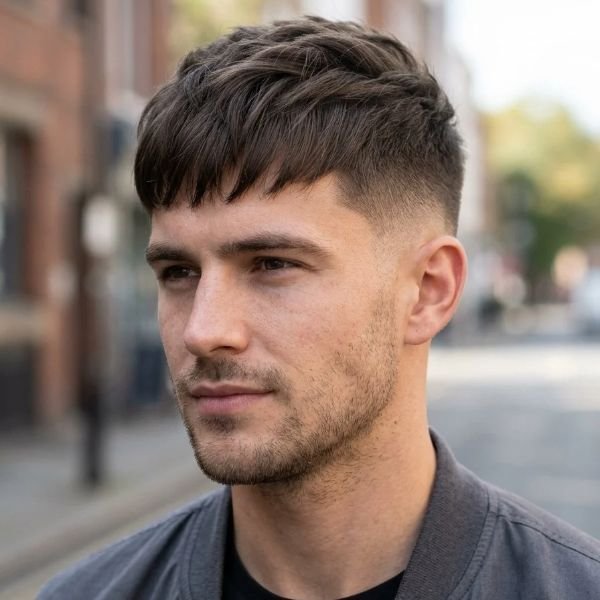
A forward fringe creates a youthful and relaxed appearance. The front hair falls naturally toward the forehead while the temples and neckline remain neatly tapered.
This style works particularly well with medium-length straight hair. Keep the fringe slightly above the eyebrows if you want a cleaner everyday finish.
3. Mid Taper Fade Textured Fringe Straight Hair

The textured fringe introduces separation and movement into straight hair. Instead of having every strand fall evenly, the barber creates light layers and uneven ends.
Use matte clay to define individual sections. Avoid applying too much product because heavy styling creams can make fine straight hair look greasy.
Short & Long Mid Taper Fade Styles
4. Mid Taper Fade Short Hair Straight
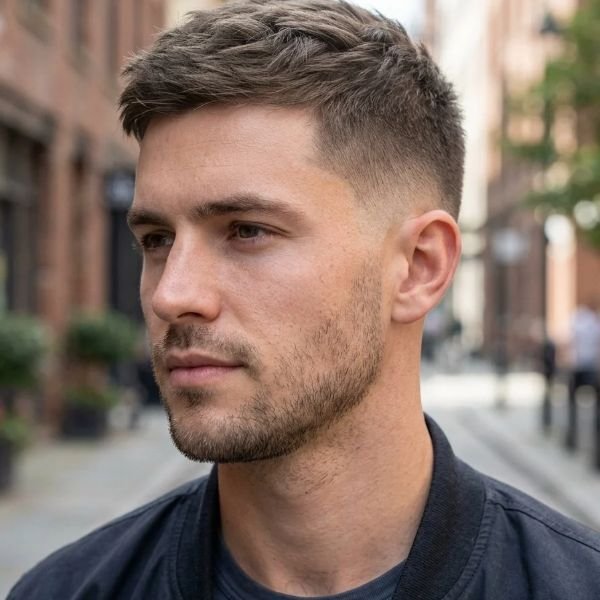
This variation keeps the top short and the sides gradually tapered. It is a practical option for men who prefer simple grooming and minimal styling.
A short textured top, crew-style finish, or compact crop can all work. A small amount of matte paste is usually enough to control the shape.
5. Mid Taper Fade Long Hair Straight
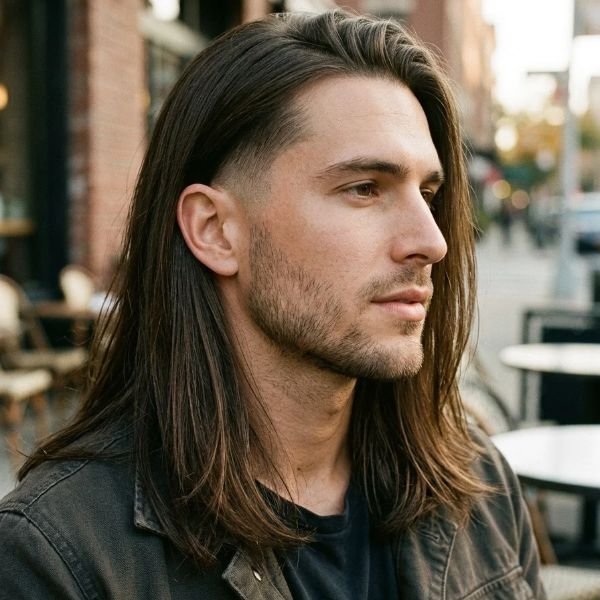
Longer straight hair creates a noticeable contrast against the clean sides. You can wear the top backward, forward, or loosely parted.
Ask for light layers to prevent the hair from looking too heavy. This haircut requires more daily attention because longer sections need proper direction and shape.
Blonde Mid Taper Fade Styles
6. Mid Taper Fade Blonde Straight Hair

Blonde straight hair gives the mid taper a bright, noticeable finish. The shorter sides highlight the longer top, particularly when the haircut includes textured layers.
Natural blonde, platinum, and darker blonde shades can all work. If you color your hair, use a suitable conditioner and avoid excessive heat styling.
Burst, Drop & Skin Fade Combos for Straight Hair
7. Mid Taper Burst Fade Straight Hair
A burst-inspired variation creates a curved transition around the ear. It can give a modern appearance when combined with a textured or slightly longer top.
Be clear with your barber because a burst fade and a traditional mid taper are different shapes. Ask for a subtle burst effect rather than a full high-contrast fade if you want to preserve more side coverage.
8. Mid Taper Drop Fade Straight Hair
A drop variation follows the natural curve behind the ear, allowing the fade line to sit lower toward the back of the head.
This creates a more customized outline. It works well with textured tops, short fringes, and modern layered styles.
Buzz Cut & Low Mid Taper Combos
9. Mid Taper Fade Buzz Cut Straight Hair
A buzz cut with a mid taper offers a clean, simple appearance. The top remains very short while the temples and neckline receive additional blending.
It is useful for men who do not want to spend much time styling their hair. Discuss the top guard length with your barber before starting.
10. Low Mid Taper Fade Straight Hair
A low-mid variation keeps the transition slightly softer than a standard mid taper. It preserves more visible weight around the upper sides.
This is a good option if you want a noticeable but conservative haircut. It also provides a gradual way to experiment with shorter sides.
Slick Back, Beard & French Crop Styles for Straight Hair
11. Mid Taper Fade Slick Back Straight Hair
The slick back directs the top hair away from the forehead. The tapered sides create contrast and keep the overall shape organized.
Medium to thick hair generally holds this style more easily. Apply a small amount of pomade and use a comb or brush to guide the hair backward.
12. Mid Taper Fade With Beard Straight Hair
Combining a mid taper with a beard creates a connected grooming style. The barber blends the sideburn area into the beard to avoid an abrupt transition.
This look works with short stubble, a trimmed beard, or a fuller beard. Ask for balanced cheek and neckline shaping to complement the haircut.
13. French Crop Mid Taper Fade Straight Hair
The French crop features a short top with a forward fringe. It is a useful choice for men who want a structured haircut without extensive styling.
Straight hair naturally follows the forward direction. A little matte paste adds texture while keeping the finish relaxed.
Design, Fluffy & Middle Part Styles for Straight Hair
14. Mid Taper Fade With Design Straight Hair
A haircut design adds a shaved line or subtle geometric detail to the tapered section. Popular options include a single curved line, a short diagonal mark, or a simple double-line pattern.
Keep the design modest if you need a professional appearance. Remember that detailed patterns become less visible as the hair grows.
15. Mid Taper Fade Fluffy Straight Hair
The fluffy version keeps the top soft, airy, and full of movement. It is especially suitable for men who want a relaxed alternative to slick or tightly controlled hairstyles.
Ask for layers that reduce excess weight without removing too much density. Blow-dry at the roots and finish with lightweight styling cream.
16. Mid Taper Fade Middle Part Straight Hair
A middle part divides the top into two sections that fall toward either side of the forehead. The mid taper keeps the perimeter clean while allowing the longer hair to frame the face.
You generally need enough top length for the hair to fall naturally. A blow-dryer and light styling cream help maintain the center part.
Mid Taper Fade for Asian Straight Hair
17. Mid Taper Fade Straight Hair Asian
Asian straight hair can be thick, dense, and naturally resistant to upward styling. A mid taper reduces bulk around the temples while preserving enough length on top.
Ask your barber to remove excess weight carefully rather than thinning the entire haircut. Texture powder can help create lift, while a layered top provides movement.
Additional Mid Taper Fade Variations
18. Two Block Mid Taper Fade Straight Hair
The two-block haircut separates the longer top from the shorter sides. Adding a mid taper creates a cleaner transition around the temples and neckline.
This style is popular with Korean-inspired grooming trends. It works especially well with straight hair because the longer top can fall smoothly over the shorter sides.
19. Mid Taper Fade Quiff Straight Hair
A quiff lifts the front hair upward and slightly backward. It creates height and gives straight hair a more structured silhouette.
Use volumizing mousse on damp hair. Blow-dry the front upward with a round brush, then apply a small amount of matte clay for hold.
20. Mid Taper Fade Curtains Straight Hair
Curtains feature a center or slightly off-center part with longer sections framing the forehead. The mid taper prevents the sides from becoming too bulky.
This is a flexible option for medium and long straight hair. Use a light cream to maintain movement without making the strands stiff.
How to Ask Your Barber for a Mid Taper Fade
Getting the right haircut depends on communicating clearly. The phrase “mid taper fade” alone may not explain the exact finish you want. Show your barber a reference photo and describe the top length, fade height, and neckline.
Key Phrases to Use With Your Barber
You can use this simple description:
“I want a mid taper fade with a gradual blend around the temples and neckline. Keep the sides natural, leave enough length on top for styling, and make the transition smooth.”
Also explain:
- Whether you want a skin, zero, or longer guard finish.
- How much length you want to keep on top.
- Whether you prefer a textured, smooth, or fluffy finish.
- Whether the neckline should be tapered or squared.
- Whether you want the sideburns connected to your beard.
The Guard Number Blending Sequence
Clipper guards help barbers control the length of hair left behind. The following table provides a general reference, not a fixed cutting formula.
| Clipper guard | Approximate hair length |
| #0 | Around 1.5 mm |
| #1 | Around 3 mm |
| #2 | Around 6 mm |
| #3 | Around 10 mm |
| #4 | Around 13 mm |
A barber might blend from a shorter base through guards #1, #2, and #3. The exact sequence depends on the desired contrast, clipper equipment, and hair density.
midtaprfade.com+1
Common Mistakes to Mention
Tell your barber what you want to avoid:
- Removing too much length from the top.
- Making the fade too high.
- Creating visible blending lines.
- Thinning thick hair excessively.
- Cutting the fringe shorter than requested.
- Creating an unwanted skin fade.
A reference photo showing the front and side views can reduce misunderstandings.
Common Mid Taper Fade Mistakes to Avoid
Even a good haircut can lose its shape if the proportions are wrong. Straight hair often makes uneven cutting more noticeable because its strands do not naturally hide inconsistent blending.
Avoid these common mistakes:
- Choosing the wrong fade height: A high transition can expose more of the sides than you intended.
- Ignoring hair density: Fine hair and thick hair need different cutting approaches.
- Removing too much top length: This limits styling options.
- Using heavy products: Excessive pomade can make straight hair look oily and flat.
- Over-thinning the top: Too much thinning can create unwanted gaps.
- Skipping regular trims: The temples and neckline can lose their clean appearance as hair grows.
The best haircut is not necessarily the most dramatic one. Choose a finish that suits your natural hair and daily routine.
How to Maintain a Mid Taper Fade for Straight Hair
A mid taper fade requires regular attention to keep its outline clean. The top also needs appropriate styling to maintain its shape.
Touch-Up Schedule
Your maintenance schedule depends on hair growth and how sharp you want the haircut to look.
| Time after haircut | Recommended care |
| First week | Maintain the original shape |
| Second week | Check the sideburns and neckline |
| Third week | Consider a taper refresh |
| Fourth week | Book a haircut if the blend looks grown out |
A two-to-three-week refresh is a reasonable starting point for someone who prefers crisp edges. A softer taper may remain presentable for longer.
Taper Empire+2
Daily Styling Routine
Follow these simple steps:
- Wash or lightly dampen your hair when needed.
- Apply a small amount of suitable styling product.
- Blow-dry in the direction you want the hair to fall.
- Use your fingers or a brush to create the desired shape.
- Finish with a light-hold product if additional control is needed.
Do not apply excessive heat. Use a heat protectant when blow-drying regularly.
Products That Work Best
| Product | Best use | Hair type |
| Matte clay | Natural texture and definition | Medium to thick |
| Lightweight cream | Soft control | Fine to medium |
| Volumizing mousse | Root lift | Flat straight hair |
| Texture powder | Added grip and volume | Fine or thick |
| Pomade | Smooth, polished finish | Medium to thick |
| Heat protectant | Helps reduce heat-related damage | All hair types |
Choose products based on the finish you want. You do not need to use all of them together.
Best Mid Taper Fade for Straight Hair by Face Shape
Your face shape can help determine which top hairstyle will create balanced proportions. The taper itself is adaptable, but the top length and direction make a difference.
| Face shape | Recommended hairstyle | Why it works |
| Oval | Middle part, quiff, slick back | Balanced proportions allow flexibility |
| Round | Quiff, blowout, textured fringe | Added height can create a longer appearance |
| Square | French crop, side-swept, slick back | Balances a defined jawline |
| Heart-shaped | Curtains, textured fringe | Adds visual balance around the forehead and chin |
Oval Face
Oval faces generally work with most mid taper variations. Try a slick back, fluffy top, middle part, or textured fringe. You can experiment with different lengths without needing major adjustments.
Round Face
Choose styles that add height rather than excessive width. A quiff or blowout can create a more elongated appearance. Avoid overly rounded top shapes if you want additional definition.
Square Face
A square face usually has a strong jawline and broad forehead. A French crop, slick back, or side-swept style can complement these proportions. Keep the sides clean without making the overall haircut unnecessarily harsh.
Heart-Shaped Face
Heart-shaped faces often have a wider forehead and narrower chin. Curtains and textured fringes can soften the upper face and create a balanced appearance.
Best Mid Taper Fade Styles by Age Group
A mid taper fade is flexible enough to suit different ages. The best variation depends more on personal taste, hair density, and lifestyle than age alone.
Teenagers
Teenagers can experiment with textured fringes, fluffy tops, curtains, and two-block styles. These variations create a modern appearance without requiring an extremely short top.
Young Men
Young men can choose quiffs, blowouts, middle parts, and designs. These styles provide more room for individual expression and can be adjusted for casual or professional settings.
Professional Men
For a workplace-friendly finish, consider a short mid taper, slick back, French crop, or classic side part. Avoid excessive designs if your workplace has conservative grooming expectations.
Mid Taper Fade vs Other Fades for Straight Hair
Understanding different fade styles helps you select the right level of contrast. The main differences involve fade placement, the amount of hair removed, and the final appearance.
Mid Taper Fade vs Low Taper Fade
A low taper begins closer to the ears and lower hairline. It produces a subtle transition and preserves more hair around the sides.
A mid taper creates a more noticeable change around the temples. Choose a low taper for a conservative appearance and a mid taper for additional definition.
Mid Taper Fade vs High Taper Fade
A high taper begins higher around the temples and creates stronger contrast. It can make the top appear more prominent.
A mid taper is a more balanced option. It offers definition without creating the same dramatic effect as a high taper.
Mid Taper Fade vs Skin Fade
A skin fade blends the hair down to bare skin at the shortest point. A traditional taper can retain some hair length around the sideburns and neckline.
| Feature | Mid taper fade | Low taper fade | High taper fade | Skin fade |
| Placement | Mid-temple area | Near ears | Higher temples | Depends on height |
| Contrast | Moderate | Subtle | Strong | Strong at skin |
| Appearance | Balanced | Conservative | Bold | Very sharp |
| Maintenance | Moderate | Usually lower | Frequent | Frequent |
| Best for | Versatile styling | Natural finish | Dramatic contrast | High definition |
Remember that fade height and fade finish are separate choices. You can request a mid-height skin fade, for example, rather than assuming every mid taper goes down to bare skin.
barber.style+2
Frequently Asked Questions
1. Is a mid taper fade good for straight hair?
Yes. It creates a clean outline around the temples and neckline while allowing straight hair to be styled in different ways.
2. How long should straight hair be on top for a mid taper fade?
It depends on the style. Short crops may need around 1 to 2 inches, while curtains and slick backs often need 3 to 5 inches or more.
3. Does a mid taper fade make straight hair look thicker?
It can create the appearance of fuller hair by reducing bulk on the sides and adding contrast, but it does not increase actual hair density.
4. How often should I get a mid taper fade haircut?
Most men prefer a refresh every 2 to 3 weeks for sharp edges. Softer tapers can sometimes last 3 to 5 weeks.
5. Which mid taper fade is best for thin straight hair?
A short textured fringe, French crop, or subtle mid taper can work well. Avoid removing too much hair from the top.
6. Can I get a mid taper fade with long straight hair?
Yes. A mid taper works with longer styles, including curtains, slick backs, and layered tops. Keep enough length for your preferred styling direction.
7. What is the difference between a mid taper and a mid fade?
A mid taper mainly shortens the temples, sideburns, and neckline. A mid fade removes more hair across the sides and back, creating a broader transition.
Conclusion
The mid taper fade for straight hair is a versatile haircut that combines clean sides with plenty of styling options. Whether you prefer a textured fringe, blowout, French crop, slick back, or middle part, there is a variation to suit your personal style. The key is choosing the right top length, fade height, and blending technique.
Before visiting your barber, consider your face shape, hair thickness, and daily grooming routine. Bring a reference photo and explain exactly how much length you want to preserve. With the right cut and basic maintenance, a mid taper fade can give straight hair a neat, modern, and well-balanced appearance throughout 2026.

Liam Joseph Miller is a fashion writer and content creator who enjoys exploring the latest fashion trends, outfit ideas, hairstyles, and styling tips. He focuses on creating simple, useful, and easy-to-read content for readers who want fresh inspiration for their personal style.
