

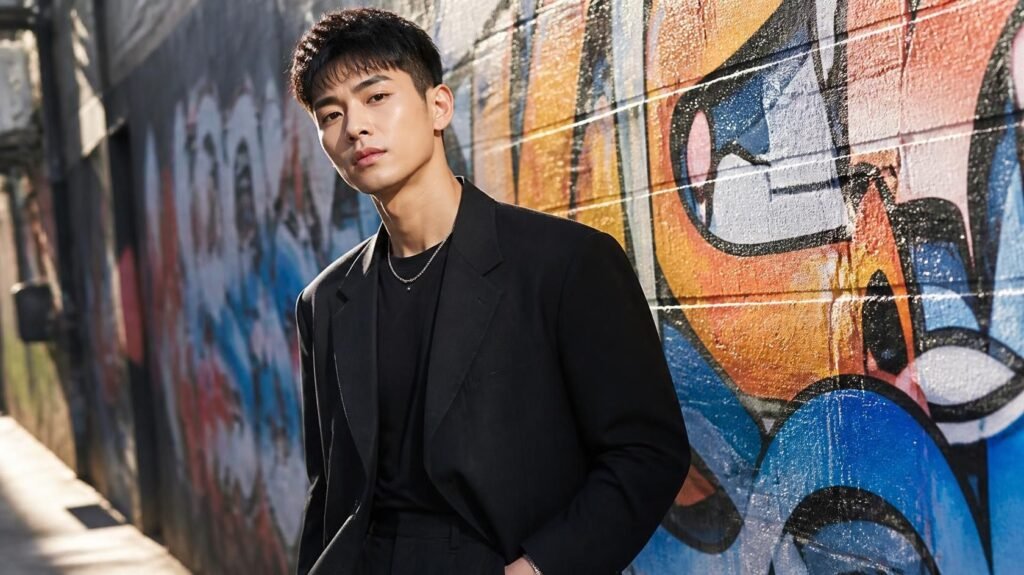
The mod haircut is back in barbershops, and this time it feels less like a costume and more like a smart everyday cut. It gives you a defined fringe, soft layers and a rounded shape that frames the face without much effort. If you’re tired of tight skin fades and stiff, shiny styling, a mod cut is a refreshing change.
This guide covers 30 mod haircut styles, who they suit, and how to ask for them. You’ll also get styling steps, grow-out advice and common mistakes to avoid, so you can walk into the barbershop with confidence.
What Is a Mod Haircut?
Quick answer: A mod haircut is a medium-length, scissor-cut men’s style from 1960s Britain. It has a structured fringe, textured layers, tidy sideburns and a rounded silhouette.
The style grew out of the Mod subculture in London. Young “Modernists” borrowed their look from Italian tailoring and French cinema, and the hair matched the sharp suits. The cut sits on the longer side of short, usually 3 to 5 inches (8 to 13 cm) on top, with sides left fuller than a modern fade.
You’ll also hear it called the wings haircut, the flow or the mop top. The names overlap, but a true mod cut keeps clean edges and a deliberate fringe.
Today there are two broad versions:
- Classic mod: Blunt fringe, scissor-blended sides, collar-length back, often finished with a comb.
- Modern mod: Softer layers, a matte finish and sometimes a light taper around the ears.
What Are the Best Mod Haircut Styles for Men?
Here are 30 variations, from vintage to current. Each one lists the hair type or situation it works best for.
1. Classic 60s Mod
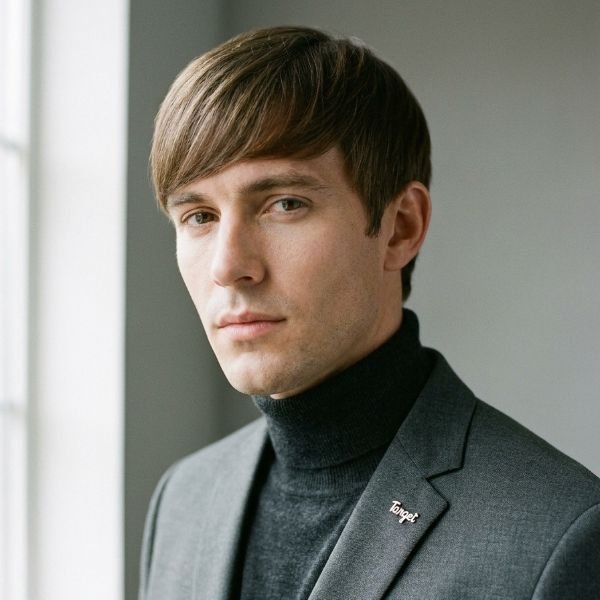
Long fringe, short sides and a collar-length back. The edges stay neat and the shape is rounded. Best for: Straight to slightly wavy hair and men who want the authentic look.
2. 90s Britpop Mod
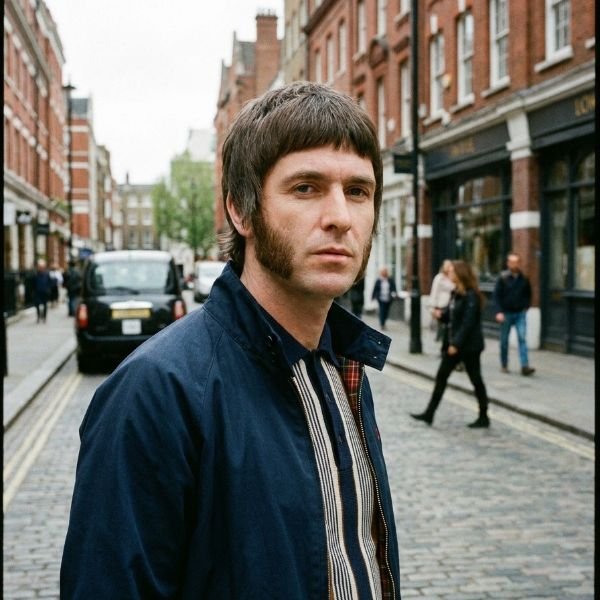
Think Oasis and Blur. Choppy layers, a low fringe and a slightly unkempt finish. Blow-dry lightly and shape with your fingers. Best for: Medium thickness hair.
3. Modern Textured Mod
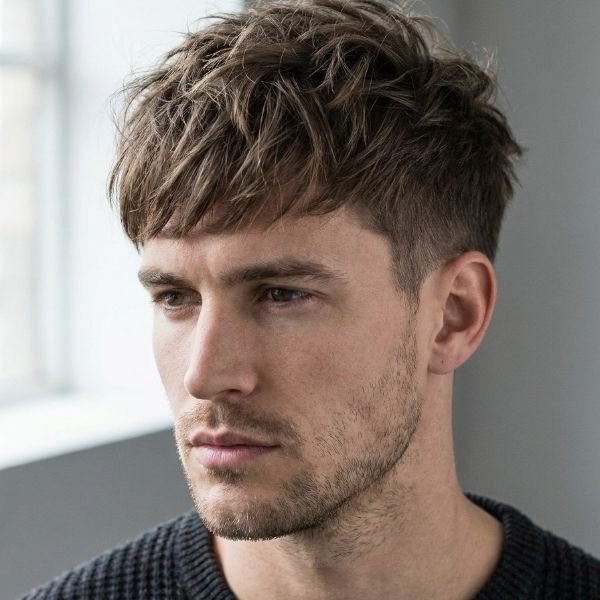
Internal layering separates the fringe and crown so the hair moves. A matte clay keeps it natural. Best for: Almost any hair type, which makes it the safest first mod cut.
4. Short Mod Cut
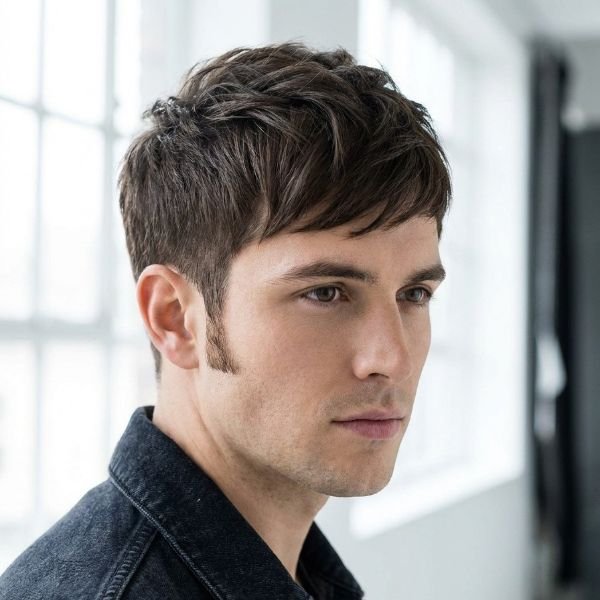
The rounded shape stays, but the length drops to about 2 to 3 inches. The fringe is neater and the sides are softly tapered. Best for: Busy mornings and workplaces.
5. Choppy Mod
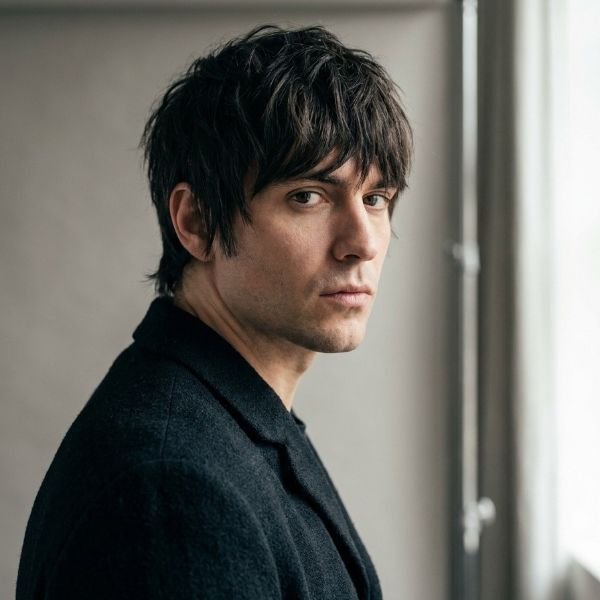
Uneven, point-cut layers create a rebellious edge with lots of movement. Best for: Thick, straight hair that needs weight removed.
6. Messy Mod

Finger-styled and lived-in, with no comb and no precision. It still keeps a clear fringe. Best for: Guys who want a relaxed, low-effort look.
7. Curly Mod
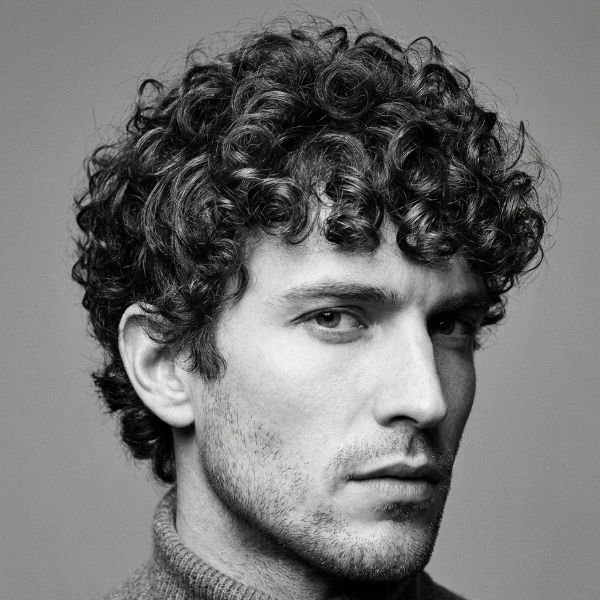
Curls take over the silhouette, so the barber shapes around your natural pattern. Ask for a fringe that doesn’t fight your curls. Best for: Type 2C to 3C curls.
8. Wavy Mod
Waves add natural volume and flow with very little work. A light cream is often enough. Best for: Wavy hair, which is arguably the easiest texture for this style.
9. Mod for Straight Hair
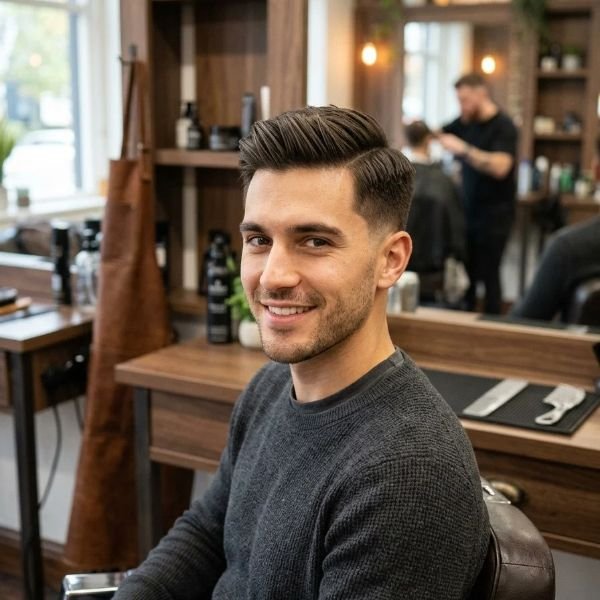
Precision is everything here. Sharp layering and a texturized crown stop straight hair from looking flat. Best for: Straight, medium to thick hair.
10. Long Mod
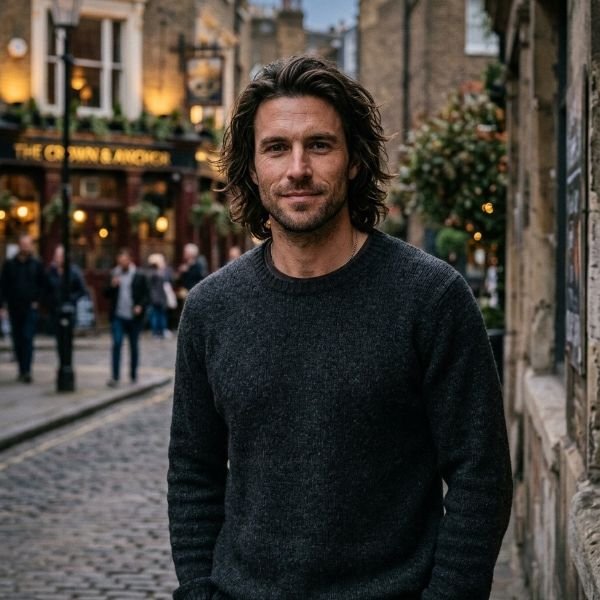
An eyebrow-skimming fringe, ear-grazing sides and a collar-length back. It needs healthy hair and regular trims. Best for: Men who like flow and have patience.
11. Medium Mod
The most balanced length, about 4 inches on top. It’s long enough to style several ways but short enough to stay tidy. Best for: First-timers.
12. Fluffy Mod

Lifted roots and airy crown volume with a soft, layered fringe. Use a blow-dryer and a light mousse. Best for: Fine to medium hair that needs body.
13. Shaggy Mod
Longer layers through the sides and back blend the mod with a shag. It looks rock and roll without losing shape. Best for: Wavy or thick hair.
14. Mod Mullet
A mod fringe on top with extra length at the nape. It’s part vintage, part punk. Best for: Confident dressers who like a statement.
15. Mod Wolf Cut
A wolf cut’s heavy layering meets a mod silhouette. It’s wilder than a standard mod but still has a defined fringe. Best for: Straight or wavy hair with decent thickness.
16. Mod Quiff (Paul Weller Style)
The Jam frontman made this look famous. The hair is swept up and back from the forehead with a polished finish, so it’s more structured than a flop. Best for: Men who like a sharper, styled look.
17. Mop Top (Beatles Style)
A full, rounded fringe that covers the forehead and ears. The Beatles popularised it in the early 1960s, though the mod scene was already forming. Best for: Straight, medium hair.
18. Mod French Crop
A short back and sides with a blunt, textured fringe. It’s one of the lowest maintenance options. Best for: Men who want the shape without daily styling.
19. Mod Bowl Cut
A uniform, rounded fringe that wraps around the head. It’s the boldest nod to 1960s style, so it works best when cut with a clean line. Best for: Thick, straight hair and strong, angular features.
20. Side-Swept Mod
The fringe sweeps across the forehead instead of falling straight. It looks tidy and a bit more grown up. Best for: Office settings and men who like a side part.
21. Mod Flow
Longer layers that sweep back and around the ears. It’s relaxed and works well with sunglasses and a casual wardrobe. Best for: Wavy hair and long or oval faces.
22. Mod with Low Taper
A light taper around the ears and neckline keeps the neat edge, while the top stays full and scissor-cut. Best for: Men who want a barbershop fresh finish.
23. Blonde Mod
Blonde tones, whether natural or lightened, make the layers show up more. Bleaching needs aftercare, so use a good conditioner. Best for: Pale or olive skin tones and men who enjoy colour.
24. Thick Mod with Waves
Thick hair needs internal weight removal so it doesn’t turn into a helmet. The result is a layered, wavy and rounded shape. Best for: Dense wavy hair.
25. Spiky Mod
Short, choppy layers with lifted fringe tips. It’s a nod to the 90s punk and indie scene. Best for: Short, straight hair and a playful mood.
26. Textured Messy Mod with Beard
A tousled mod fringe balanced by a full, shaped beard. The beard adds weight to the lower face while the top stays soft. Best for: Round or oval faces that want more structure.
27. Korean Mod
Inspired by two block and soft perm trends. The fringe is lighter and more see-through, and the volume sits on top. Best for: Straight, slightly thick Asian hair.
28. Mod for Fine/Thin Hair
Short layers and a thicker looking fringe create the illusion of density. Use a light, root lifting powder. Best for: Fine hair, and men who notice early thinning near the temples.
29. Edgy Short Mod
Short, sharp and a little rough. Think point-cut ends and a lifted crown. Best for: Men who want attitude without length.
30. Mod with Curtain Fringe
A centre-parted fringe that falls to both sides. It’s a 2026 favourite that combines the mod shape with the middle part trend. Best for: Oval, long and heart-shaped faces.
Who Should Skip a Mod Haircut?
A mod cut isn’t for everyone. Think twice if you:
- Have a receding hairline or advanced thinning on top, since the fringe needs density.
- Have a very strong cowlick at the front, which can fight the fringe.
- Want zero styling. Even short mod cuts need a minute with a product.
- Work somewhere with strict grooming rules about hair length.
If hair loss is the concern, a short, textured version (style 28 or 29) is far more forgiving than a long one.
Which Face Shape Works Best with a Mod Cut?
Oval faces handle every version. For other shapes, small changes make a big difference:
- Square: Soften the fringe with layers to offset a strong jaw.
- Round: Keep the top slightly longer and the sides tighter, which adds height.
- Oblong or rectangular: A fuller, forward fringe shortens the face visually.
- Heart-shaped: A side-swept or curtain fringe balances a wider forehead.
- Diamond: Keep the sides fuller around the cheekbones.
How Long Does Your Hair Need to Be for a Mod Cut?
Most men need around 3 to 4 inches (7 to 10 cm) on top to get a proper fringe. Your sides should be at least 1 to 2 inches so the barber can blend them with scissors. The back should reach the collar for a classic version, though a short mod needs less.
Hair grows about half an inch (1.25 cm) a month on average. So if you’re starting from a short crop, expect to wait roughly 3 to 4 months. If you’re in between, ask your barber for a bridging trim that keeps the shape while the top catches up.
How Do You Ask Your Barber for a Mod Haircut?
Be specific, because “mod” can mean different things to different barbers. Bring one or two photos and use words like these:
- “Mod cut, 60s style, long fringe and layered top.”
- “About 4 inches on top, point-cut for texture.”
- “Sides scissor-blended, or a light taper around the ears.”
- “Defined sideburns, to mid-ear and squared off.”
- “Collar-length at the back, and keep the fringe blunt” (or “wispy,” for a softer finish).
Tell the barber how much time you’ll spend styling. If it’s under five minutes, say so. It helps them choose the right amount of layering.
How Do You Style a Mod Cut at Home?
You only need five minutes and a few simple products.
- Start with damp hair. Towel dry it so it isn’t dripping.
- Add a light base. A pea-sized amount of cream, sea salt spray or mousse works well.
- Blow-dry forward. Direct hair from the crown toward the fringe. Use your fingers to lift the roots.
- Finish with texture. Warm a small amount of matte clay or paste and work it from mid-length to the ends.
- Set the fringe. Shape it with your fingers or a comb, depending on how polished you want to look.
Modern mod cuts usually look best with a matte finish. Go with a high-shine pomade and a comb only if you want the authentic 60s feel.
What Are the Most Common Mistakes with a Mod Cut?
- Using too much product. Heavy gel flattens the fringe and kills the soft shape.
- Cutting the fringe too short. It’s easier to take more off than to put it back.
- Skipping texture. Blunt, thick hair with no thinning can look like a helmet.
- Brushing aggressively. It breaks the clean lines of a classic mod.
- Ignoring your hair type. Curly, fine and thick hair each need a different cut.
- Waiting too long between trims. The shape disappears quickly.
What Is the Difference Between a Mod Cut and Similar Styles?
| Style | Main difference |
| Mop top | Fuller, heavier fringe that covers the ears |
| Bowl cut | Uniform length all the way around |
| French crop | Much shorter, with a tight back and sides |
| Caesar cut | Short, forward fringe, usually with a fade |
| Wolf cut | Heavier, choppier layers and more volume |
| Curtains | Centre-parted and often longer on the sides |
A mod cut falls in the middle. It has more structure than a shag, more length than a crop, and more polish than a mop top.
How Often Should You Trim a Mod Haircut?
Every 4 to 6 weeks is the sweet spot. Shorter versions and tapered sides need a visit closer to every 4 weeks. Longer, shaggier mod cuts can stretch to 8 weeks, since a bit of grow-out is part of the charm. A quick fringe and sideburn tidy between full cuts keeps things sharp.
FAQs
Can a mod cut have a fade?
Yes. A low taper or low fade keeps the sides neat while the top stays full.
Is a mod cut good for professional settings?
Yes. A short or side-swept version looks polished and works well in most offices.
Did the Beatles invent the mod haircut?
No. The mod scene was already growing in London, and the Beatles popularised the related mop top.
Can you pair a mod cut with a beard?
Yes. A trimmed or full beard balances the soft fringe and adds structure to the face.
Does a mod cut work for men over 40?
Yes. Choose a shorter, neatly tapered version and keep the styling matte.
How does a mod cut grow out?
It grows out well. The fringe becomes a flow and the shape turns shaggy, though you’ll want a trim every 6 to 8 weeks.
What is the easiest mod cut to maintain?
The mod French crop or a short mod cut. Both need only a few minutes of styling.
Conclusion
A mod haircut works because it’s flexible. You can keep it sharp and vintage, go choppy and Britpop, or wear a soft, textured version that suits your hair type. The key is a clear conversation with your barber, a matte product and regular trims.
Start by picking two or three styles from the list, bring photos, and ask for a cut that fits your hair length and your daily routine. Do that, and the mod cut becomes one of the easiest ways to look put together in 2026.

Liam Joseph Miller is a fashion writer and content creator who enjoys exploring the latest fashion trends, outfit ideas, hairstyles, and styling tips. He focuses on creating simple, useful, and easy-to-read content for readers who want fresh inspiration for their personal style.
