


A shaggy haircut for men is one of the easiest ways to get texture, movement, and a relaxed appearance without making the hair look overly polished. The style is built around layers, choppy ends, natural volume, and a slightly messy finish.
The modern shag is also much more versatile than the classic 1970s version. You can wear it short, medium, or long. It can work with straight, wavy, curly, thick, or fine hair when the layers are adjusted correctly.
The key is not simply asking for “shaggy hair.” Your barber needs to know how much length, layering, fringe, and texture you want. This guide covers 25 popular shag styles, how they compare with wolf cuts and mullets, what to tell your barber, and how to maintain the shape.
Best Shaggy Haircuts for Men
A shag is defined more by its layered construction and texture than by one exact length. The right variation depends on your hair type, face shape, lifestyle, and how much styling you want to do.
1. Classic Shag

The classic shag takes inspiration from the heavily layered hairstyles of the 1970s. It normally has volume at the crown, feathered sides, a textured fringe, and noticeable length toward the back.
It is ideal if you want a vintage rock inspired appearance with plenty of movement. Thick and wavy hair can make this version especially easy to style.
2. Modern Shag
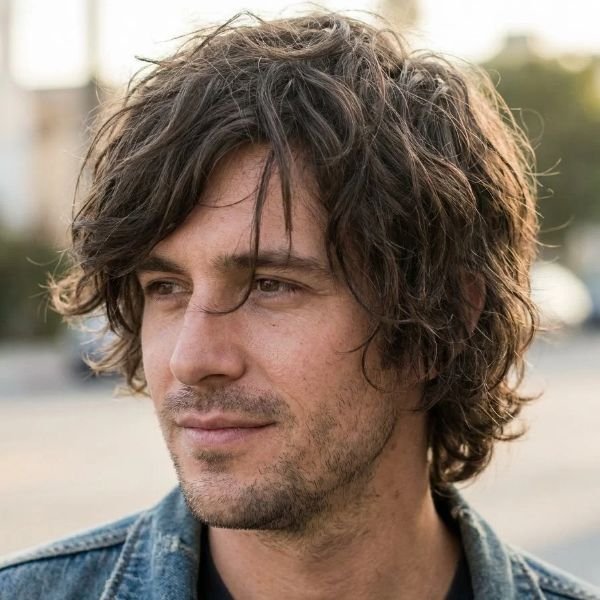
The modern shag keeps the recognizable layers but uses a cleaner, more controlled shape. The fringe can be softer, while the sides and back are usually less bulky than a traditional shag.
This is a strong choice if you want shaggy texture without looking like you stepped directly out of the 1970s.
3. Short Shag

A short shag keeps the layers above or around the ears while retaining texture through the crown and fringe.
It works well for men who want a low maintenance haircut but still want more personality than a standard crop. Use a small amount of matte styling cream to separate the ends.
4. Medium Shag
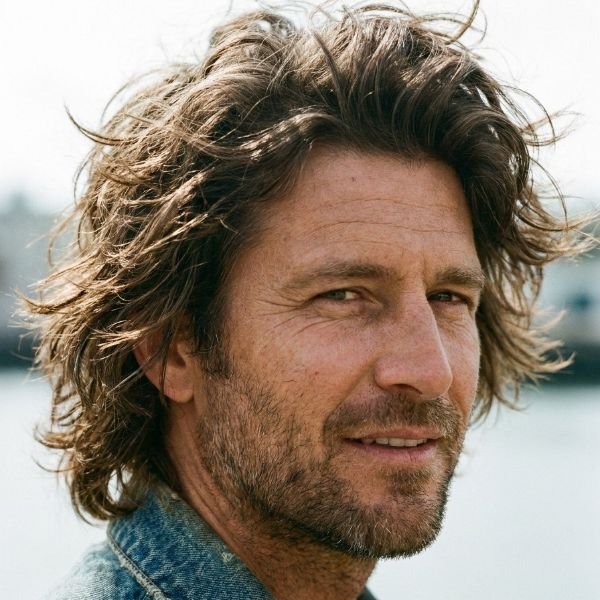
The medium shag is one of the most versatile versions. Hair usually reaches around the ears, jaw, or upper neck, giving the barber enough length to create visible layers.
It works particularly well with naturally wavy hair because the layers encourage movement without requiring much styling.
5. Long Shag
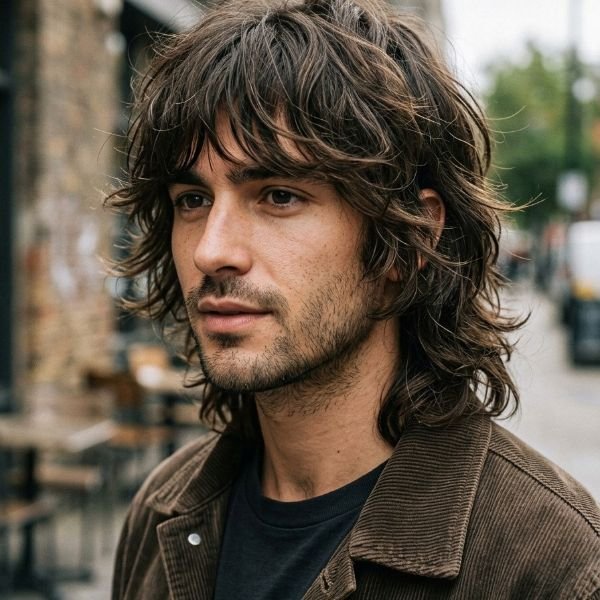
The long shag leaves substantial length through the sides and back while using layers to prevent the hair from becoming heavy.
It suits men who enjoy longer hairstyles but do not want a single length. Regular conditioning is important because longer textured hair can become dry at the ends.
6. Shaggy Fade Haircut

A shaggy fade combines textured, layered hair on top with a cleaner fade around the sides and neckline.
This creates a stronger contrast between messy texture and clean edges. It is useful for men who like the shag aesthetic but want a sharper silhouette.
7. Shag with Taper

A shag with taper is more subtle than a fade. The hair gradually becomes shorter around the ears and neckline while the top remains layered and loose.
This version can be easier to wear in professional settings because the perimeter looks neat without removing the shag’s movement.
8. Curly Shag
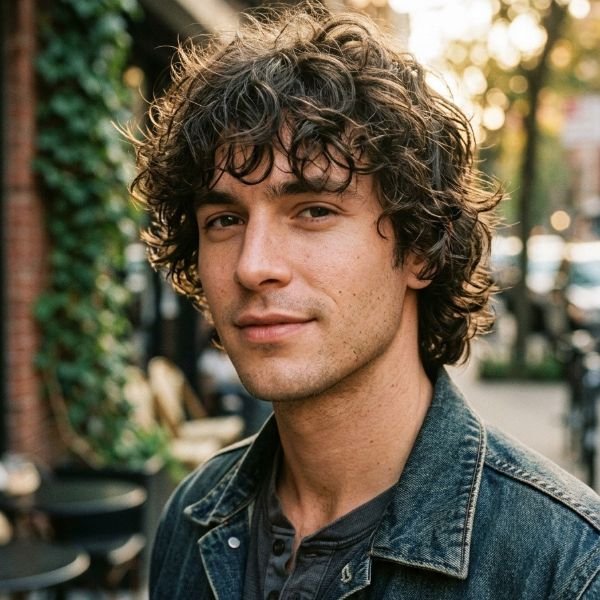
A curly shag uses layers to distribute the natural volume of curls. Proper layering prevents the hair from forming one large, heavy shape.
Curly hair should be cut with its natural shrinkage in mind. Styling with curl cream and allowing the hair to air dry or diffuse can preserve the pattern.
9. Wavy Shag
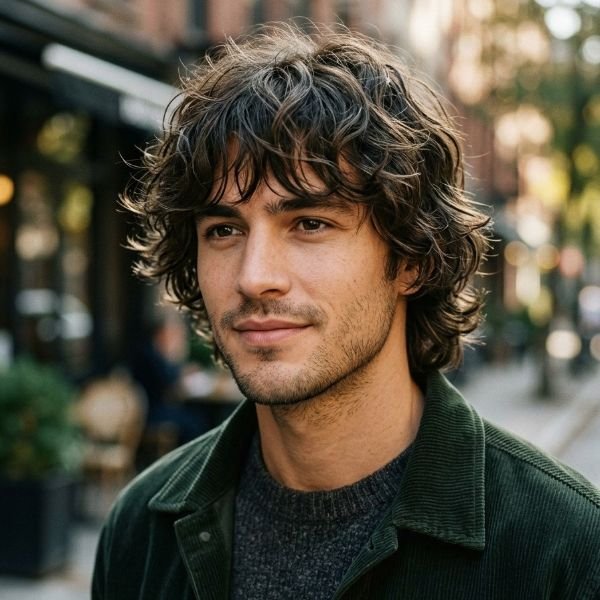
A wavy shag is a natural match for this haircut because waves already provide the movement the style needs.
The barber can use layers to release some weight and encourage the waves to separate. A lightweight sea salt spray can enhance texture without making the hair stiff.
10. Shag Haircut for Straight Hair
Straight hair can absolutely work with a shag, but cutting technique becomes more important.
Without natural bends, the layers need to create the movement. Point cutting, soft layering, and carefully textured ends can stop straight hair from looking flat or overly uniform.
11. Choppy Shag
The choppy shag features clearly separated layers and piecey ends. It has a more rebellious appearance than a soft, blended shag.
This style works particularly well if you want visible texture rather than a polished haircut. Avoid excessive product because heavy styling creams can flatten the layers.
12. Textured Shag
The textured shag focuses on separation throughout the crown, sides, and fringe.
It is a good choice for men who want their haircut to look naturally undone. Matte paste, texture powder, or a lightweight styling cream can emphasize individual sections.
13. Messy Shag
The messy shag deliberately embraces an imperfect finish. The layers are designed to move independently instead of sitting in a precise shape.
This makes it appealing for men who prefer air drying and minimal styling. The haircut should create most of the texture before product is added.
14. Shaggy Mullet
The shaggy mullet combines shag layers with a more noticeable length difference between the front and back.
Unlike a traditional mullet, the transition can be softer and more textured. This makes it a useful option if you want a mullet inspired look without an extremely sharp contrast.
15. Shaggy Wolf Cut
The shaggy wolf cut sits between a shag and a mullet. It normally has shorter, fuller crown layers and a longer, wispy back.
The wolf cut is especially popular with wavy and curly textures because natural movement enhances the layered shape. Haircut.info
16. Curtain Shag
The curtain shag features a center or slightly off center part with longer pieces framing the face.
It combines the relaxed structure of a shag with curtain bangs. It can be particularly flattering if you want to soften a strong forehead or create more vertical emphasis around the face.
17. Korean Shag
The Korean shag usually has softer layering, airy volume, and face framing pieces.
Compared with a heavily choppy rock shag, this version can look cleaner and more controlled. It is a good choice for straight or slightly wavy hair.
18. 70s Rock Shag
The 70s rock shag goes all in on retro texture. Think fuller sides, feathered layers, longer sideburns, and a substantial fringe.
It pairs naturally with facial hair and vintage styling. The result is expressive rather than minimalist.
19. Shag with Bangs
Adding bangs makes the front of the haircut the main feature. They can be full, wispy, curtain style, or heavily textured.
The right length depends on your face and hair texture. Ask your barber to connect the fringe with the surrounding layers instead of creating an isolated block.
20. Shag with Beard
A shag with beard creates a strong balance between loose hair and structured facial hair.
Keep the sideburn area blended into the haircut. A neatly shaped beard can give a heavily textured hairstyle more definition.
21. Thick Hair Shag
Thick hair is excellent for a shag because it naturally provides volume. However, excessive bulk can make the haircut look too wide.
Your barber should remove weight strategically while keeping enough density in the ends. Over thinning can make thick hair look frizzy or weak.
22. Fine Hair Shag
Fine hair can benefit from a shag when the layers are controlled carefully.
Avoid removing too much density. Softer layers and shorter crown pieces can create the appearance of volume without making the ends look thin.
23. Surfer Shag
The surfer shag has longer, relaxed layers and a naturally tousled appearance.
It works especially well with wavy hair. The goal is movement rather than precision, so a light texture spray and air drying can be enough.
24. Shaggy Crop
The shaggy crop is a shorter interpretation of the trend. It combines a cropped silhouette with a textured top and broken fringe.
It is a practical option if you like the personality of a shag but do not want medium or long hair.
25. Shaggy Undercut
A shaggy undercut creates a dramatic difference between the textured top and shorter sides.
This version is more alternative than the classic shag. It is best for someone comfortable with a stronger contrast and more noticeable grow out.
Shag vs Wolf Cut vs Mullet: What’s the Difference?
The three styles overlap, which is why they are often confused. The simplest distinction is based on where the length and layering are concentrated.
| Haircut | Main feature | Overall shape | Best description |
| Shag | Layers throughout | Balanced and textured | Classic layered movement |
| Wolf cut | Short crown plus longer back | Fuller top, wispy back | Shag and mullet hybrid |
| Mullet | Shorter front and sides | Clearly longer back | Strong front to back contrast |
A traditional shag distributes layers across much of the head. A mullet creates a clearer difference between short sides and a longer back.
The wolf cut sits between them. It borrows the shag’s choppy layers and the mullet’s longer back, usually with a fuller crown. Current barber guides similarly describe the wolf cut as a hybrid rather than a completely separate cutting concept. Haircut.info
If you want more traditional shag, tell your barber to keep the sides and back connected. If you want a wolf cut, request more crown volume and a longer, lighter nape.
How to Ask Your Barber for a Shag Haircut?
Do not simply say, “Give me a shag.” That word can describe several different silhouettes.
Instead, tell your barber:
- Your preferred length: short, medium, or long.
- Your hair texture: straight, wavy, curly, thick, or fine.
- Your fringe preference: full, wispy, curtain, or side swept.
- Your layering preference: soft and blended or choppy and obvious.
- Your styling routine: air dried, blow dried, or naturally curly.
- Your desired sides: natural, tapered, faded, or longer.
A reference photo is extremely useful. Choose one showing hair with a texture and density similar to yours. Copying a haircut from straight hair onto tightly curly hair will not produce the same result.
You can also give your barber a simple instruction such as:
“I want a medium shag with visible layers, a textured fringe, natural sides, and enough length in the back for movement. Please keep the ends light and avoid making the shape too bulky.”
That gives the barber a much clearer starting point.
What Goes Wrong with Shaggy Haircuts?
The biggest mistake is confusing messy with shapeless. A good shag looks intentionally relaxed because the layers create movement.
Common problems include:
- Too much thinning, especially on fine or frizzy hair
- Removing too much length from the back
- Making the crown excessively short
- Creating a fringe that does not connect with the sides
- Using too much heavy styling product
- Choosing a reference photo with a completely different hair texture
- Cutting curly hair without accounting for shrinkage
- Asking for a fade when you actually want traditional shaggy sides
A professional shag should still have a recognizable silhouette. The messiness should come from texture and layering, not from an absence of shape.
How Often Should You Trim a Shag Haircut?
Most men can refresh a shag approximately every 6 to 10 weeks, depending on how quickly their hair grows and how precise they want the shape to remain. Some longer, deliberately messy versions can be grown out for longer.
If your priority is maintaining the fringe and crown shape, shorter maintenance visits may be useful. If you prefer a relaxed grow out, you can wait longer.
A useful maintenance strategy is to ask your barber to preserve the overall length while refreshing the crown, fringe, and damaged ends.
FAQs About Shaggy Haircuts for Men
Should you wash your hair before a shag haircut appointment?
Arrive with clean hair unless your barber gives different instructions. Avoid excessive styling products so the barber can see your natural texture and movement.
Can a barber fix a bad shag without cutting it all short?
Usually, yes. A barber can often rebalance uneven layers, reshape the fringe, and improve weight distribution without removing all the length.
Does a shag haircut work with glasses?
Yes. A shag can work very well with glasses, especially when the sides and fringe are shaped so they do not constantly interfere with the frames.
Can you tie a shag back for sports or the gym?
Yes, provided the hair is long enough. A small hair tie or headband can keep longer layers away from your face during exercise.
Can you perm straight hair to create shag texture?
Yes, a professional perm can add waves or curls, but the haircut should be planned around the new texture. Ask an experienced stylist to assess your hair before combining chemical treatment with heavy layering.
Final Thoughts
Shaggy haircuts for men remain popular because they offer something many conventional cuts lack: natural movement without requiring a perfectly polished finish. The style can be adapted to almost any length and many different hair textures.
The most important factor is the layering. Thick hair may need weight removal, while fine hair usually needs density preserved. Wavy and curly hair can use natural movement to create the shag’s signature texture, while straight hair may need more deliberate cutting and styling.
Before your appointment, choose the specific version you want, bring a suitable reference photo, and explain how you normally style your hair. Whether you choose a classic shag, modern shag, wolf cut, shaggy mullet, curly shag, or tapered version, the best haircut is the one designed around your actual hair, not just the picture you found online.
Liam Joseph Miller is a fashion writer and content creator who enjoys exploring the latest fashion trends, outfit ideas, hairstyles, and styling tips. He focuses on creating simple, useful, and easy-to-read content for readers who want fresh inspiration for their personal style.
