


The mid taper fade middle part is one of the most versatile men’s hairstyles in 2026. It combines a clean taper around the temples, sideburns, and neckline with longer hair that separates naturally down the center. The result is neat without looking overly sharp or rigid.
This haircut also gives men plenty of styling freedom. You can wear the top smooth, textured, messy, wavy, curly, or slightly wet-looking. The right version depends on your hair type, face shape, lifestyle, and preferred level of maintenance.
What Is a Mid Taper Fade Middle Part?
A mid taper fade middle part combines two main elements. The first is a center part that divides the longer hair on top into two sections. The second is a mid-level taper that gradually reduces the hair around the temples, sideburns, and neckline.
The top is normally kept noticeably longer than the tapered areas. This allows the hair to move away from the center and create the familiar curtain or middle-part shape. The exact length can vary, but roughly 3 to 6 inches gives many men enough room for different versions of the style.
A mid taper should not remove too much weight from the upper sides. The goal is to create a clean transition while allowing the longer top to flow naturally.
This makes the haircut different from a traditional full fade. A full fade can create stronger contrast across the sides, while a taper usually keeps more natural weight around the head.
Why Mid Taper Fade Middle Part Is So Popular in 2026
The style combines two qualities that many men want: clean edges and natural movement. The taper keeps the haircut looking controlled, while the middle part gives the top a relaxed and expressive appearance.
Another reason for its popularity is versatility. Straight hair can create smooth curtains, wavy hair can produce natural flow, and curly hair can turn the center part into a fuller textured look.
The haircut also works across different settings. A polished version can suit an office, while a messy or textured version works well for casual outfits, college, social events, and everyday wear.
Modern middle parts are also less rigid than older versions. Instead of creating a perfectly flat split with heavy gel, many men now prefer soft volume, loose texture, and flexible movement.
Pros and Cons
| Pros | Cons |
| Clean and modern appearance | Requires enough length on top |
| Works with several hair textures | Hair may need training |
| Can be styled casually or professionally | Cowlicks can affect the part |
| Keeps temples and neckline neat | Requires regular taper maintenance |
| Many styling variations | Heavy products can make it look greasy |
| Works with textured and natural finishes | Very fine hair may lack fullness |
10 Best Mid Taper Fade Middle Part Styles
1. Classic Middle Part Mid Taper

The classic middle part mid taper is the easiest version to understand and wear. The top is medium length, divided through the center, and allowed to fall naturally toward both sides.
Ask your barber to keep enough weight around the front and upper sides. Avoid making the taper too aggressive because the haircut looks better when the top connects naturally with the sides.
This style works particularly well with straight or lightly wavy hair. A small amount of styling cream can provide control without making the hair stiff.
2. Slick Middle Part Mid Taper
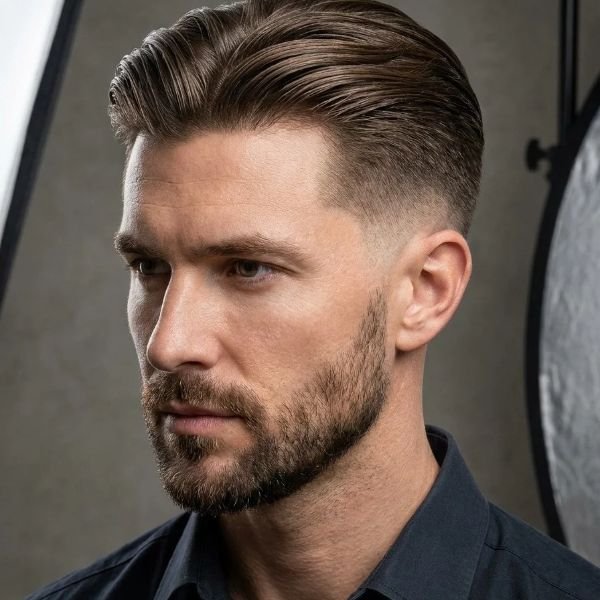
The slick middle part gives the haircut a more polished appearance. The hair is separated in the center and combed smoothly toward each side.
Use a light styling cream or flexible pomade rather than applying a large amount of strong gel. The goal is controlled shine and movement rather than a hard, helmet-like finish.
This version is useful for dinners, formal events, dates, and professional environments where a cleaner hairstyle is preferred.
3. Wet-Look Middle Part Mid Taper
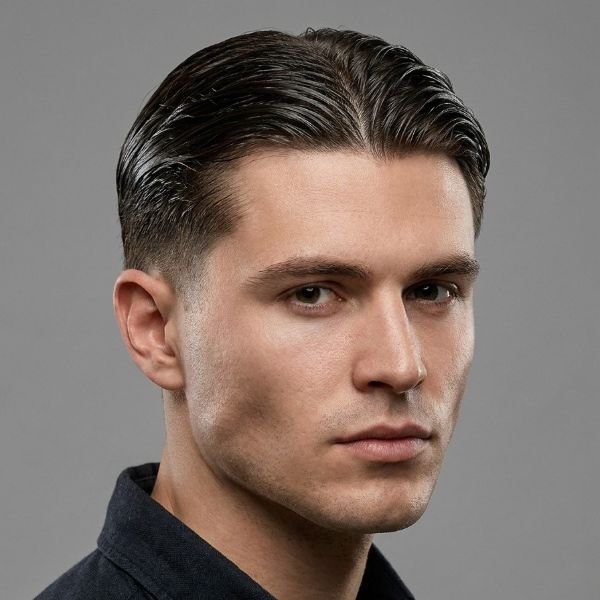
The wet-look version adds shine and stronger definition to the classic middle part. It works especially well when the hair has enough density to maintain its shape.
Apply a small amount of shine-enhancing styling product to damp hair. Create the center part with your fingers or a comb, then direct each side away from the face.
Avoid using too much product. Excessive shine can flatten the top and make the haircut appear heavy.
Textured Middle Part Styles
4. Textured Middle Part Mid Taper
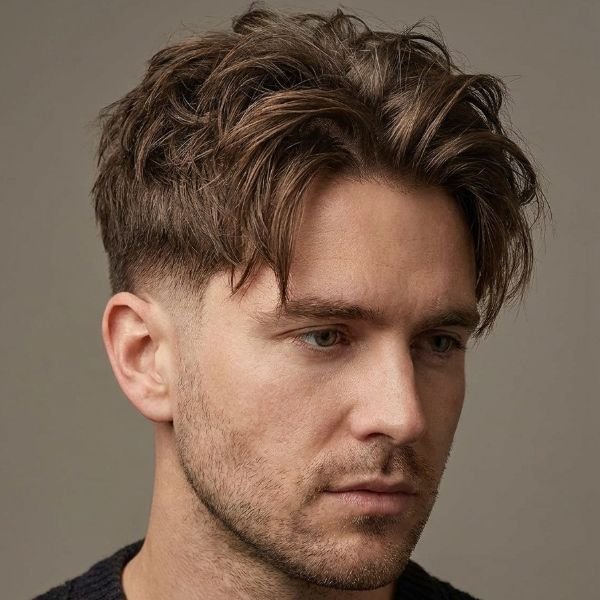
A textured middle part gives the haircut more volume and separation. Instead of perfectly smooth curtains, individual sections of hair are allowed to move independently.
This is an excellent choice for thick or naturally textured hair. Ask for light layering or point cutting so the barber can remove excess bulk without making the ends too thin.
A matte clay, texture powder, or lightweight styling cream can help create separation. Use your fingers rather than aggressively combing the hair into place.
5. Messy Middle Part Mid Taper

The messy middle part is designed to look intentionally relaxed. The center remains visible, but the hair does not need to fall perfectly on both sides.
This style works particularly well with wavy or thick hair. Blow-dry the hair loosely, establish the center split, and finish with a small amount of matte paste.
The key is controlled messiness. Too much product or excessive teasing can turn a natural-looking style into an unnecessarily bulky haircut.
Curl and Wave Middle Part Styles
6. Curly Middle Part Mid Taper

Curly hair can create a fuller and more distinctive middle part. Instead of forcing the curls completely flat, let them follow their natural direction.
A curl cream or lightweight leave-in conditioner can help define the curls. A diffuser can also reduce frizz while maintaining natural volume.
The taper should remain clean around the temples and neckline. Do not remove too much weight from the sides if the curls need that volume to connect with the top.
7. Wavy Middle Part Mid Taper

Wavy hair may be one of the easiest textures for this haircut because natural waves already create movement.
Keep the front long enough for the waves to separate around the center. A lightweight sea salt spray can add texture, while a styling cream can reduce frizz and improve control.
The best finish usually looks effortless. Let the waves create some irregularity rather than forcing every strand into a perfectly symmetrical position.
Detail and Combination Middle Part Styles
8. Middle Part with Fringe Mid Taper

A middle part with fringe combines a curtain shape with shorter or textured pieces around the forehead.
It is useful for men who want some forehead coverage without committing to a traditional forward fringe. The front can be layered so it naturally separates near the center.
This style is especially effective with straight, wavy, and lightly textured hair.
9. Undercut Middle Part Mid Taper

The undercut middle part creates stronger separation between the longer top and shorter sides. It gives the hairstyle a more dramatic appearance than a traditional taper.
This option is best for men who want visible contrast. However, the barber should carefully balance the transition so the result does not look disconnected by accident.
Use this style when you want the middle part to be the main visual feature of the haircut.
10. Two-Block Middle Part Mid Taper
The two-block middle part combines the recognizable two-block silhouette with a cleaner taper around the edges.
The top and front remain relatively full, while the lower sides and neckline receive more controlled shaping. It can create a youthful, fashion-forward appearance.
This version works especially well with straight or slightly wavy hair. It can also be adapted for thicker hair by adding internal layers.
How to Style a Middle Part with a Taper Fade
Start with clean, towel-dried hair. Use your fingers or a comb to locate the natural center of your hairline.
Then follow these steps:
- Apply a small amount of styling cream or mousse.
- Create the middle part from the front toward the crown.
- Blow-dry each side away from the center.
- Use your fingers to encourage natural movement.
- Add a small amount of matte clay or cream if extra control is needed.
- Finish with light hairspray if your hair loses its shape quickly.
Do not overload the roots with product. A middle part usually looks better when it retains movement.
Which Face Shapes Suit a Middle Part Taper?
A middle part taper can be adapted to many face shapes, but the ideal proportions are different for each one.
Oval faces can handle most versions. Round faces often benefit from additional height and less width at the sides. Long faces may look better with more side volume and less vertical height.
The haircut can also be adjusted through fringe length, layering, taper height, and overall top volume.
How to Choose the Right Style for Your Hair Type
Straight Hair
Straight hair creates clean, defined curtains. Try the classic, slick, or wet-look versions if your hair naturally falls into place.
Wavy Hair
Wavy hair adds natural movement. Choose a textured, messy, or relaxed middle part and avoid excessive brushing.
Thick Hair
Thick hair benefits from layering and controlled bulk removal. A textured middle part can make dense hair easier to manage.
Curly Hair
Curly hair should be styled according to its natural curl pattern. Use curl cream and avoid forcing the hair completely straight.
Fine Hair
Fine hair needs volume rather than heavy products. A lightweight mousse, volumizing spray, or texture powder can help create a fuller appearance.
Best Mid Taper Fade Middle Part Styles by Face Shape
Oval Face
An oval face can handle almost every version. Classic, textured, slick, and wavy middle parts are all strong choices.
Round Face
Choose a style with moderate height and controlled side volume. A textured middle part can visually lengthen the face.
Square Face
A square face works well with structured middle parts. Soft texture can prevent the haircut from appearing too rigid.
Heart-Shaped Face
A slightly longer and fuller middle part can balance a wider forehead and narrower chin.
Long Face
Avoid excessive height on top. A fuller, wavier middle part with some side volume can create better facial balance.
Diamond Face
Textured curtains and wavy middle parts can complement prominent cheekbones while adding softness around the forehead and jaw.
Rectangular Face
Keep reasonable width around the sides and avoid making the top excessively tall. A medium-length textured middle part is a strong option.
Best Mid Taper Fade Middle Part Styles by Age Group
Teenagers
Teenagers can experiment with textured, messy, wavy, and two-block variations. These styles work well for casual settings and require relatively flexible styling.
Young Men
Young men have the widest range of choices. A textured middle part, classic taper, or modern two-block version can work for both casual and social environments.
Professional Men
For professional settings, choose a classic or slick middle part with controlled volume. Keep the taper clean and avoid excessive texture or shine.
How to Ask Your Barber for a Mid Taper Fade Middle Part
Be specific instead of simply saying, “Give me a middle part.”
Tell your barber:
“I want a medium-length middle part with a mid taper around the temples, sideburns, and neckline. Keep enough weight on top and around the upper sides so the hair flows naturally from the center.”
Also explain your preferred finish.
You can ask for:
- A classic smooth finish
- Natural texture
- Messy movement
- Wavy curtains
- Curly volume
- A slick finish
- A shorter or longer front
Bring a reference photo if possible. Your barber can then adjust the cut according to your hair density, growth pattern, and face shape.
Mid Taper Fade Middle Part: Video Guide
A video guide can be useful because this haircut depends heavily on sectioning, taper placement, length, and styling direction.
When watching a tutorial, pay attention to how the barber:
- Establishes the center part.
- Preserves length on top.
- Blends the temples.
- Shapes the sideburns and neckline.
- Removes excess bulk.
- Blow-dries the hair away from the center.
- Finishes the style without overloading it with product.
A good tutorial should show the haircut from several angles rather than only the finished front view.
Common Mid Taper Fade Middle Part Mistakes to Avoid
Several mistakes can make this haircut look less balanced.
- Cutting the top too short.
- Making the taper too high.
- Removing too much side weight.
- Creating an unnaturally straight part.
- Using too much gel or pomade.
- Ignoring cowlicks.
- Over-thinning thick hair.
- Trying to force curly hair into a straight shape.
- Failing to style the part after washing.
- Waiting too long between taper touch-ups.
The biggest mistake is choosing the haircut without considering your natural hair pattern. The best version works with your hair rather than constantly fighting it.
How to Maintain a Mid Taper Fade Middle Part
Daily Styling
Refresh the center part with slightly damp hair each morning. Use your fingers to guide both sides outward and use a blow dryer when additional volume or control is needed.
Products That Work Best
Product choice depends on the desired finish.
| Desired Look | Recommended Product |
| Natural movement | Styling cream |
| Matte texture | Matte clay |
| Extra volume | Mousse or texture powder |
| Wavy definition | Lightweight curl cream |
| Flexible hold | Light paste |
| Shine | Light pomade |
Start with a small amount. You can always add more, but removing excess product is harder.
Washing Routine
Wash according to your scalp and hair needs rather than following a fixed schedule. Avoid aggressive scrubbing and use conditioner when your hair needs extra softness.
Very dry or curly hair may benefit from less frequent shampooing, while oily hair may require more regular cleansing.
Touch-Up Frequency
Most men can refresh the taper every 2 to 4 weeks depending on how quickly their hair grows and how sharp they want the edges.
The top usually needs less frequent cutting. Let it retain enough length for the center part to continue flowing naturally.
Mid Taper Fade Middle Part vs Other Styles
Middle Part vs Side Part
A middle part creates symmetry by dividing the hair near the center. A side part creates asymmetry and usually gives one side more volume.
Choose the middle part for a relaxed, balanced appearance. Choose the side part when you want a more traditional and structured look.
Middle Part vs Slick Back
A middle part directs hair away from the center toward both sides. A slick back directs most of the hair toward the rear.
The middle part usually frames the face more strongly, while the slick back exposes more of the forehead and creates a cleaner backward silhouette.
Middle Part vs Regular Mid Taper
A regular mid taper focuses primarily on keeping the sides and neckline clean. A mid taper fade middle part adds a specific center-parted top as the main styling feature.
The taper is the foundation, while the middle part determines the overall character of the haircut.
Frequently Asked Questions
What is a mid taper fade middle part?
It is a haircut with longer center-parted hair on top and a gradual mid-level taper around the temples, sideburns, and neckline.
How much hair do I need on top for a middle part?
Around 3 to 6 inches is a useful starting range, although the ideal length depends on your texture, desired finish, and how long you want the curtains to fall.
Does a middle part work with curly hair?
Yes. Curly hair can create an excellent middle part when the cut follows the natural curl pattern and keeps enough length for definition.
How do I train my hair to hold a middle part?
Create the part while your hair is damp and blow-dry each side away from the center consistently until the hair begins to follow that direction naturally.
How often do I need a touch-up for a mid taper fade middle part?
A taper usually looks freshest with a touch-up about every 2 to 4 weeks, depending on your hair growth and preferred level of sharpness.
Is a middle part or side part more professional?
Both can look professional. A controlled middle part works well in modern workplaces, while a neat side part often gives a more traditional business appearance.
What products work best for a middle part?
Styling cream, lightweight paste, matte clay, mousse, and texture powder can all work, depending on whether you want smoothness, volume, texture, or hold.
Final Thoughts
The mid taper fade middle part is a strong choice for men who want a haircut that combines clean edges with natural movement. Its biggest advantage is flexibility. You can make it smooth and professional, textured and casual, or curly and expressive without changing the basic haircut.
The key is getting the proportions right. Keep enough length on top, protect the natural flow around the center, and avoid taking the taper unnecessarily high. Choose products according to your hair type, maintain the edges regularly, and style the part in the direction your hair naturally wants to go. With those details in place, this 2026 hairstyle can look modern, balanced, and easy to personalize.

Liam Joseph Miller is a fashion writer and content creator who enjoys exploring the latest fashion trends, outfit ideas, hairstyles, and styling tips. He focuses on creating simple, useful, and easy-to-read content for readers who want fresh inspiration for their personal style.
